Night view of illuminated white Southern-style houses with wraparound porches beneath Spanish moss-draped oak trees.

Furnace Repair in Cumming, GA

Tell us about the job

Takes about a minute. No obligation.

RepairFurnace or heatingForsyth County, GA
Step 1 of 2

What ZIP code is the job in?

Seven months of work a year

Furnaces in Forsyth County run from October through April, then shut off for the rest of the year. Overnight lows average 33°F in December, January and February, not far below freezing. A furnace here isn't working as hard as one built for harder winters up north.

That makes repair the right call more often

A furnace that hasn't been pushed hard tends to have the rest of its parts in decent shape when one thing fails. If yours is acting up, the problem is more likely a single worn part than a system that's worn out all over.

7 months
October through April, your furnace is on duty
33°F
the average winter night it heats against
69%
of homes here heat with gas, so most furnaces here burn gas
5 winter storms
in ten years, the nights a failure hurts most
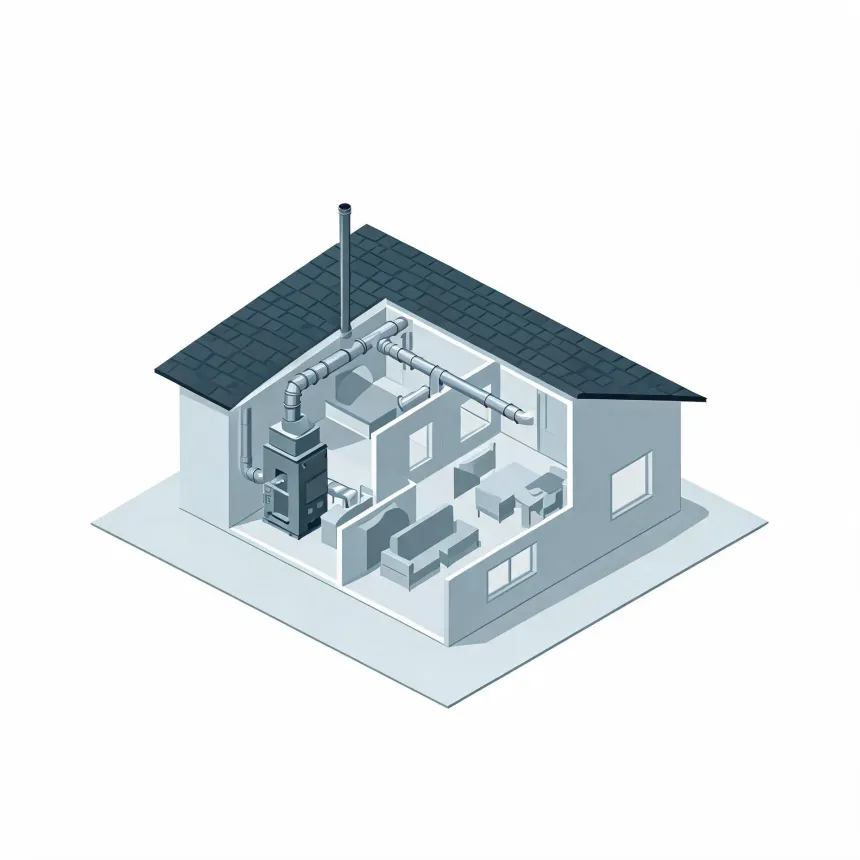
Isometric cutaway illustration of a single-story house with a dark shingled roof, showing a furnace with a flue pipe and branching ductwork running through interior rooms furnished with a sofa, table and chairs.
Your furnace works hardest from November through March.

NOAA nClimDiv, 1991–2020 normals

Half the homes in Forsyth County were built in 2004 or later.

A furnace that came with a newer house still has years left in it, and that's worth knowing before you replace instead of repair.

September is worth paying attention to. Furnaces here sit idle from April through September, then homeowners start them back up in October. That first cold snap is when a weak igniter or a failing flame sensor tends to show itself, because the part was already on its way out and the furnace is just now asking something of it again. If your furnace ran fine last winter and is acting up now that it's back on, that points to a single part rather than the whole system. Getting it looked at as soon as you notice the problem beats waiting until you're deep into the seven months you'll need the heat.

Get the furnace looked at before you consider replacing it

If your furnace came with a newer house, it's probably got years left in it. A repair call will tell you what's actually wrong, and in most cases here, that's all it takes.

Find a contractor
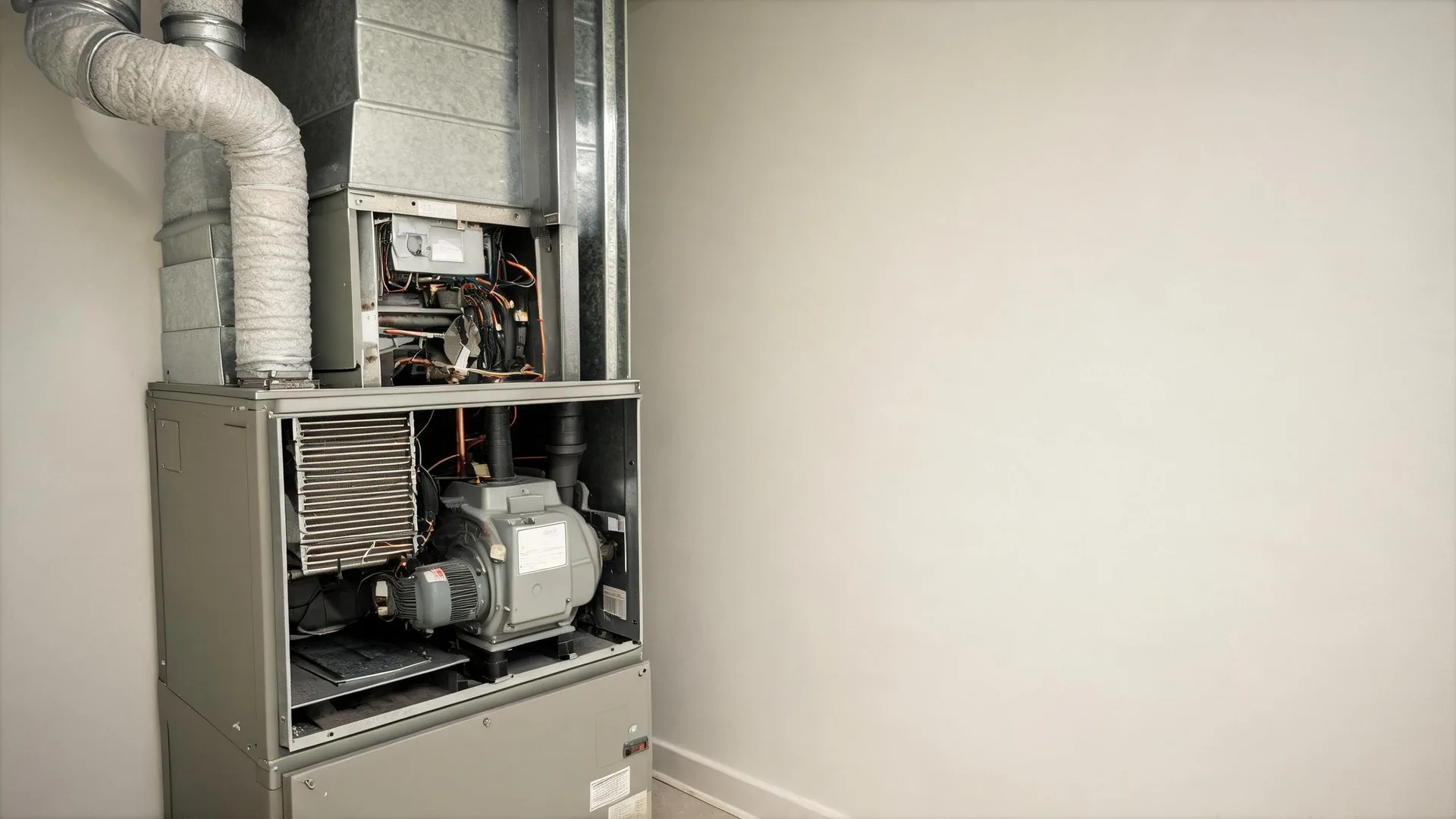
A gray residential gas furnace installed in an unfinished basement, connected to sheet-metal ductwork and PVC pipes.

The hours on the clock

The clip beside this runs the same furnace from October's first cold morning through a February night at 33°F. That's the stretch it works. The rest of the year it sits off. A furnace that spends part of the year idle has less reason to wear out, so when one shows up for a repair call, the odds favor a single bad part over a system in decline. Worth getting it looked at rather than planning around a replacement.

What you can check first

Make sure the thermostat is set to heat and the setting is above room temperature. Check the furnace switch, the one that looks like a light switch near the unit, and make sure it's on. Check the breaker it runs on. If you have a standing pilot, see if the pilot light is lit. None of this requires opening the furnace itself.

What tells you to stop and call

A burning smell that doesn't fade after the first few minutes of running, a clicking sound that doesn't end in ignition, or the furnace short cycling, turning on and off every few minutes, all mean something inside needs a tech's attention. Don't keep resetting the switch or breaker hoping it catches. Repeated resets on a furnace that won't stay lit usually make the diagnosis harder, not easier.

An unfinished basement featuring concrete block walls, exposed floor joists, and a metal forced-air furnace with ductwork near a central pillar.

A new furnace would cut about $140 a year off heating for a typical Forsyth County home.

  • A new high-efficiency furnace$640 a year
  • An older furnace$780 a year

Estimates for a typical Forsyth County home, compared with an older unit built to the previous federal minimum, from EIA household energy data, Georgia fuel prices and NOAA climate normals. Your home will differ.

Repair makes sense when one part has failed and the heat exchanger is sound.

Replacement makes sense when the heat exchanger is cracked or the furnace keeps needing parts.

A diagnostic visit starts before the panel comes off. The tech asks what you noticed first, the smell, the sound, whether it ran at all, because that narrows things down fast. Then the panel comes off and the tech watches it try to start, since most furnace problems show up in the ignition sequence. That means checking for a spark or glow at the igniter, confirming gas is reaching the burners, and watching whether the flame sensor is picking up the flame once it lights. A furnace that ignites and then shuts off a few seconds later is usually telling you the flame sensor isn't reading the flame, not that the burners are bad. From there it's a matter of testing the part that looks guilty rather than replacing things to see what helps.