






Night view of illuminated white Southern-style houses with wraparound porches beneath Spanish moss-draped oak trees.

Heat Pump Installation in Stockbridge, GA

Tell us about the job

Takes about a minute. No obligation.

New system or replacementHeat PumpHenry County, GA
Step 1 of 2

What ZIP code is the job in?

Just over half of homes in Henry County heat with utility gas. Most of the rest run on electricity, which is the furnace a heat pump replaces or works alongside. If your home already has gas, a heat pump still earns its keep on the cooling side, and some setups pair it with the existing gas furnace for the coldest nights. If your home heats with electricity now, a heat pump takes over that job directly and does it for less than baseboard or resistance heat. Either way, the contractor sizing your system needs to know which fuel you have now before anything else.

5 months
November through March, your system heats
5 months
May through September, it cools
35°F
the average winter night it heats against
89°F
the average summer afternoon it cools against
Isometric line illustration of a cutaway house showing interior rooms with furniture, a furnace or air handler with overhead ductwork, and an outdoor condenser unit connected by lines outside the wall.
Your system heats November through March and cools May through September.

NOAA nClimDiv, 1991–2020 normals

Heat pumps in Henry County run cooling from May through September and heat from November through March.

Install before April or October and the system is tested and set before it has to work.

A heat pump here coasts through a short, mild winter

Power costs 14.08 cents a kWh statewide
Climate zone 3A
Cooling runs May through September

A heat pump installed here has to meet the zone 3A minimum, and may qualify for a federal credit

Any new heat pump installed in Stockbridge has to hit 14.3 SEER2 for cooling and 7.5 HSPF2 for heating, the federal minimum for this zone. A federal tax credit is available for qualifying equipment, on top of whatever that efficiency saves on the power bill.

Find a contractor
A man in a cap, dark jacket and tan work pants climbs porch steps toward a blue front door, carrying a canvas tool bag in his right hand, with a potted shrub beside the entry.
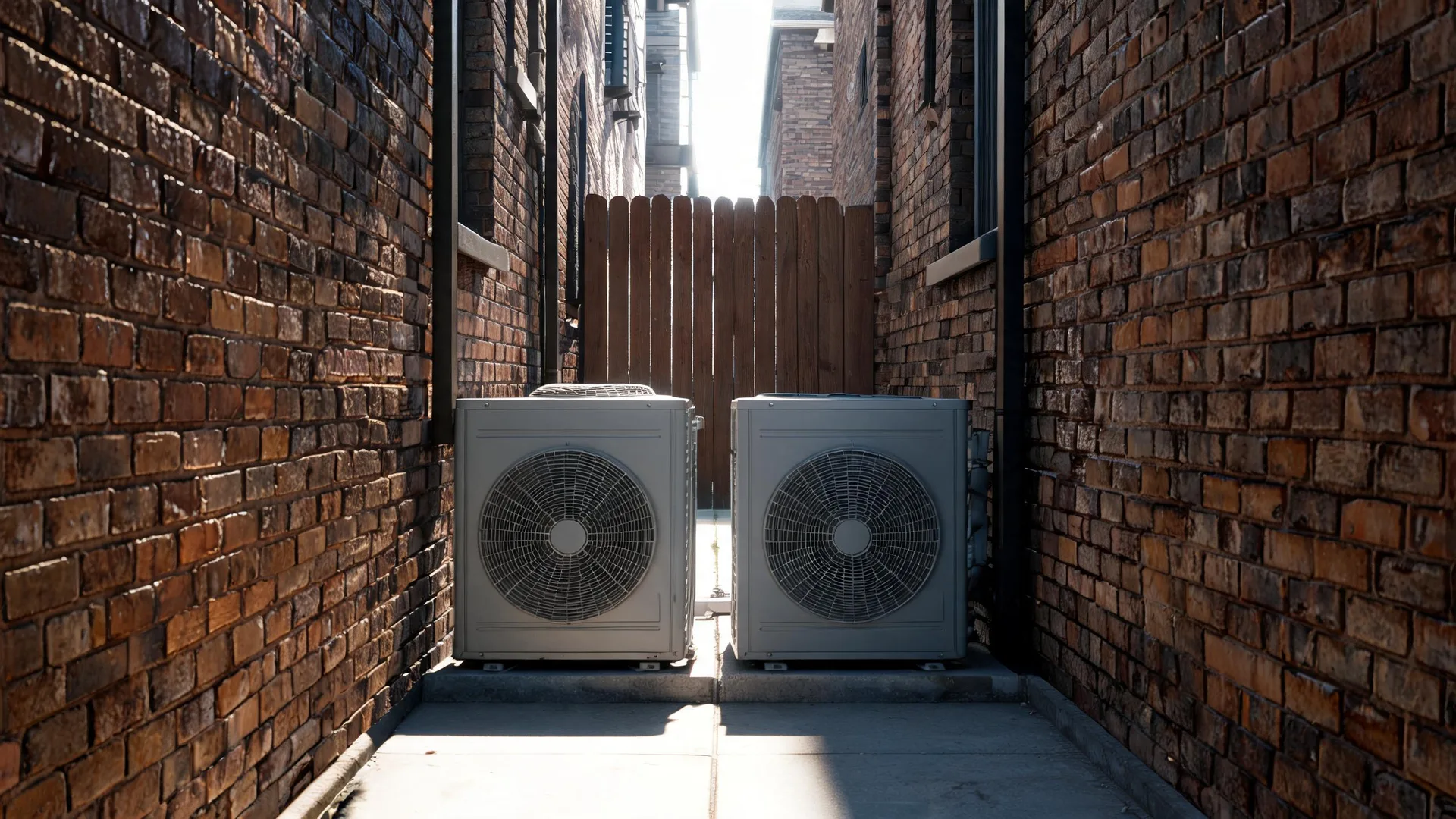
A gray heat pump outdoor unit mounted on a concrete pad next to a residential house with lap siding and stone accents.

Years of light duty, not a system under strain

Mild winter, short and easy on the equipment. That's the case for picking a heat pump built to last, not one chasing a SEER2 number past the zone 3A minimum. The extra efficiency above that line is there for places that lean on a system hard, year after year. A heat pump here just doesn't get pushed that way.

Ask what size the load calculation says, not the old system

A heat pump sized off the equipment it replaces can end up wrong for the house. A contractor should run a load calculation on the home itself, room by room, and size the unit to that. Too big and it short cycles, turning on and off without running long enough to pull moisture out of the air. Too small and it runs longer than it should and still falls short on the few genuinely cold nights.
Ask what backup heat is built in and when it kicks on

Every heat pump has some form of backup for the rare stretch of real cold, usually electric strips inside the air handler, sometimes a paired gas furnace instead. Ask which one is in this system and at what outdoor temperature it takes over. That backup is there for the exceptions, not the ordinary winter, but you want to know it's set up right before the one night you need it.

A load calculation looks at more than floor space. It accounts for the windows, which way the house faces, how much attic sits above each room, and how many exterior walls a room has. A home with a sunroom full of glass needs different sized equipment than one without, even at the same square footage. That's why a contractor measures the house instead of matching the old unit's tonnage. Equipment gets swapped for bigger models over the years without anyone checking if the original size was right, so the system being replaced isn't a reliable guide. The only way to know the real number is to run the calculation on the house as it stands now.

Install day starts with the outdoor unit and the indoor coil, and usually the air handler or furnace they tie into. If ductwork is staying as is, a lot of the day goes to the refrigerant lines, the electrical disconnect, and setting the new outdoor pad level so the unit doesn't shift over time. The old refrigerant gets recovered, not vented, and the lines get flushed or replaced if they weren't sized for the new equipment. Once everything's connected, the system gets charged to the exact refrigerant level the manufacturer specifies, checked against the pressures and the temperature split across the coil. A thermostat built for a heat pump gets set up, since it has to manage the backup heat differently than a straight furnace thermostat would. Before anyone leaves, the system should run through a full cycle in both heating and cooling so the contractor can confirm it holds steady, not just that it turns on.