




Heat pump vs furnace in Henry County, Georgia

Request a Quote

Installers who work in Henry County

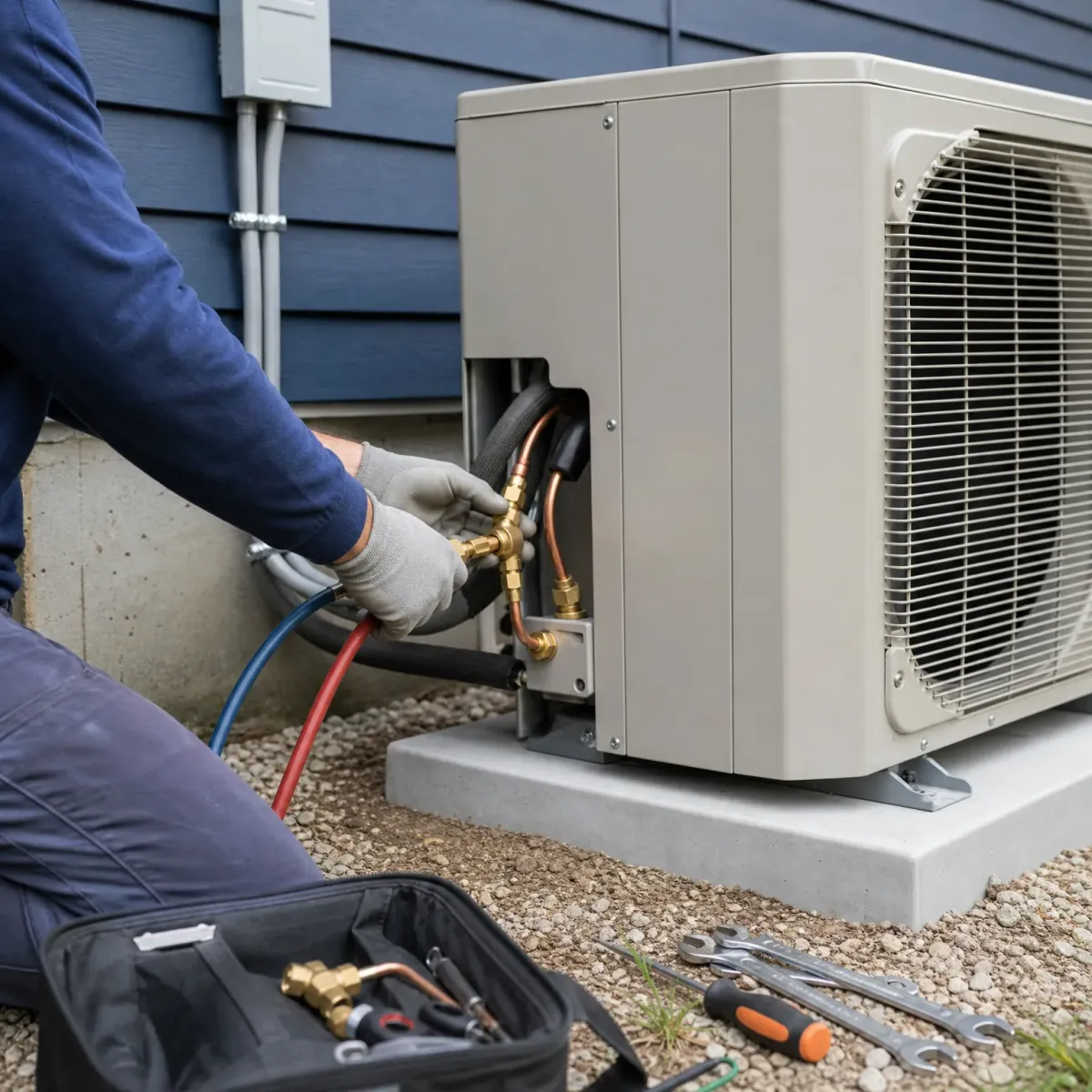
A person in a navy shirt and work gloves connects red and blue gauge hoses to copper refrigerant lines on a beige outdoor condenser unit mounted on a concrete pad, with wrenches, a screwdriver and a tool bag on the gravel in the foreground.

Tell us about the job

Takes about a minute. No obligation.

New system or replacementHenry County, GA
Step 1 of 3

What kind of equipment?

Which costs less to run in Henry County?

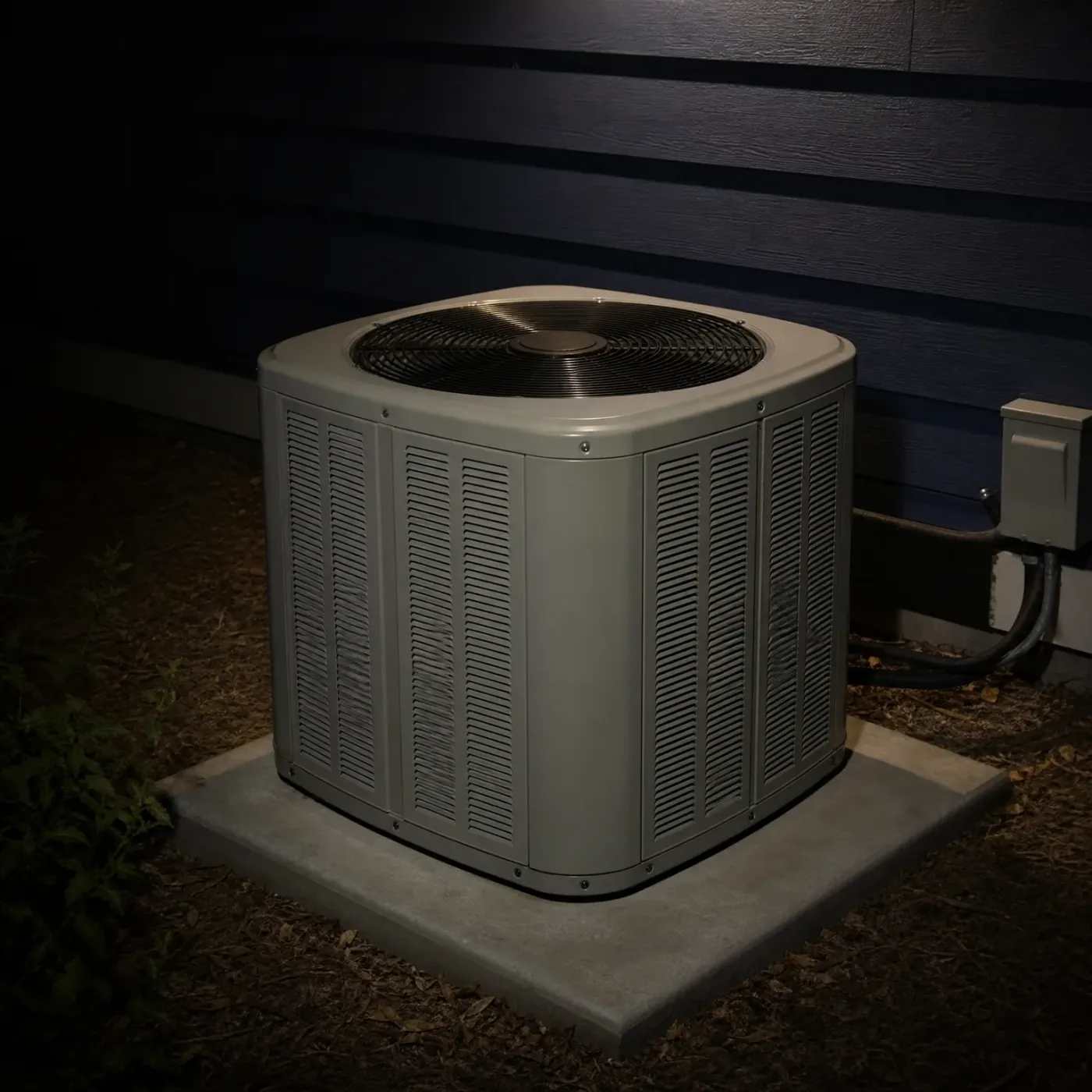
A gray outdoor condenser unit with a top fan grille sits on a concrete pad beside a dark horizontal-lap-sided wall at night, with an electrical disconnect box and conduit to the right and mulch and leafy plants around the pad.

Heat pump

To heat your home here$1.88per 100,000 Btu

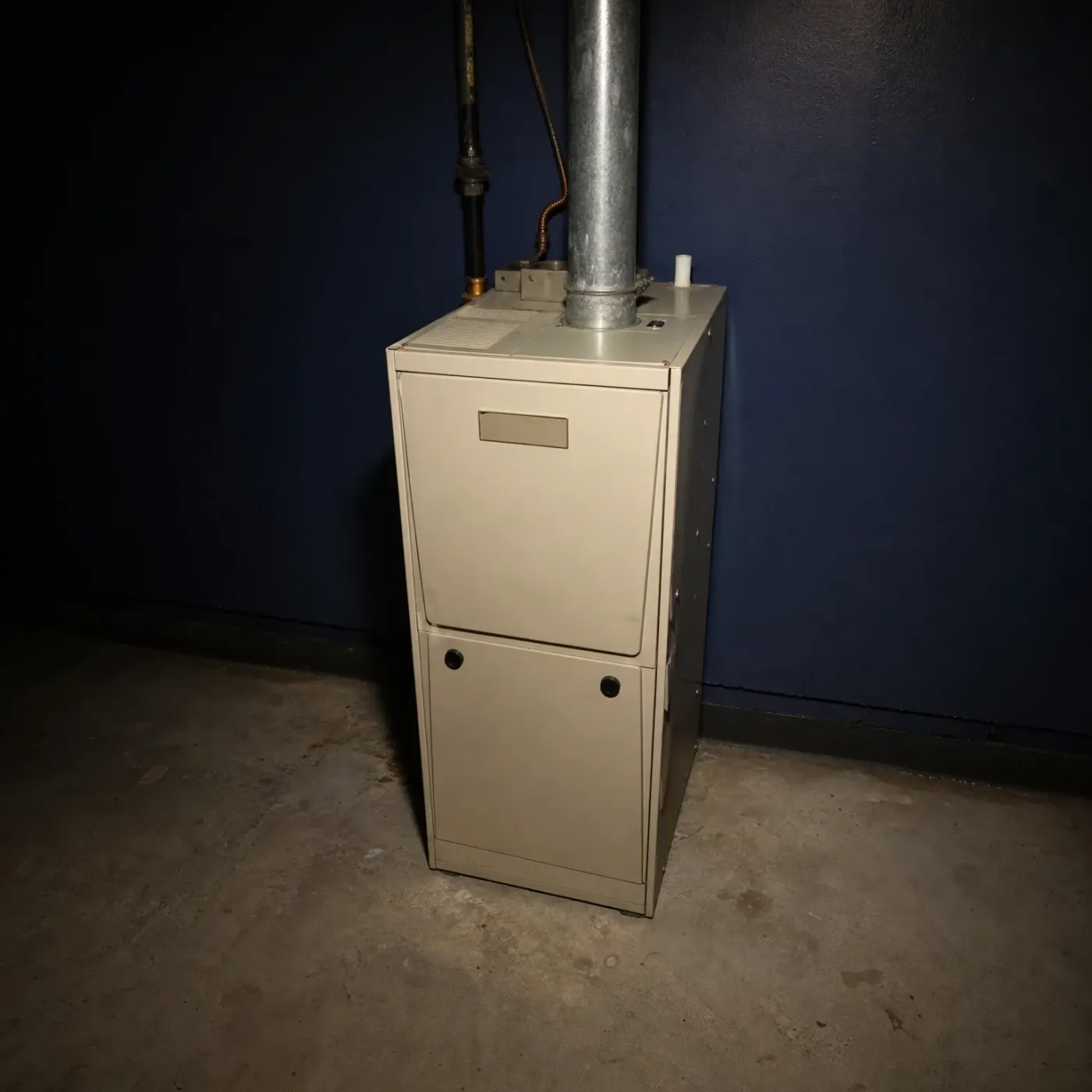
A beige gas furnace standing on a concrete floor against a dark blue wall, with a metal flue pipe and gas piping running up from its top.

Furnace

To heat your home here$2.21per 100,000 Btu

At Georgia's gas and electricity prices, a heat pump makes the same heat as a gas furnace for about 15% less.

Btu stands for British thermal unit, the standard measure of heat energy.

Where does a heat pump shine?

  • Made for mild winters

    Winter nights in Henry County average 35°F, not far below room temperature. A heat pump can pull heat from air that mild all night long without working hard to do it.

    A navy blue front door with a brass knob on a light blue clapboard house, with a weathered wood porch, jute doormat, leather boots, and a blue glazed pot of evergreen branches and pinecones, beside frost-covered ground.
  • Covers a long cooling season

    May through September is five months of cooling in Henry County. A heat pump handles all of that, then switches over to keep you warm once the weather turns.

    A covered porch with blue lap siding, a ceiling fan, a navy cushioned sofa and wicker furniture, where a glass of iced tea sits on a coaster on a weathered wooden table beside a potted plant, with a person standing at the railing looking out at green trees.
  • No gas line, nothing burning in the house

    There's no gas line to the unit and no flame anywhere in it. Carbon monoxide isn't part of the picture.

    A kitchen island with a pale stone countertop holding a black induction cooktop and a stainless steel whistling kettle, with navy blue cabinetry, white subway tile backsplash, a wooden open shelf with ceramics, a potted plant, woven-seat wooden stools, and a loaf of bread on a cutting board.

Where does a furnace shine?

  • Runs on the gas most homes here already use

    Just over half the homes in Henry County already heat with gas. If your house is piped for it, a furnace fits into what's already there instead of changing how the house gets its heat.

    Snow-covered front yards and concrete steps of adjacent houses, with a dark blue metal handrail in the foreground and exterior gas meters mounted beside the foundations.
  • Pairs with any central AC

    A furnace's blower and ducts carry cooled air too. Adding central AC uses the same system.

    A metal floor vent set into hardwood flooring beside a window with sheer white curtains, with sunlight and leaf shadows on the floor and a blue-and-cream patterned rug at right.
  • Fast, strong heat on demand

    The air coming from the vents feels genuinely hot. That's welcome on a freezing morning.

    A mudroom with a navy door with a window showing snow outside, snow-dusted fur-lined boots on a stone tile floor, a patterned rug, and a light blue bench with wood top holding a steaming mug and woven storage baskets, with coats hanging above.

What winter actually asks of a heat pump here

Winter in Henry County is mild more often than it's hard. The overnight low averages 35°F across December, January and February, and it only drops to freezing or below on about 55 nights a year. Out of the roughly 150 nights that heat runs here, that's under half. A heat pump does its best work in exactly that range, above freezing, and here that's most of the season.

The cost numbers back up what the climate suggests. A heat pump built to the federal minimum makes heat here for $1.88 per 100,000 Btu, against $2.21 for a gas furnace at the federal minimum, both at Georgia's average fuel prices. That's about 15% less to run, and it holds without adding anything for backup heat on the coldest nights, because those nights are the minority here, not the rule.

Heating and cooling split the year almost evenly in Henry County, five months of heat from November through March and five months of cooling from May through September. A furnace only answers one of those. A heat pump is built to answer both, which matters in a county where the two seasons carry equal weight.

A navy-blue clapboard house with a white-columned front porch holding two white rocking chairs, a light blue glass-paned front door with sidelight, hanging fern, potted plants, and painted steps above a brick walkway.

What the gas line already in the house is worth

Just over half the homes in Henry County heat with utility gas, and close to as many heat with electricity, so neither fuel is the unusual choice here. If gas already runs to the house, a furnace uses what's already there. If it doesn't, running a new gas line is a real cost that the furnace's $2.21 doesn't include, and the heat pump's $1.88 doesn't ask for it.

Summers push the other side of the decision. The afternoon high hits 90°F or above about 60 days a year, under a quarter of the year but enough that the house needs real cooling for five months straight. A furnace has no answer for that; it does nothing outside the five months it heats. A heat pump is also the air conditioner, covering the same months a separate central AC unit would.

So the choice comes down to what's already in the house and what you want from one system. A furnace paired with a central AC costs less to run on the coldest nights of a mild winter, and it's a fast, strong heat on demand if the gas line is already there. A heat pump costs less overall here and does both jobs with one piece of equipment. Either works in Henry County. Which one is cheaper for your house depends on whether you're building on a gas line you already have or starting from nothing.

Sources: NOAA nClimDiv · NOAA 1991–2020 seasonal normals · Census ACS 2020–2024 · EIA SEDS 2024 · 10 CFR 430.32

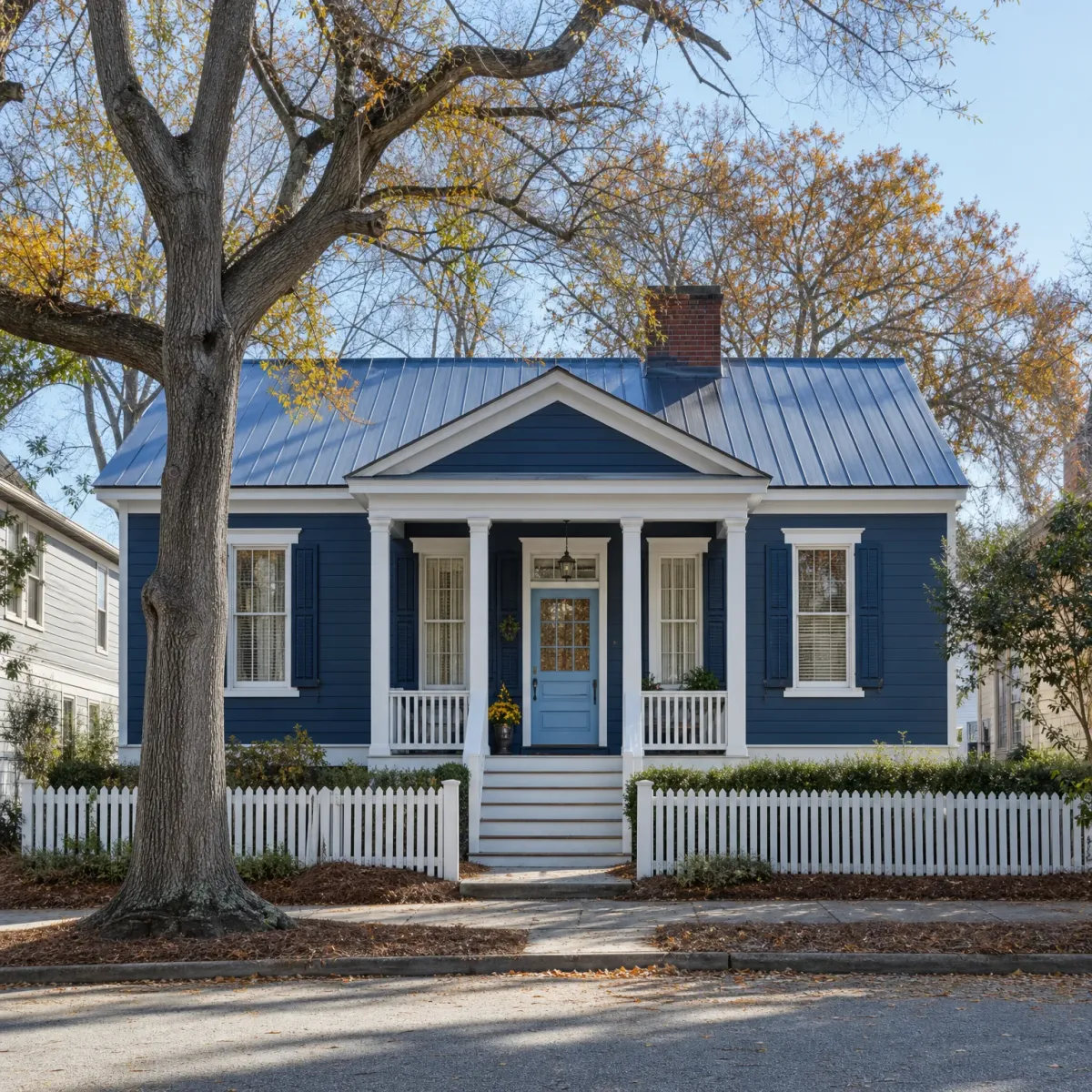
A single-story navy blue cottage with white trim, a metal roof, brick chimney, columned front porch with steps, and a white picket fence, with a large bare tree in the foreground.

Common questions about heat pumps and furnaces

  • Will a heat pump keep my house cool enough here?

    Yes, a heat pump cools the same way a central air conditioner does, because it is one. Henry County's cooling season runs about five months, the same length as its heating season, and the afternoon hits 90°F or higher on about 60 days a year. A heat pump sized for this house handles both ends of the year.

  • Can I keep my furnace and add a heat pump?

    Yes, that is how most heat pump installs here work when there is already a gas furnace in the house. The heat pump handles the mild nights and the furnace covers the cold snaps, the roughly 55 nights a year here that drop to freezing or below. The two share the ductwork already in the house.

  • Is a heat pump cheaper to run than a furnace in Henry County?

    Yes, a heat pump costs less to run here. It makes the same heat for $1.88 per 100,000 Btu against $2.21 for a gas furnace, both at Georgia's average fuel prices. Over the five months heat runs here, that gap holds on most nights, since fewer than half of them drop to freezing or below.