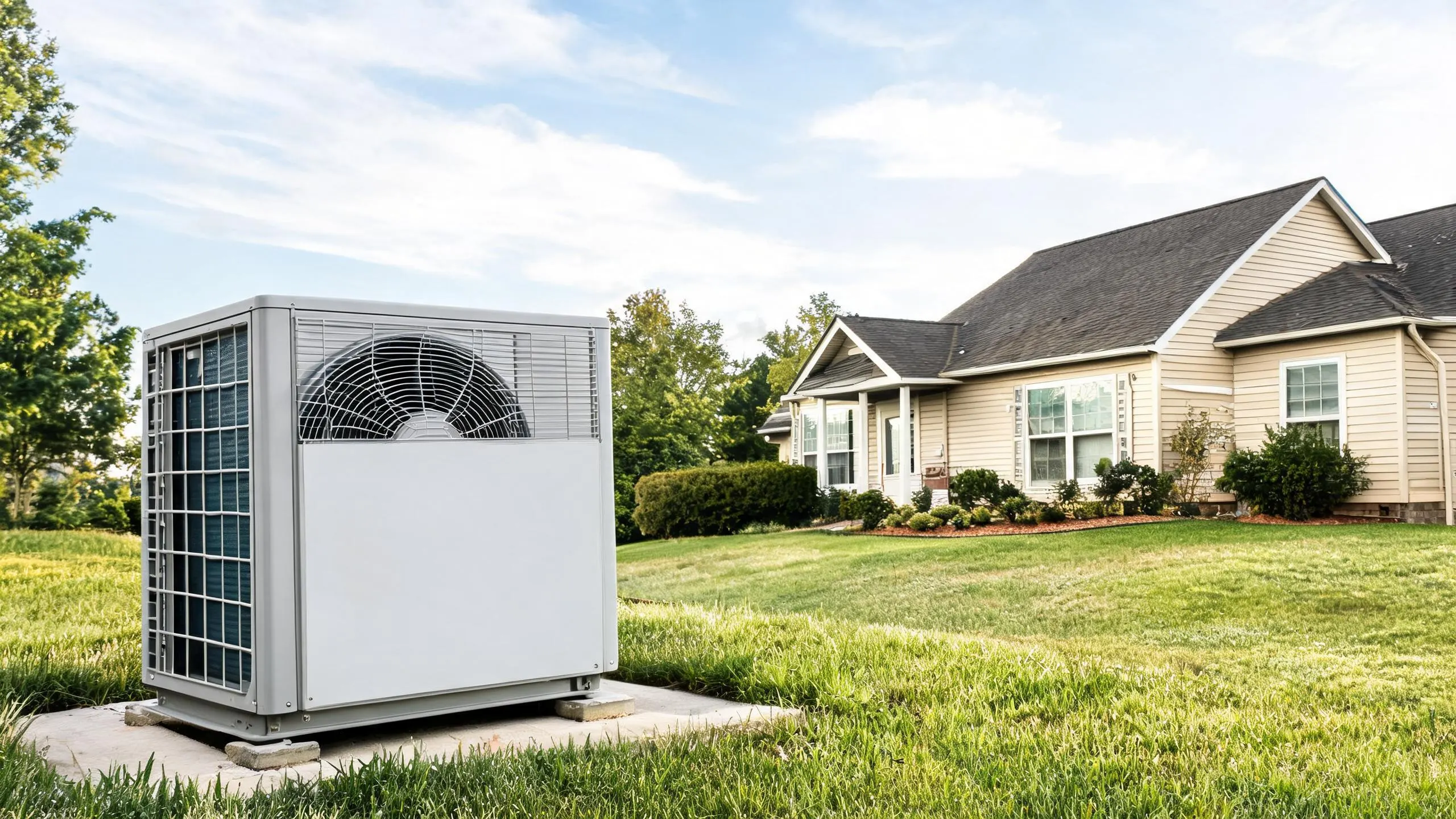






An outdoor heat pump unit mounted on a concrete pad in front of a single-story suburban house with beige siding.

Heat Pump Maintenance in Stockbridge, GA

Tell us about the job

Takes about a minute. No obligation.

Tune-up, service, or cleaningHeat PumpHenry County, GA
Step 1 of 2

What ZIP code is the job in?

A heat pump in Stockbridge switches jobs with the seasons, so it has two startup points, not one. Cooling here runs May through September, and heat takes over November through March. April is the month to get it looked at before the system starts carrying the summer load, and October does the same job ahead of winter. Overnight lows only average around 35°F in the coldest stretch of the year, so this unit isn't fighting extreme cold the way it might elsewhere. A check before each season catches a weak part while it's still a quick fix, not a breakdown on the first hot or cold day you actually need the system to work.

Summer dew points in Stockbridge average 67°F, which is muggy but nothing extreme for a heat pump to handle.

One check before the system takes on that load is enough to keep it running the way it should.

Half the heat pumps here are still young enough for upkeep to matter

Half the homes here were built by 2001
Climate zone 3A
Power here costs 14.33 cents per kilowatt-hour
Nothing here calls for more than the two checksWeather here doesn't single out your heat pump, it's wind and storms that pass through like anywhere else in Georgia.

A newer system still needs someone to look at it once a year. If your heat pump came with the house and the house went up anywhere near 2001 or later, the parts inside are probably still within their working life, not worn out and due for replacement. That's exactly when a yearly check pays off. Catching a weak capacitor or a low refrigerant charge early keeps it from turning into a failed compressor down the road. Skip the checks for a few years and a young system starts acting like an old one well before it should.

Book it before the season

It starts running hard in the first month of the season here. Book the check the month before.

Find a contractor
A man in a cap and brown jacket, seen from behind, climbs porch steps toward a blue front door while carrying a canvas tool bag, with a potted shrub in a blue planter beside him.
A dark gray heat pump unit mounted on a concrete pad next to a house with gray siding and a stone veneer wall.

This system never gets an off season

A heat pump never really shuts off for the year the way a furnace alone might. It just changes which direction it's moving heat. That means the reversing valve, the defrost control board, and both coils stay in use across the whole year, not half of it. Dirt on the outdoor coil makes the system work harder to do either job, heating or cooling, and it builds up whether the unit is blowing warm air or cold. Low refrigerant charge shows up the same way in both seasons: longer run times, weaker output, ice where ice shouldn't be. Left alone, a dirty coil or a low charge doesn't stay a small problem. The compressor ends up covering for it, and the compressor is the one part that's expensive to replace and impossible to patch. A yearly check catches the small stuff on both sides of the switch before the system starts compensating for it.

What shows up before it breaks

A heat pump usually gives warning before it quits outright. It runs longer than it used to without getting the house as warm or as cool. The outdoor unit ices over in mild weather, not just on the coldest nights. Air comes out of the vents weaker than it should, or it comes out barely warm when the system is supposed to be heating. Short cycling, where the system kicks on and off in quick bursts, is another one. None of these mean the system has failed. They mean something inside it is working harder than it should to get the same result.
Why those signs are worth a look now

By the time a heat pump is making noise or icing over, whatever caused it has usually been building for a while. A weak capacitor, a low refrigerant charge, a coil coated in dirt: any of these will let the system keep running, just worse and worse, until the compressor starts covering for the difference. A tune-up before the season catches that early, while it's a part swap or a coil cleaning instead of a compressor job. Waiting until the system is struggling to push air means fixing it after it's already cost you a season of higher bills and uneven comfort.

Airflow is what makes a heat pump's efficiency ratings mean anything, and three things control it: the filter, the coils, and the condensate drain. A clogged filter starves the system of air, so it runs longer to move the same amount of heat, whichever direction it's moving it. The indoor coil picks up dust once the filter stops catching it, and a dirty coil transfers heat poorly, which again means longer run times for less result. The outdoor coil has the same problem from the other side, coated with leaves, grass clippings, or just general grime, and it can't give up or pull in heat the way it's supposed to. The condensate drain matters for a different reason. Cooling mode pulls moisture out of the air, and that water has to go somewhere. A clogged drain backs up, and the overflow can damage the system or the space around it before anyone notices a performance problem at all. None of these three failures look dramatic on their own. Together, they're most of what a tune-up actually checks.

A tune-up on a heat pump means someone actually goes through a checklist, not just a glance at the thermostat. The refrigerant charge gets checked against what the system calls for, since even a slightly low charge makes the compressor work past what it should. Electrical connections get tightened, because a loose connection generates heat and wears out whatever it's attached to. The capacitor gets tested, since that's the part that gives the compressor and fan motors their starting push, and a weak one causes hard starts long before it fails outright. Moving parts get lubricated where they're supposed to be. The thermostat gets checked to make sure it's actually calling for heat or cooling correctly and talking to the system the way it should. None of this is guesswork or a visual once-over. It's measurements against manufacturer specs, which is the only way to catch a part that's degrading but hasn't failed yet.