




What winter here actually asks of a heat pump
Winter in Cobb County is mild, but it is not short. The heat runs six months, November through April, longer than the five months of cooling. Any machine you pick has to carry that stretch, not just the easy weeks in it.
Most nights it is fine for a heat pump. The overnight low in December, January and February averages 34°F, and nights at or below freezing come to about 60 a year, under a third of the nights the heat is running. A standard heat pump handles that range without much trouble.
The catch is that 34°F average sits right at the edge of where a standard heat pump starts to struggle. Below 40°F its heat output drops below its rating. Below about 35°F it often needs backup heat to make up the difference. The average winter night here falls below both marks, and every one of those 60 freezing nights does too.
That does not mean the house goes cold. It means a standard heat pump leans on backup heat, usually electric resistance coils, on a good share of winter nights. Near 0°F is where a standard heat pump would struggle most, and that almost never happens here. Fewer than one night a year drops to 0°F or below. So the backup heat is making up a gap, not fighting an Arctic night.
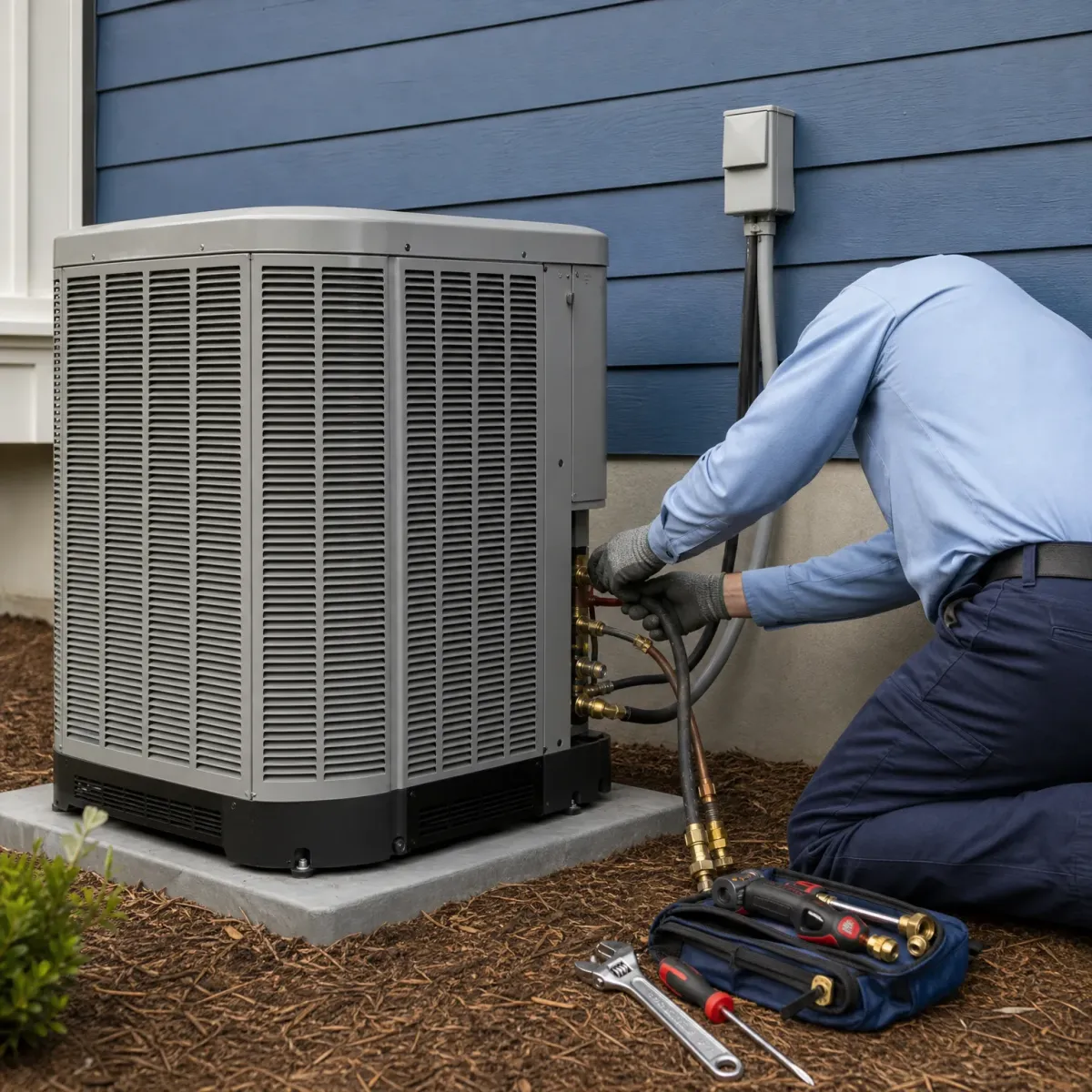
If you want a heat pump that closes most of that gap on its own, that is what the ENERGY STAR Cold Climate label is for. To earn it, a heat pump has to make at least 1.75 units of heat per unit of electricity at 5°F and hold on to 70 percent of its 47°F capacity at that same temperature, checked by independent testing. In a two-winter field test of that kind of equipment, backup heat covered only a small share of the heat needed between 0°F and 35°F, and running on backup alone was rare even above 0°F. For a county where lows mostly sit in the 30s, a cold-climate model gets you through winter on the heat pump itself, not the backup coil.