





A white Southern-style house with a wraparound porch photographed at night, surrounded by Spanish moss-draped oak trees lit by landscape lights.

Heat Pump Maintenance in Mableton, GA

Tell us about the job

Takes about a minute. No obligation.

Tune-up, service, or cleaningHeat PumpCobb County, GA
Step 1 of 2

What ZIP code is the job in?

A quick tune-up has someone glance at the outdoor unit, check the refrigerant pressure, and call it done. A thorough one takes longer because a heat pump has to work both directions. The tech should check the reversing valve by actually switching the system into both heating and cooling and watching how it responds, not just assuming it's fine. They should pull the panel and check the contactor and capacitor for wear, not just look at the unit from outside. The coils, both indoor and outdoor, should get cleaned, since a dirty coil makes the whole system work harder without you seeing why. And they should check the refrigerant charge against what the manufacturer specifies, not just top it off because the gauge looks low. If the visit is over before you'd finish a cup of coffee, something got skipped.

A heat pump that runs longer than it used to isn't warming up slower on purpose.

A failing reversing valve or a dirty coil makes it work harder for the same result, and that shows up on the runtime before it shows up as a breakdown.

Heat pump season starts in November here. October is when to get it checked.

Cooling runs May through September
Heat runs November through April
70 damaging wind events from 2015 to 2024
Storms here are hard on outdoor units105 severe weather events hit Cobb County between 2015 and 2024

Half the homes in Cobb County were built in 1990 or later. If yours is one of them, the heat pump itself may be newer too, especially if it came with the house. A newer system still has most of its working life ahead of it, which makes the yearly check worth more, not less. Catching a worn contactor or a weak capacitor early keeps it from taking the compressor down with it. Skip the checks and a newer unit just gets old faster, losing a bit of efficiency every year until something finally fails outright.

Easier duty still means a checkup a year

Cobb County winters are short and mild, and summers run long but don't push a heat pump as hard as they would in a harsher climate. That means less strain year to year. But the parts still age, and the storms that roll through here put outdoor units at risk on top of normal wear. A yearly check catches what's starting to go before it takes something bigger down with it.

Find a contractor
A gray heat pump outdoor unit mounted on a concrete pad next to a residential house with lap siding and stone accents.

Running fine isn't the same as running right

A heat pump left alone doesn't fail all at once. The contactor pits a little more each season. The capacitor drifts further from its rating. The coil picks up another layer of film. None of it stops the system from running, so none of it gets noticed. What changes is how hard the system works to do the same job it did last year. A compressor that cycles on under a weak capacitor draws harder every start, and each hard start wears the same parts a little more than the last one did. Years go by this way. The system still runs. It just runs older than it needs to, right up until the morning it doesn't run at all.

Keep the filter clean

Check the filter once a month and swap or wash it when it looks gray. This is the one thing in the whole system you can actually see and touch without taking a panel off. A clean filter is the cheapest insurance there is against a struggling system.
Leave the rest alone

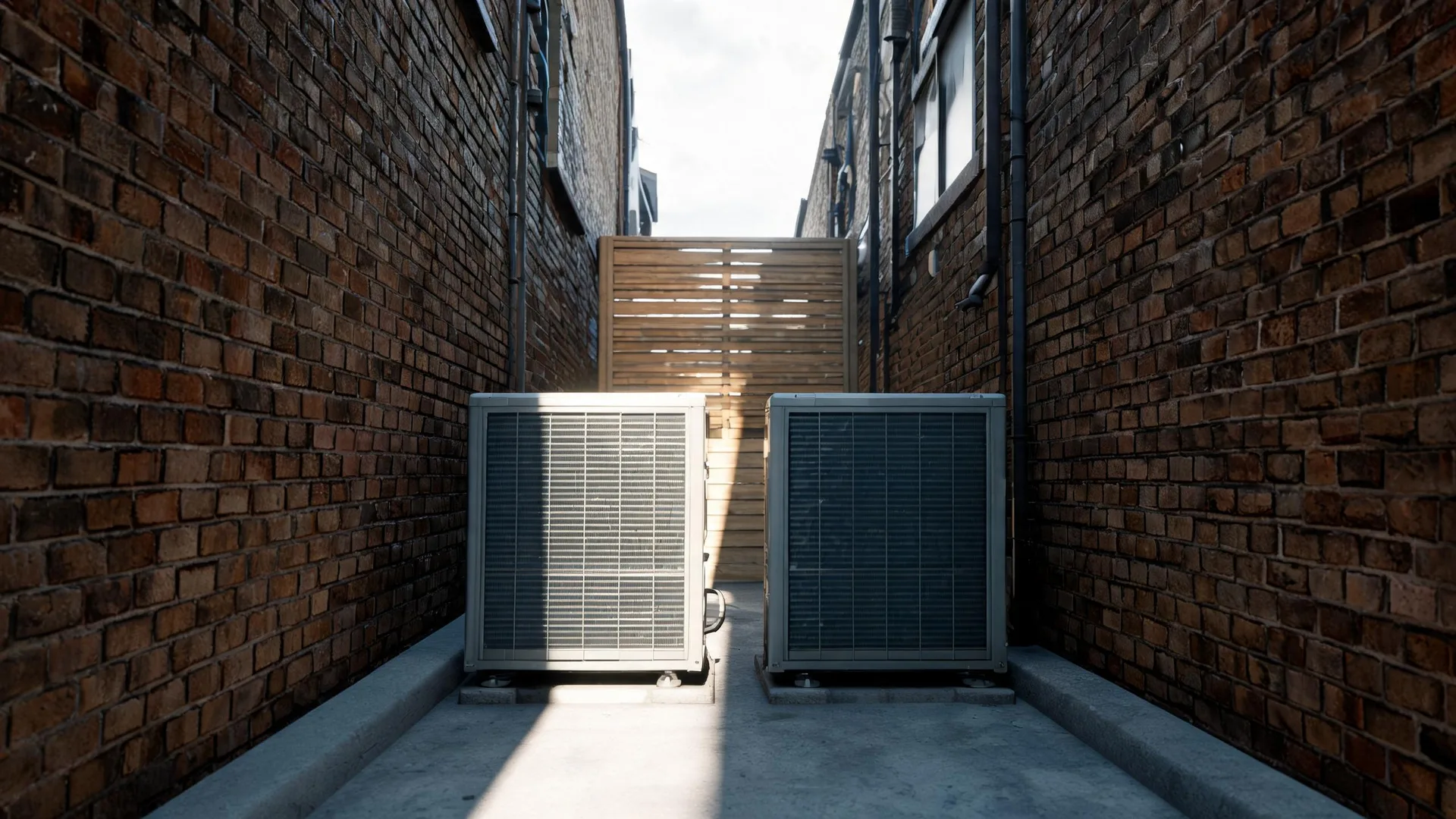
Don't pull the outdoor unit's panel, don't touch the refrigerant lines, and don't try to clean the coils yourself with anything more than a garden hose on low pressure to knock off loose leaves. The reversing valve, the contactor, the charge, all of that needs a gauge and training to check safely. Poking at it without knowing what you're looking at can turn a small problem into a bigger one.

A tune-up turns up things you'd never spot from the thermostat. A contactor can have a pitted surface that's about to stop making good contact, even while the system still runs fine today. A capacitor can be down on its rating and still start the compressor most of the time, right up until the morning it doesn't. Refrigerant charge can be a little off from what the manufacturer specifies without tripping any alarm, and that alone makes the compressor run hotter than it should every single cycle. None of this shows up as a symptom you'd notice. It shows up as a system that's aging faster than it needs to, and the only way to catch it is to actually check.

A tune-up also means watching the system actually switch modes, not just reading gauges while it sits in one. The tech should run the heat pump in heating, let it settle, then force it into defrost and watch how it recovers. That's when a sluggish reversing valve or a weak sensor shows itself. Electrical connections get checked under load too, not just eyeballed, since a loose wire can test fine cold and fail once it heats up. And the outdoor unit's fan motor and blades get looked at for wobble or wear, because a motor that's starting to go will often run fine for months before it seizes. These checks take time precisely because none of them are visible from across the yard.