Night view of illuminated white Southern-style houses with wraparound porches beneath Spanish moss-draped oak trees.

Heat Pump Installation in Mableton, GA

Tell us about the job

Takes about a minute. No obligation.

New system or replacementHeat PumpCobb County, GA
Step 1 of 2

What ZIP code is the job in?

Weather here is hard on outdoor equipment

Cobb County logged 105 severe weather events between 2015 and 2024, with damaging wind the most common by far. A heat pump's outdoor unit sits outside through all of it, so where it goes and what shields it from debris and hail is worth planning before install.

Plan for the power to go out

Close to a third of Georgia households went at least a day without power in 2024. A heat pump runs on electricity, so an outage means no heat and no hot water from it until the power comes back. Worth asking about backup options before the system goes in, not after.

6 months
November through April, your system heats
5 months
May through September, it cools
34°F
the average winter night it heats against
88°F
the average summer afternoon it cools against
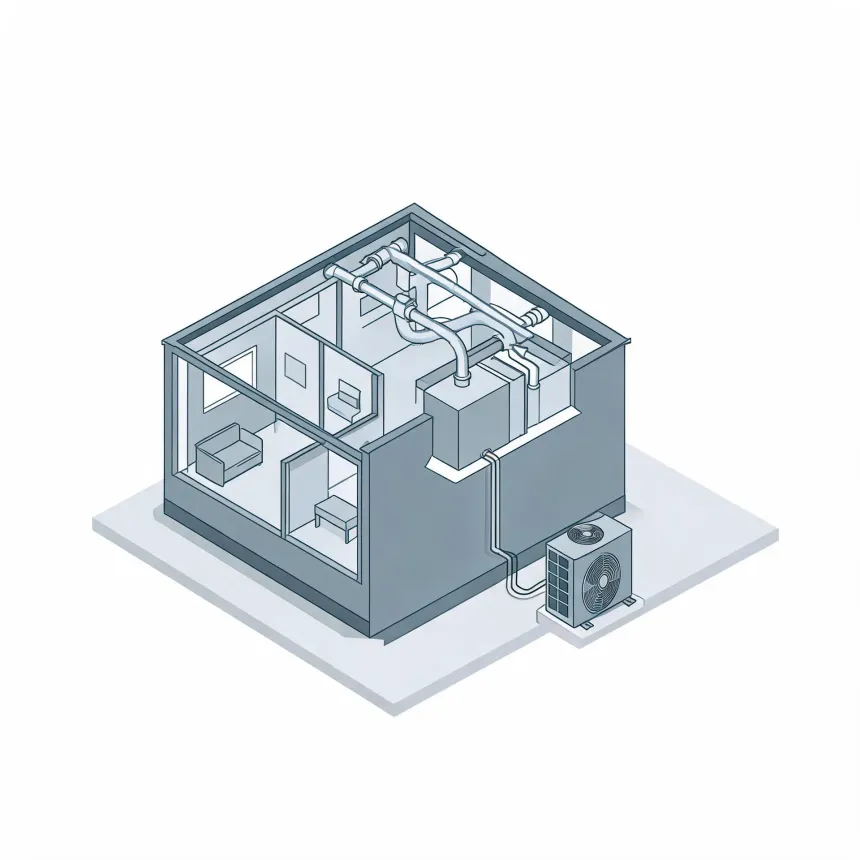
Isometric line illustration of a cutaway house showing interior rooms with furniture, ceiling ductwork connected to an indoor air handler, and refrigerant lines running to an outdoor condenser unit on a pad.
Your system heats November through April and cools May through September.

NOAA nClimDiv, 1991–2020 normals

Gas heats 68.2% of homes in Cobb County, more than any other fuel.

A heat pump going into a gas home usually pairs with the furnace rather than replacing it.

Your heat pump works six months of heat and five of cooling. Get it in before November.

Cooling runs May through September
Heat runs November through April
Climate zone 3A

Cobb County sits in climate zone 3A, warm summers with a short mild winter. Any split-system heat pump installed here now has to hit 14.3 SEER2 for cooling and 7.5 HSPF2 for heating at minimum. That's a federal floor, not a local add-on, and it applies whether the system is going into new construction or replacing something older. Central air sold on its own faces a similar bar in this region, 14.3 SEER2 below 45,000 Btu/h, higher than what the rest of the country requires. A contractor sizing your system will already be working within these numbers, so the real decision is how far above the minimum you want to go.

Plan for storms

Storms and outages are common here. Plan where the outdoor unit goes, how it's protected, and how you'll keep heat and hot water in an outage.

Find a contractor
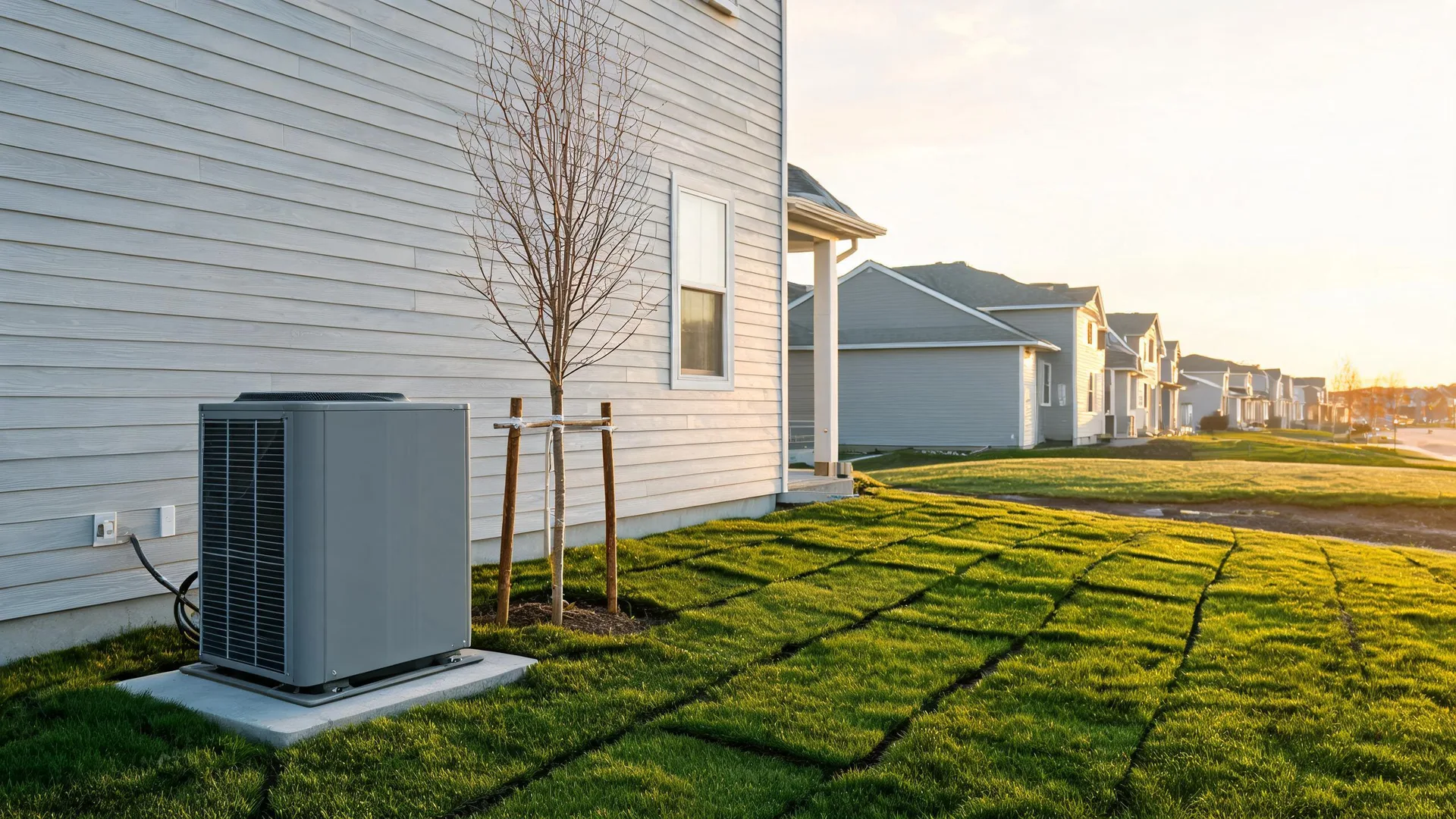
A gray air-source heat pump mounted on a concrete pad next to a house with gray vinyl siding, surrounded by gravel and flanked by green shrubs and white hydrangea flowers.

Running most of the year, but not running hard

This system runs most months of the year here, cooling through the long warm stretch and heating through a short mild winter. Neither side asks much of it. Cobb County doesn't get the kind of deep cold that makes a compressor fight for every degree, so the strain that wears down a heat pump up north just isn't part of the job here. When something does go wrong, it's more likely age or a skipped service visit than the machine being pushed past what it's built for. That's worth knowing if a repair comes up instead of a straight replacement.

Size comes from a load calculation, not the old unit's label

A contractor works out heating and cooling load room by room, based on square footage, window area, insulation, and ceiling height. Matching whatever size is already out there just copies a guess someone else made years ago. The output is a number in Btu/h that says what the house actually needs to move, not what happened to get installed last time.

Oversized fails differently than undersized

A heat pump that's too big cools or heats the air fast, then shuts off before it's pulled the moisture out of the room or settled into a steady rhythm. That cycling wears on the compressor and leaves rooms feeling clammy even at the right temperature. Too small, and it runs constantly trying to catch up, struggling most on the hottest and coldest days when you need it to keep pace.

Taking out the old equipment is part of the install, not a separate job. If a furnace is staying in place and only the outdoor unit and coil are being added or swapped, the contractor has to confirm the furnace can still pair correctly with the new equipment. If the whole system is coming out, expect the old outdoor unit, the indoor coil, and the refrigerant line set to go with it. Refrigerant has to be recovered from the old system before anything is disconnected, that's a legal requirement, not a courtesy. A contractor hauls the old equipment away as standard practice, so you shouldn't be left to deal with it yourself.

The equipment itself is only part of what you're paying for. Ductwork often decides where the price lands. If what's already in place is sized right and sealed well, a contractor connects to it and moves on. If it's leaky, crushed, or built for a different kind of system, that has to get fixed first, or the new heat pump won't deliver what its rating promises. Line set length and where the indoor and outdoor units end up matter too, since more refrigerant line and tighter install spots take more time and material than a straightforward swap. Electrical work can factor in as well. A heat pump may need a dedicated circuit or a panel upgrade if what's feeding the old system doesn't carry enough capacity. None of this shows up on the price tag of the unit itself, but it's where installs start to differ from each other.