A single-story brick house with a white-columned wraparound porch and a neighboring light-colored siding house, seen across a lawn behind a trimmed hedge, under oak branches draped with Spanish moss.

Furnace Repair in Mableton, GA

Tell us about the job

Takes about a minute. No obligation.

RepairFurnace or heatingCobb County, GA
Step 1 of 2

What ZIP code is the job in?

Check the thermostat and the switch first

Make sure the thermostat is set to heat and the setpoint is above room temperature. Look for a power switch near the furnace that looks like a light switch, sometimes it gets bumped off by accident. Check the breaker too. None of this requires opening the furnace itself.

A furnace that won't light may just be waiting on you

Many furnaces lock out after a few failed attempts to light and need the thermostat turned down, then back up, to try again. If the furnace has a standing pilot, check whether the pilot light is actually lit before assuming the worst. These are things worth trying before a call, not after one.

6 months
November through April, your furnace is on duty
34°F
the average winter night it heats against
68%
of homes here heat with gas, so most furnaces here burn gas
5 winter storms
in ten years, the nights a failure hurts most
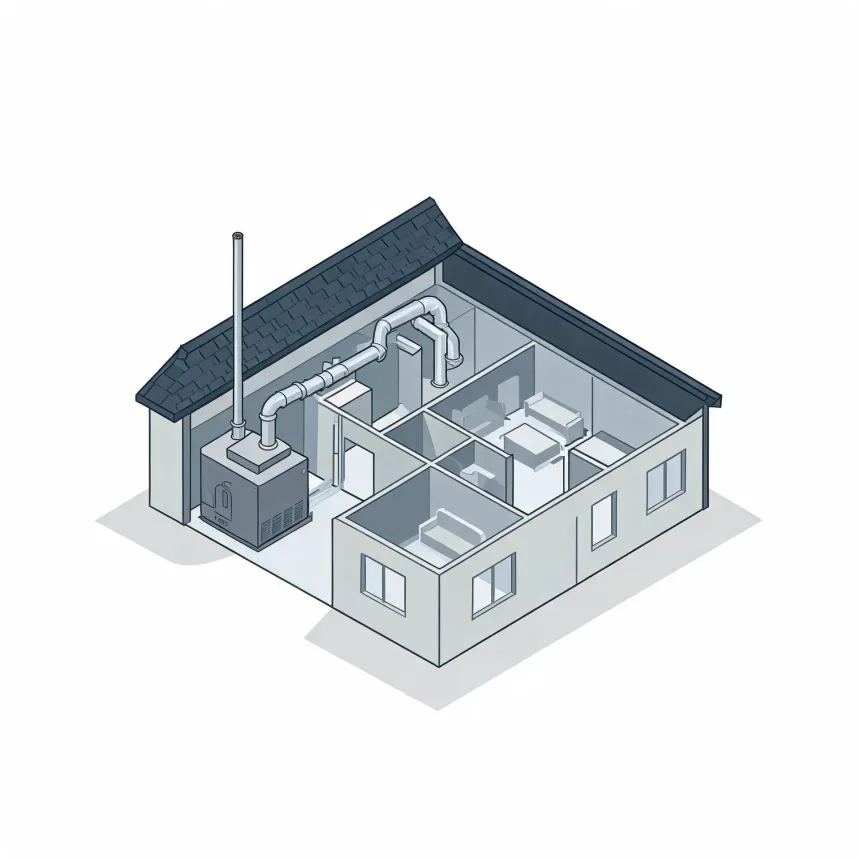
Isometric grayscale illustration of a cutaway single-story house showing interior rooms with furniture, plus an exterior furnace unit with a tall flue pipe and ducting running into the attic space.
Your furnace works hardest from November through March.

NOAA nClimDiv, 1991–2020 normals

Furnaces in Mableton only run about six months a year, November through April.

Six months of light use most years means a furnace acting up is more likely worn or neglected than worked to death, and that's usually worth fixing.

Half the furnaces here are younger than that

Half the homes here were built by 1990
Heat runs November through April
Winter nights average 34°F
Get it checked before NovemberFurnace season runs November through April here, and October is the month to catch trouble early.

The igniter is usually the first thing to go. It's a thin strip that heats up to light the gas, and that heating and cooling cycle every time the furnace runs eventually cracks it. A flame sensor gets a close second, not because it breaks but because it coats over with residue until it can't tell the burner is lit, and the furnace shuts itself down as a safety measure. Blower motors wear out after years of running, usually announcing themselves with a grinding or squealing sound before they quit for good. A dirty flame sensor can often be cleaned, but a cracked igniter has to be replaced. None of these are about how hard the furnace has been run. They're about parts that wear out in any furnace, used a little or a lot.

A newer furnace is almost always worth repairing

If your house went up in 1990 or later, your furnace is probably well within its working life. That makes a repair call the right first step, not a replacement. Get the actual problem diagnosed before you assume the worst.

Find a contractor
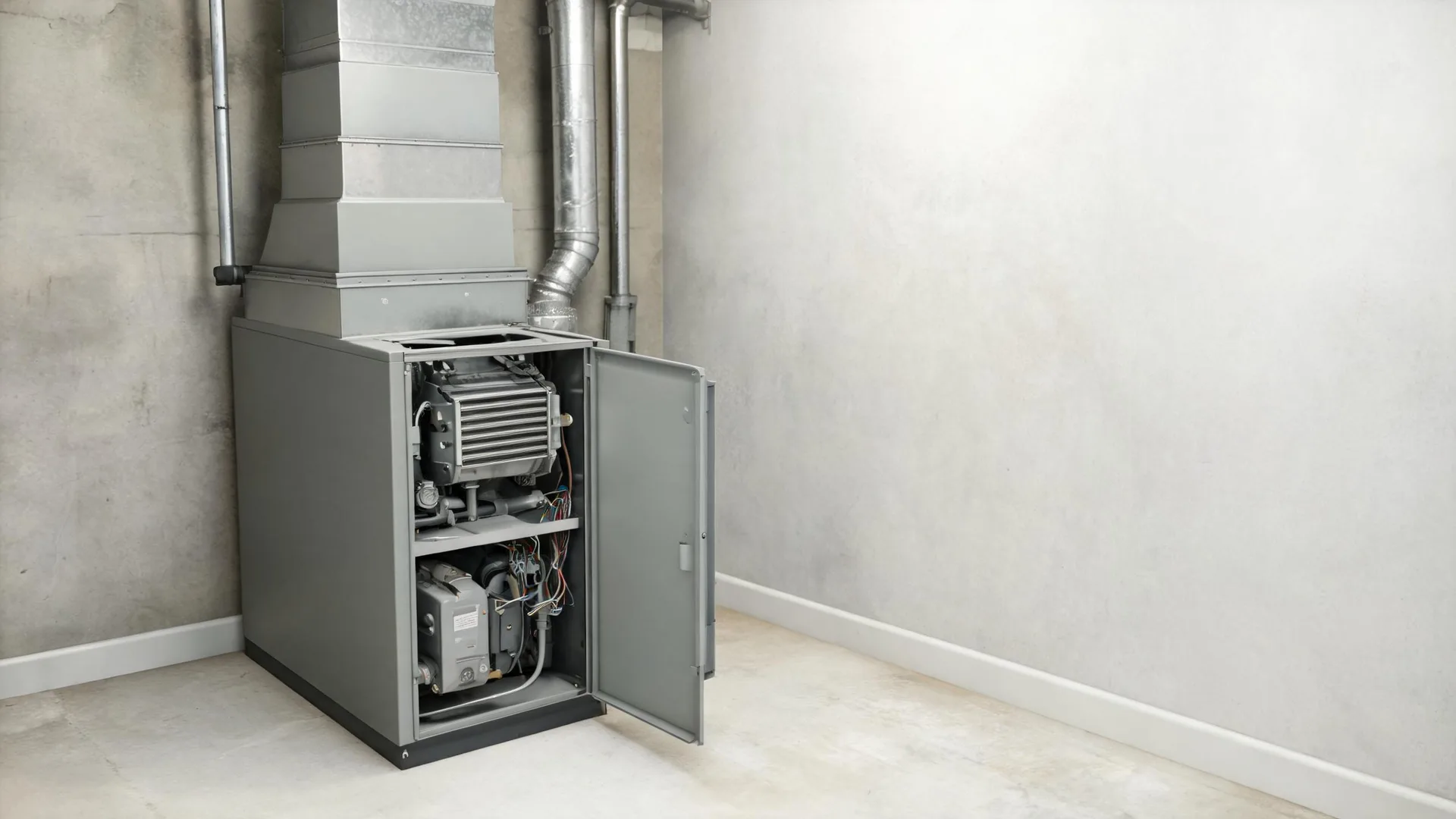
A gray residential gas furnace installed in an unfinished basement, surrounded by ductwork, a metal flue pipe, and a gas supply line.

Six months on, six months resting

November through April, then nothing until next winter. That six month gap is why a repair call usually makes more sense than jumping to replacement. If yours is struggling to light or short cycling, get the part identified before deciding it's done for good.

What a repair actually fixes

Most furnace trouble comes down to one part failing while everything else is fine. An igniter, a flame sensor, a pressure switch, a blower motor. Replacing the one part that quit costs far less than a whole new furnace, and the rest of the system, the heat exchanger, the gas valve, the ductwork, keeps doing its job like it always has.

When replacement is the honest answer

A furnace with a cracked heat exchanger needs to be replaced, not patched, because that part isn't sold on its own and isn't safe to run around. The other sign is a furnace that keeps coming back for new parts, year after year. At some point the repairs are just buying a little more time from a unit that's done. A tech who looks at the actual furnace can tell you which situation this is.

An unfinished concrete basement containing a gas furnace with sheet-metal ductwork, utility shelving, and exposed overhead joists.

A new furnace would cut about $130 a year off heating for a typical Cobb County home.

  • A new high-efficiency furnace$600 a year
  • An older furnace$730 a year

Estimates for a typical Cobb County home, compared with an older unit built to the previous federal minimum, from EIA household energy data, Georgia fuel prices and NOAA climate normals. Your home will differ.

Repair makes sense when one part has failed and the heat exchanger is sound.

Replacement makes sense when the heat exchanger is cracked or the furnace keeps needing parts.

A diagnostic visit starts before the panel comes off. The tech asks what the furnace was doing right before it quit, whether it tried to light and failed, ran and shut off on its own, or never made a sound at all. That alone narrows things down. Then the cover comes off and the tech watches it try to run, looking for a spark or glow at the igniter, listening to the blower, checking whether the burners catch and stay lit. Most of the time the furnace will show its problem within a few cycles. From there it's a handful of checks with a meter, pulling the flame sensor to look at it, maybe checking the pressure switch, until one part tests bad and the rest test fine. The furnace gets fixed based on what's actually wrong with it, not a guess.