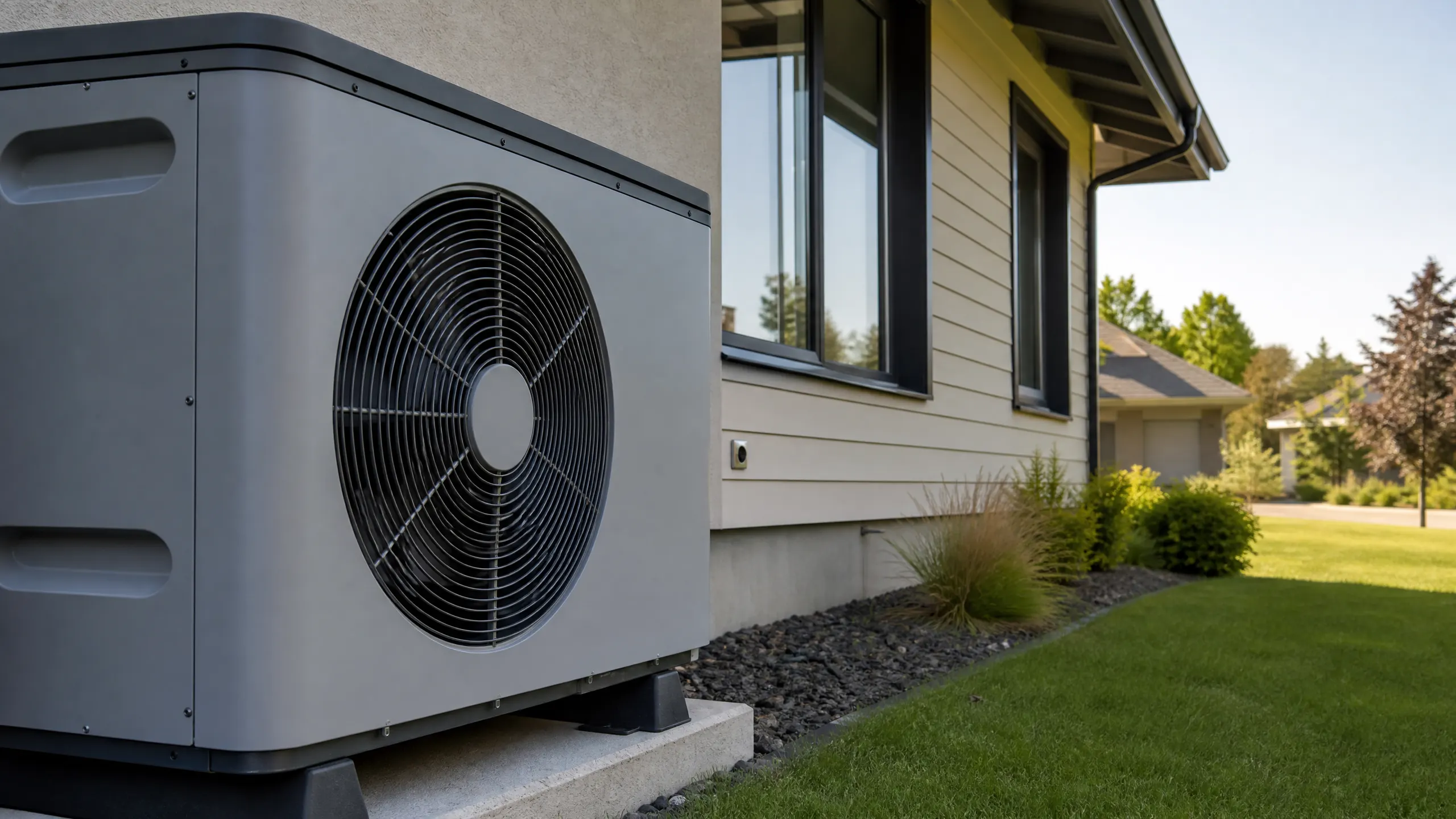
A grey outdoor HVAC unit mounted on a concrete pad beside the beige-sided exterior wall of a suburban house.

Heat Pump Repair in Stonecrest, GA

Tell us about the job

Takes about a minute. No obligation.

RepairHeat PumpDeKalb County, GA
Step 1 of 2

What ZIP code is the job in?

DeKalb County sees more than its share of storms

DeKalb County recorded 165 severe weather events between 2015 and 2024, including 132 cases of damaging wind, 14 hail events, 5 tornadoes and 9 tropical storms or hurricanes. A heat pump's outdoor unit sits outside through all of it, with coils and fan blades exposed to whatever comes through.

Georgia households lose power often, and a heat pump needs it

In 2024, 31% of Georgia households went at least a day without power. A heat pump cannot heat or cool without electricity running to it, and neither can the water heater in most homes here. When the power drops for a day, that's not a minor inconvenience, it's a house with no way to stay warm or cool until it comes back.

6 months
November through April, your system heats
5 months
May through September, it cools
35°F
the average winter night it heats against
88°F
the average summer afternoon it cools against
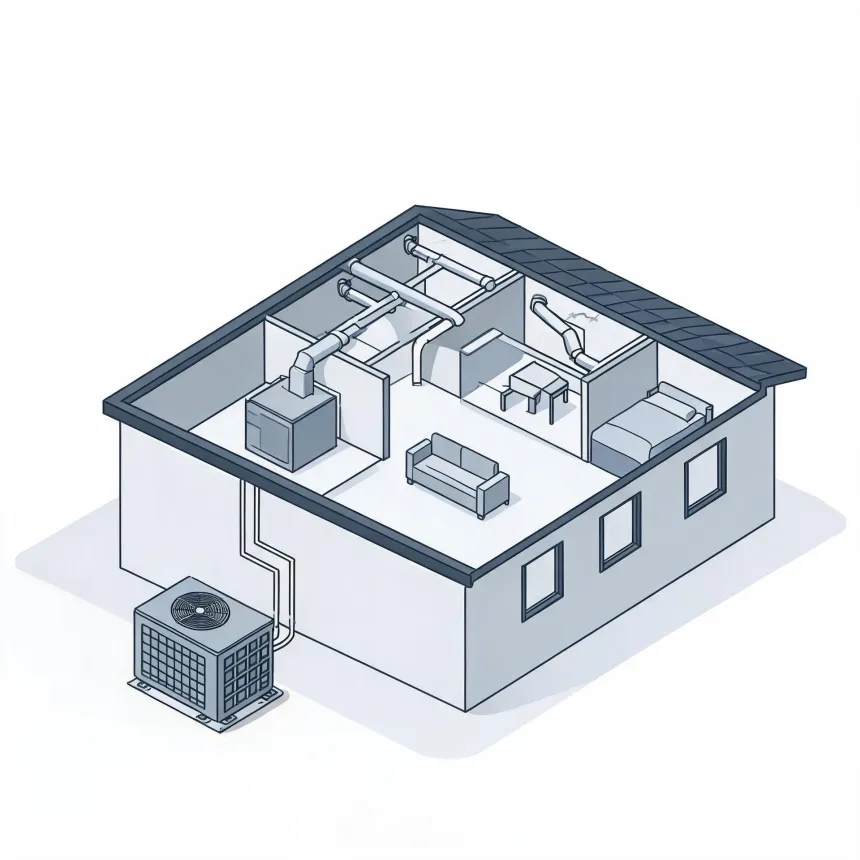
Isometric line illustration of a cutaway single-story house showing interior rooms with ducted air distribution, an indoor air handler, furniture, and an outdoor condenser unit connected by lines outside the wall.
Your system heats November through April and cools May through September.

NOAA nClimDiv, 1991–2020 normals

A heat pump that blows air but doesn't change the temperature isn't cooling or heating at all, no matter what the thermostat says.

If the outdoor unit kicks on and off every few minutes instead of running a steady cycle, something is already failing and it's worth getting looked at before it quits.

Half the homes here were built in 1984 or later, so the heat pump is probably still within its working life

Half the homes here were built by 1984
Climate zone 3A
Power here costs 15.79 cents per kilowatt-hour
Six months of heat, five of cooling, and no room for a weak partHeat runs November through April here, cooling runs May through September, and trouble usually shows up right as that load starts.

If your heat pump came with the house, that history is worth a quick check before you decide whether to repair it. A technician can look at the age and condition of the unit and tell you honestly if it's good for more years or close to the end. Most heat pumps in that position are worth fixing rather than replacing, since the parts that fail are usually specific ones like a capacitor or a control board, not the whole system. Given what the outdoor unit goes through here, storms and power loss included, a repair now protects a machine that still has working life left in it. Ask the technician what they find before you spend money assuming the worst.

If the outdoor unit took a hit, get it checked before you assume it's fine

If a storm came through recently, even one it seemed to shrug off, have the outdoor unit looked at. Hail and debris can bend fins or damage the fan without stopping the system outright, and a unit that still runs isn't the same as one that's undamaged.

Find a contractor
A person in a dark long-sleeved shirt and tan pants, seen from behind, carries a worn canvas tool bag up stone steps toward a blue front door with a shrub in a blue planter beside it.
A white mini-split heat pump outdoor unit mounted on a concrete pad beside a gray-sided house, surrounded by gravel and green shrubs.

Switching back and forth wears specific parts

A heat pump has no true off season. It switches between heating and cooling as the weather demands it, and the reversing valve that does that switching takes a hit every time it moves. Over years of cycling, the parts most likely to give out first are the ones that start the compressor: the capacitor and the contactor. A capacitor weakens slowly, so the unit starts harder and runs longer before it finally won't start at all. Contacts inside the contactor pit and burn with each cycle until they stick or stop conducting. Outside, the coil and fan blades sit exposed to whatever lands on them, and a coil caked with debris makes the whole system work harder to move the same heat. None of this is the system failing all at once. It's small parts wearing from steady use, and most of them give some warning before they quit for good.

Check the thermostat and the breaker first

Set the thermostat below room temperature in cooling mode, or above it in heat mode, and listen for the outdoor unit to start. If nothing happens anywhere in the house, check the breaker panel before assuming the heat pump itself is the problem. A tripped breaker or a thermostat with dead batteries looks exactly like a dead system, and both take a minute to rule out.

Look at the outdoor unit and the filter, then stop

Walk outside and check that the fan on top is spinning and nothing is piled against the sides of the unit. Pull the air filter and hold it up to light; if you can't see through it, replace it. Past that, leave the cover off and the wiring alone. Opening the cabinet or working on the refrigerant lines is a job for someone with the right gauges and training, not a homeowner with a screwdriver.

A heat pump that's struggling doesn't fail all at once. A capacitor that's weakening still starts the compressor, just harder each time, and that extra strain shortens the life of the compressor itself. A low refrigerant charge lets the system keep running while it works far past what it should to move the same heat, and that extra load falls on the compressor too. Ice on the outdoor coil blocks airflow, and running the unit through that ice buildup instead of shutting it down stresses the compressor further. The compressor is the most expensive part in the system, and it's also the part that can't be repaired, only replaced. A smaller problem caught early is a part swap. The same problem ignored for weeks can take the compressor down with it.

A diagnostic starts before any panel comes off. The technician asks what the system is doing, when it started, and whether it's heating, cooling, or both, since that narrows down whether the problem is electrical, mechanical, or refrigerant related. Gauges go on to check the charge, and a meter checks the capacitor and the windings in the compressor and fan motors, because a part can look fine and still be failing. The outdoor coil gets inspected for ice or buildup, and the reversing valve gets tested to see if it's actually switching when it's told to. Airflow gets checked too, since a return that isn't pulling enough air can mimic a refrigerant problem that isn't really there. By the end, the technician should be able to point to the one part causing the trouble and explain what happens if it's left alone.