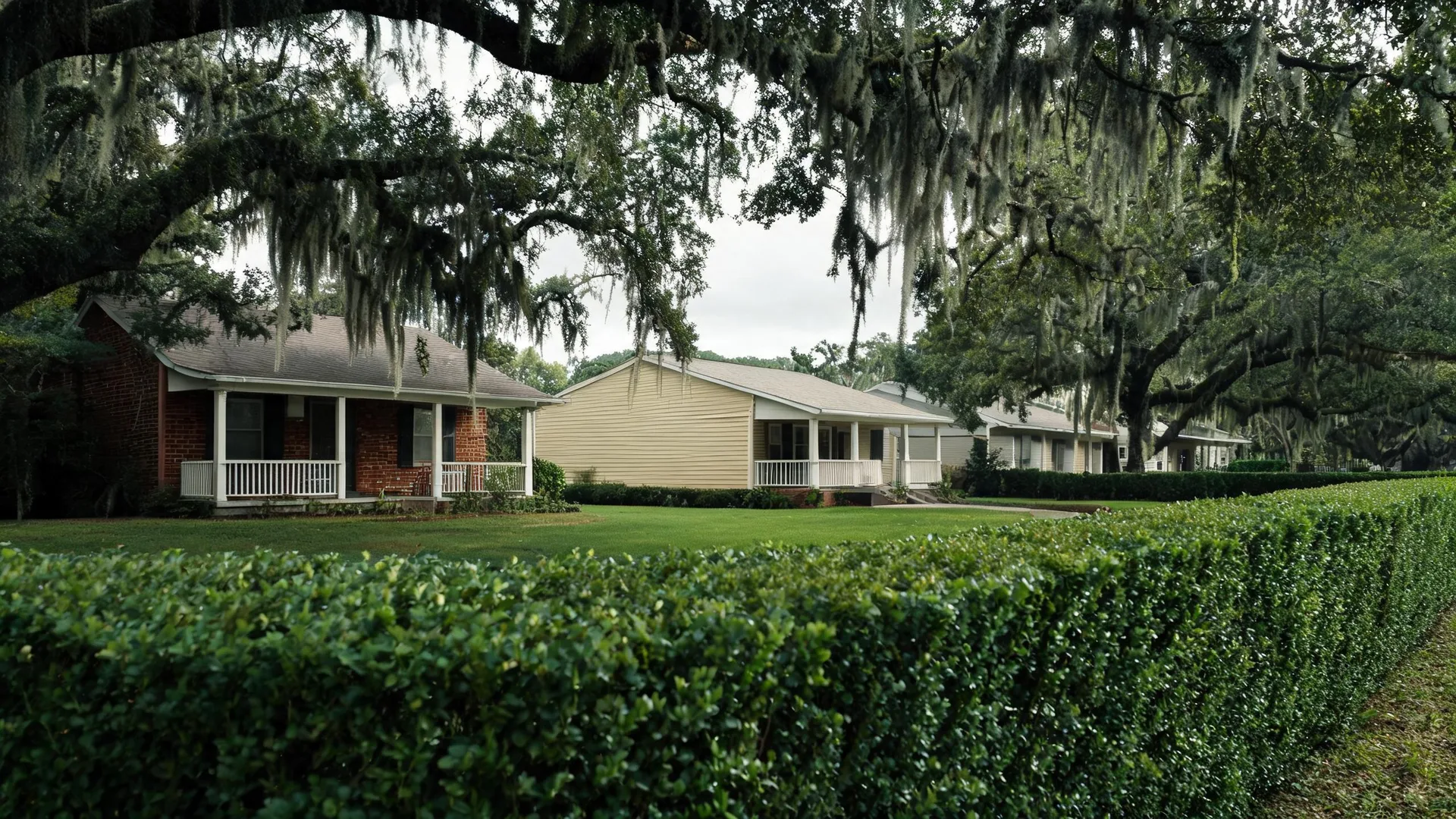
A row of single-story houses, one brick and others with pale siding and covered porches, behind a trimmed hedge and lawn, under large oak trees draped with Spanish moss.

Heat Pump Repair in Statesboro, GA

Tell us about the job

Takes about a minute. No obligation.

RepairHeat PumpBulloch County, GA
Step 1 of 2

What ZIP code is the job in?

Check the thermostat and the breaker first

Make sure the thermostat is set to heat or cool as needed and the temperature is actually set past room temperature. Then check the breaker panel for your outdoor unit and your air handler. A tripped breaker or a thermostat bumped into the wrong mode causes calls that have nothing to do with the heat pump itself.


Look at the outdoor unit and the filter

Walk outside and see if the outdoor unit is caked in ice, covered in leaves, or has something blocking airflow around it. Inside, pull the filter and hold it up to light. If you can't see through it, air can't move through it either, and that alone can make a heat pump run weak or trip out. These are worth ruling out before assuming the system itself has failed.

5 months
November through March, your system heats
6 months
May through October, it cools
39°F
the average winter night it heats against
91°F
the average summer afternoon it cools against
Isometric cutaway illustration of a single-story house showing interior ductwork, an indoor air handler and furnace unit, and an outdoor condenser connected by a line, on a white background.
Your system heats November through March and cools May through October.

NOAA nClimDiv, 1991–2020 normals

Bulloch County took damaging wind 135 times between 2015 and 2024.

A heat pump that rides out storms like that year after year wears parts down faster than the manual accounts for.

November is when a weak heat pump finally gives out

Cooling runs May through October
Heat runs November through March
135 damaging wind events from 2015 to 2024

Half the homes in Bulloch County were built in 1995 or later. If yours is one of them, the heat pump likely isn't that old either, even with the wear storms like these put on it. A system still within its working life is usually dealing with one failed part, not a breakdown of everything at once. A bad capacitor, a stuck reversing valve, a low charge from a slow leak. These get fixed, not replaced. Worth asking the contractor straight out whether the system came with the house, since that changes what the repair conversation should sound like.

Get it diagnosed properly

Your heat pump works hard here, and that's usually what's behind the problem. Have it diagnosed properly so the fix lasts.

Find a contractor
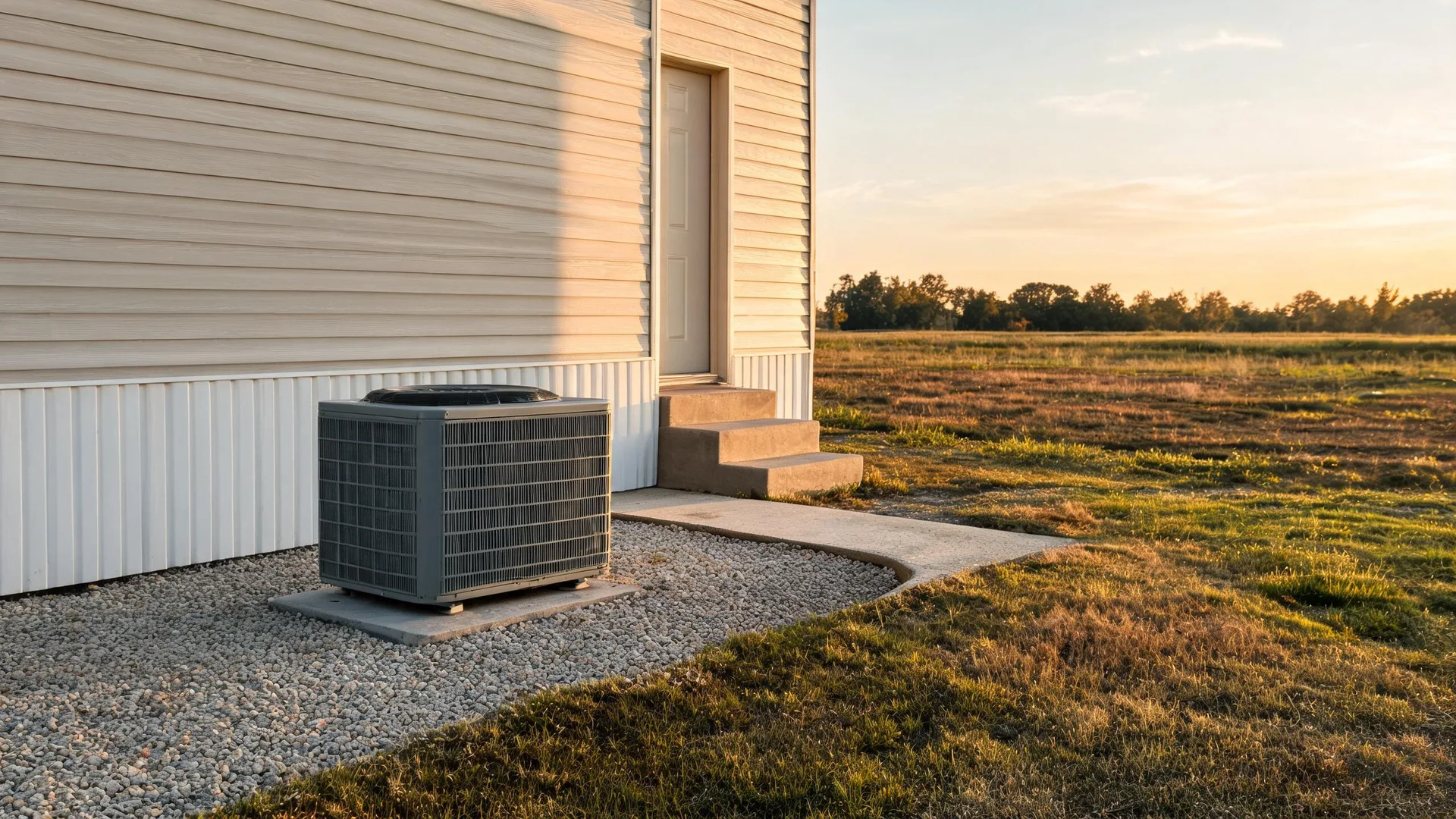
A residential heat pump outdoor unit mounted on a concrete pad next to a house with gray vinyl siding.

Years of storms, not one bad day

Ask the contractor to check the parts that take the brunt of a storm. The reversing valve, the contactor, the outdoor coil. A unit that's ridden out wind like this for years is more likely to have one of those worn down than to need replacing outright. A proper diagnosis finds which part gave out instead of guessing at the whole system.

The reversing valve sticks

The reversing valve switches a heat pump between heating and cooling. It can stick in one position from a worn coil inside it or built-up debris, and when it does the system keeps running but stops switching modes. You'll feel it as a unit that blows cold air when it should heat, or won't shut off the way it should.

Refrigerant charge runs low

A heat pump doesn't use up refrigerant over time. If the charge is low, it's leaking out somewhere, usually at a fitting, a coil, or a line joint. A low charge makes the system run longer to reach the same temperature and can ice up the outdoor coil. Topping it off without finding the leak just means doing it again later.

A heat pump that's struggling doesn't fix itself by staying on. If the charge is low, a running system keeps pulling warm, moist air around a coil that's already too cold. That coil ices over faster the longer it runs, and once ice builds up, airflow drops further, so the system works harder to move less air. A stuck reversing valve causes a different kind of harm. The compressor keeps cycling while the system fights itself, trying to heat and cool at the same time, and that strain lands on parts that were never built for it. Shutting the system off when something's clearly wrong gives it a chance to sit as it is instead of getting worse. Calling it in sooner usually means fixing one part instead of several.

A repair makes sense when one part failed and everything else still works the way it should. A replacement makes more sense when the compressor itself is the problem, since that part sits at the center of the whole system and nothing around it matters much once it's gone. Age matters less than what's actually broken. A unit that's had a repair now and then and is otherwise sound is worth fixing again. A unit where every service call turns up something new is telling you the parts are failing together, not one at a time. The honest way to tell the difference is a proper diagnosis, not a guess based on how the system sounds or how old it looks.