





A row of single-story cottages, one brick and the others light gray siding with covered porches, behind a trimmed hedge and lawn, under large oak branches draped with Spanish moss.

Heat Pump Repair in Rome, GA

Tell us about the job

Takes about a minute. No obligation.

RepairHeat PumpFloyd County, GA
Step 1 of 2

What ZIP code is the job in?

Before you call anyone, check the thermostat is set to heat and the setpoint is actually above room temperature. Go outside and look at the outdoor unit. If ice is covering the coil or the fan isn't spinning, that tells a tech something useful before they even arrive. Check your breaker panel too, since a tripped breaker will shut the whole system down and looks like a bigger problem than it is. Walk around the house and make sure no vents are blocked by furniture or rugs, since restricted airflow can make a heat pump struggle even when nothing is actually broken. Change the air filter if you haven't in a while. A clogged filter starves the system of airflow and can cause problems that look like a failing part.

7 months
October through April, your system heats
5 months
May through September, it cools
34°F
the average winter night it heats against
89°F
the average summer afternoon it cools against
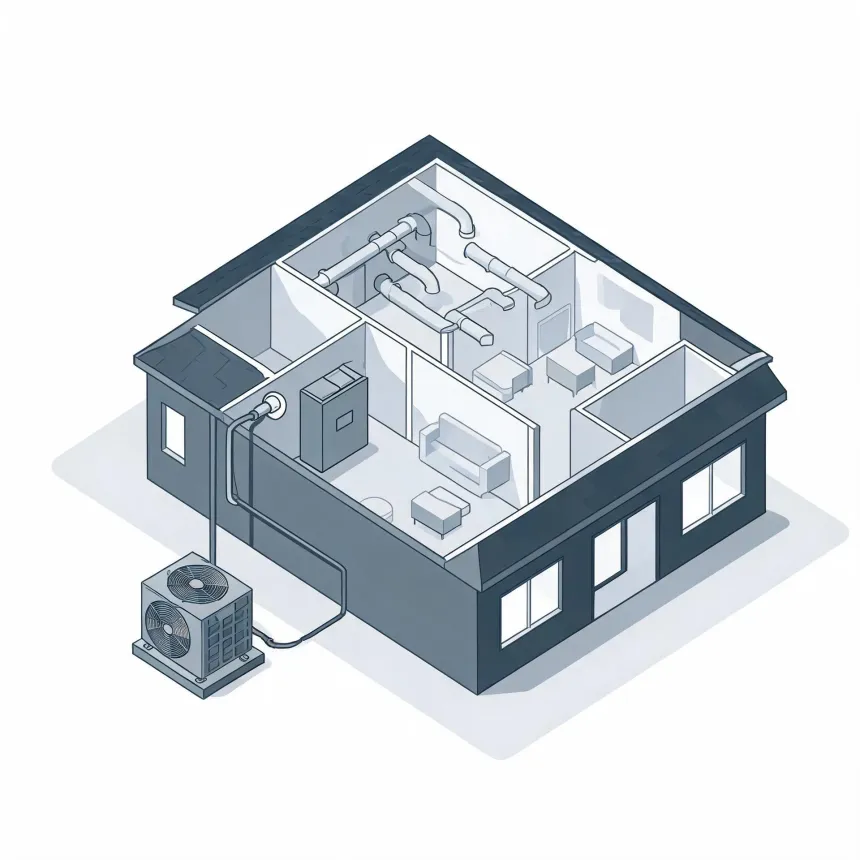
Isometric line illustration of a cutaway single-story house showing interior rooms, ceiling ductwork and an indoor air handler, connected by a line to an outdoor condenser unit on a pad beside the building.
Your system heats October through April and cools May through September.

NOAA nClimDiv, 1991–2020 normals

A tech checks refrigerant pressure, static pressure and the reversing valve before touching anything else.

That order matters because replacing a part before you know what's actually wrong just adds a cost that didn't fix the problem.

Storms here are frequent enough that your outdoor unit has probably taken a hit

115 severe weather events from 2015 to 2024
31% of homes statewide lost power a day or more in 2024
95 damaging wind events from 2015 to 2024
Built to Take a Hit, Not Just the WeatherHeat here runs October through April, and the overnight low averages 34°F across December and January.

A heat pump that's icing up or short cycling will keep running if you let it, but that doesn't mean it should. Ice on the coil blocks airflow, and the system responds by running longer to compensate, which only builds more ice. A reversing valve that's starting to stick will wear faster every time it's forced through a cycle it can't complete cleanly. Low refrigerant charge makes the compressor work against pressures it wasn't built for, and compressors don't recover from that kind of strain. Letting the system idle along on a worn capacitor or a failing contactor usually ends with a dead compressor instead of a cheap part swap. The earlier a tech sees it, the more likely the fix is small.

Get it checked after a storm

Storms hit hard here. If the outdoor unit took hail or debris, have it checked even if it still runs.

Find a contractor
A gray heat pump outdoor unit mounted on a concrete pad next to a residential house with lap siding and stone accents.

What It Sounds Like When Something's Wrong

A heat pump that runs for months without a break doesn't get much chance to show you something's wrong. It just works harder, quietly, until it can't keep up. Short cycling is one of the first signs worth noticing: the system kicks on, runs a few minutes, shuts off, then starts again before the house has caught up. That often means the compressor is protecting itself from a pressure problem or a sensor is misreading the temperature. Warm air coming out of the vents when it's set to heat usually points to the reversing valve, since that's the part deciding whether the system heats or cools. A hissing or bubbling sound near the lines can mean refrigerant escaping, and that's worth a call right away instead of waiting to see if it gets worse. If the outdoor fan is spinning but the unit doesn't seem to be moving heat either direction, the compressor itself may be the problem. None of these fix themselves, and all of them get harder to live with the longer they run.

A unit that still runs can still be damaged

Hail and wind-blown debris can bend the fins on the outdoor coil or crack the fan blade without stopping the unit from turning on. A heat pump can run for weeks on a damaged coil before it loses enough airflow to matter, and by then the compressor has been working harder the whole time.
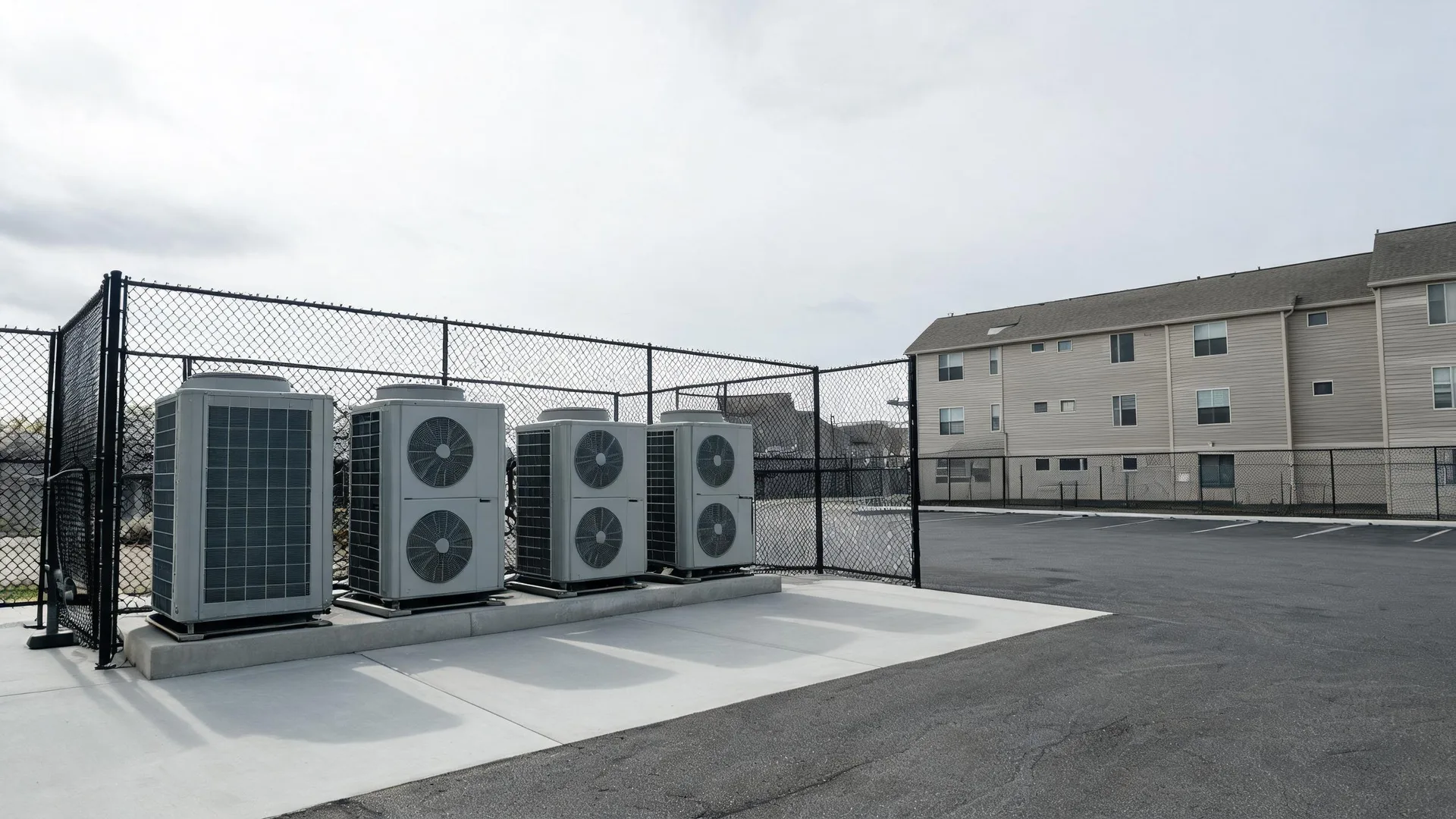
What a tech checks after a storm

A tech looks at the coil fins for dents, checks the fan blade for cracks or imbalance, and makes sure nothing punched through the cabinet or the line set. None of that shows up on a thermostat reading, which is why it's worth a look even when the system seems fine.

Most heat pump failures start small and get worse with time, not all at once. A capacitor weakens and the compressor starts pulling harder to get going, which wears the compressor too. A contactor pits and sticks from years of cycling on and off, and eventually it won't close reliably. Refrigerant leaks out slowly through a pinhole in the line, and the compressor runs hotter and harder the whole time the charge is low. Outdoor fan motors wear out from running constantly, and once the fan slows down the coil can't shed heat the way it needs to. Dirty coils cause a lot of this too, since a coil caked with dirt or lint makes everything downstream work harder than it should.

A heat pump nearing the end of its life doesn't always give you a clean signal, and that's what makes this decision hard. If the compressor is still good and what failed is a capacitor, a contactor, or a fan motor, replacing that part gets you back to where you were. But a system that's needed a few repairs in close succession is usually telling you the compressor is on borrowed time, even if it hasn't failed yet. Age matters more than it seems like it should, since the parts around the compressor wear down the same amount of time the compressor does, so a repair now often just buys time until the next part goes. The condition of the coil factors in too. A coil that's been running dirty or damaged for a long stretch has already put extra strain on the compressor, even if the compressor hasn't quit yet. When a tech lays out the options, the honest answer depends on what broke, what else is showing wear, and whether the repair fixes the actual problem or just the symptom in front of you.