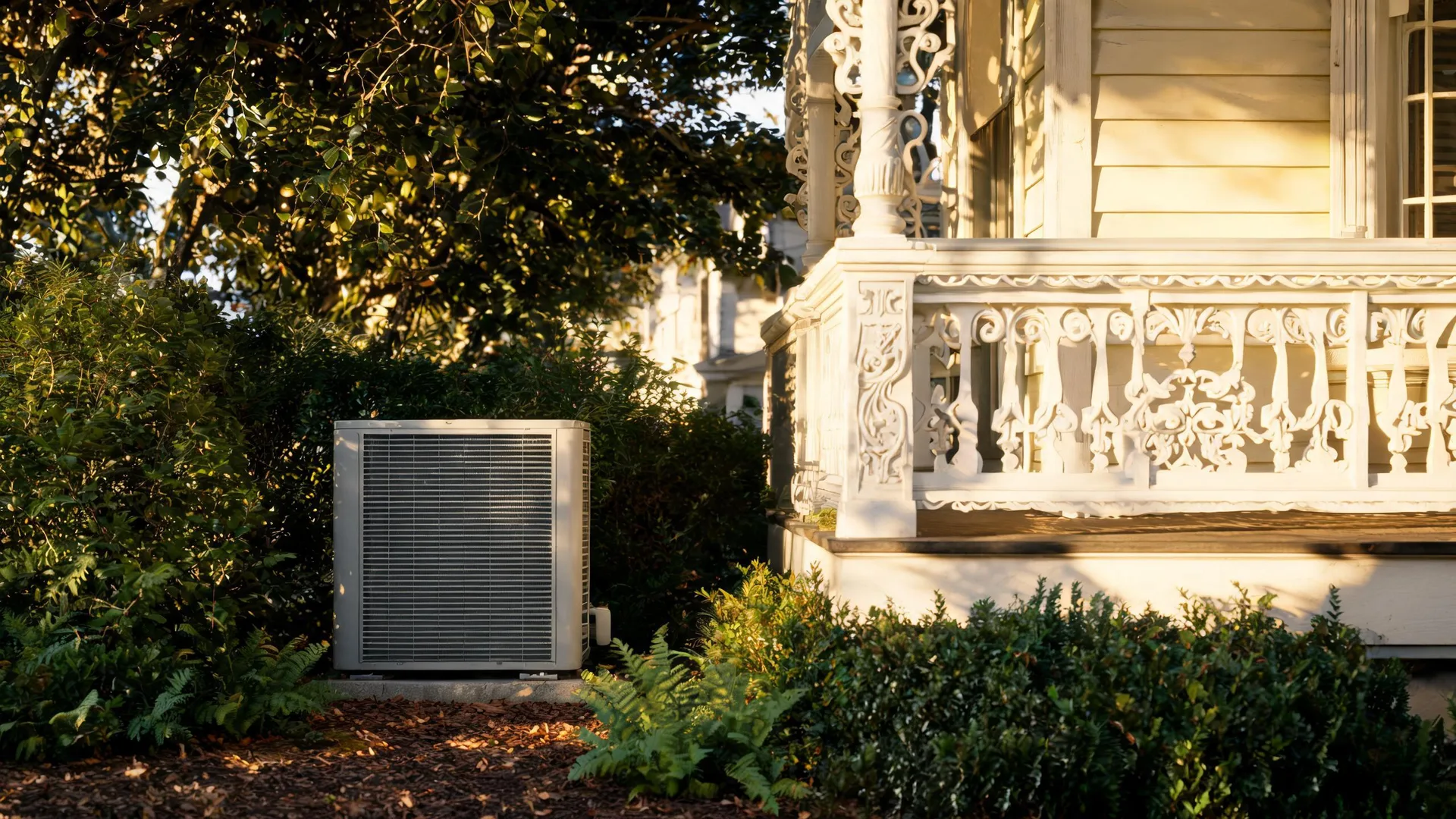
An outdoor air conditioning condenser unit mounted on a concrete pad in front of a single-story suburban house.

Heat Pump Repair in Rincon, GA

Tell us about the job

Takes about a minute. No obligation.

RepairHeat PumpEffingham County, GA
Step 1 of 2

What ZIP code is the job in?

What's failing matters more than the unit's age

A capacitor or contactor is a small, routine part, and replacing one makes sense almost no matter how old the heat pump is. A compressor or a reversing valve is a different story. Both sit deep inside the system, and replacing either can cost close to what a new unit runs.


A pattern of repairs says more than one breakdown

One repair is just a repair. But a heat pump that's needed attention every season for a few years running is usually wearing out across the board, not just in whatever part happens to fail next. A tech looking at that history can tell you whether you're paying to keep patching a system that's on its way out.

5 months
November through March, your system heats
6 months
May through October, it cools
39°F
the average winter night it heats against
91°F
the average summer afternoon it cools against
Isometric illustration of a cutaway single-family house showing interior ductwork and an air handler, with an outdoor condenser unit connected by lines along the exterior wall.
Your system heats November through March and cools May through October.

NOAA nClimDiv, 1991–2020 normals

Heat pumps in Rincon switch over to heating in November.

October is the month to get a repair looked at, before the first cold stretch finds the weak part.

Built recently, running strongHalf the homes in Effingham County were built in 2001 or later.

Effingham County logged 161 severe weather events between 2015 and 2024, most of them damaging wind. Your heat pump's outdoor unit sits through all of it, with the coil fins and fan exposed to whatever blows through. Hail can dent the fins enough to cut airflow without stopping the unit outright, so it keeps running while it works harder than it should. Wind-driven debris does similar damage, often out of sight on the back or underside of the coil. If a storm has come through since you last had it looked at, it's worth having a tech check the coil and fan even if the heat pump seems fine. Power cuts add to it too, since a heat pump that cycles off hard in a surge isn't always one that comes back right.

Get the real cause checked before you pay for a fix

Wind has hit this county 116 times between 2015 and 2024, and that outdoor unit takes the brunt of it standing outside. A dented coil or a bent fan blade can leave a heat pump running rough for a long time before it quits. Worth having someone diagnose it properly now, so whatever gets fixed actually holds.

Find a contractor
A gray air-source heat pump mounted on a concrete pad next to a house with gray vinyl siding, surrounded by gravel and flanked by green shrubs and white hydrangea flowers.

Age isn't the question here

If the heat pump came with the house, parts are rated for years of use still ahead of it. That changes what a repair call is for. A tech isn't deciding whether the unit is worth saving, just finding what failed and fixing that part.

The reversing valve sticks before it breaks

The reversing valve switches a heat pump between heating and cooling, and it tends to fail by sticking partway rather than quitting outright. A sign of this is the unit blowing cold air when it should be heating, or running long without reaching the set temperature. Catching it early is a valve repair. Ignored, it usually ends with the compressor working against a system stuck in the wrong mode.

Low refrigerant means a leak, not just a refill

A heat pump doesn't use up refrigerant the way a car uses gas. If the charge is low, it left through a leak somewhere in the lines or the coil. Topping off the charge without finding the leak just means the same call again before long, and a compressor run low on charge for too long can fail outright.

A heat pump that's struggling usually tells you before it quits outright. It might run long cycles without ever bringing the house to temperature, or blow air that feels cooler than it should for a system set to heat. Short cycling, where it kicks on and off every few minutes, is another one worth paying attention to, since it points to a control issue or a refrigerant problem rather than something that'll sort itself out. A hissing or bubbling sound near the lines usually means refrigerant escaping somewhere it shouldn't. Ice forming on the outdoor coil when it shouldn't be there, or the unit struggling to defrost itself, both point to a problem with the reversing valve or the defrost control. None of these mean the heat pump is done for, but all of them mean something specific has gone wrong and is worth having a tech trace before it takes another part down with it.

Before calling anyone, a few things are worth a look. Check the thermostat is set to heat and the temperature is actually above room temperature, since a setting bumped by accident looks exactly like a broken system. Go to the breaker panel and see if the heat pump's breaker has tripped. Outside, check that the outdoor unit isn't blocked by leaves, a fallen branch, or anything piled against it, since restricted airflow around the coil can make a heat pump labor or shut down on its own. Pull the air filter and hold it up to the light. If you can't see through it, swap it or clean it, because a clogged filter chokes airflow the same way a blocked outdoor unit does. If the outdoor unit is caked in ice beyond a light morning frost, don't chip at it or run a hose on it. Turn the system off and let a tech look at why it's icing. None of this tells you what's actually wrong inside the system, but it rules out the simple stuff before anyone drives out.