Half the homes here were built in 2002 or later
Jackson County splits evenly down the middle, half the homes built in 2002 or earlier and half in 2002 or later. A heat pump that came with one of the newer houses hasn't had decades to wear down.
Takes about a minute. No obligation.
Jackson County splits evenly down the middle, half the homes built in 2002 or earlier and half in 2002 or later. A heat pump that came with one of the newer houses hasn't had decades to wear down.
When the equipment still has years left in it, fixing the part that failed is the straightforward answer. Age only becomes a real question once a system is well past what's typical for a house like yours.

NOAA nClimDiv, 1991–2020 normals
A heat pump runs the compressor to heat and cool both, so it works harder than a furnace or an AC ever does alone.
That gives the compressor and the reversing valve more hours of wear each year, so they're usually the first places a repair starts.



November is when heat kicks on here, and that first cold snap is when a weak part finally gets found out. The reversing valve or a contactor might have been marginal all through the months the system sat idle, and nothing showed it until the heat pump had to run for hours straight. Same with May. A capacitor that barely held on last September can fail in the first real week of cooling. If your heat pump is acting up right at the start of one of these runs, that timing isn't a coincidence, it's the load finding the weak spot. Getting it looked at early in the season, rather than waiting, keeps one bad part from taking down the compressor with it.
A heat pump in Jackson County isn't working against extreme heat the way one in a harsher climate would. That means a failed part here is more often an isolated problem, not a sign the whole system is giving out. Worth getting it fixed rather than replaced.
Find a contractor
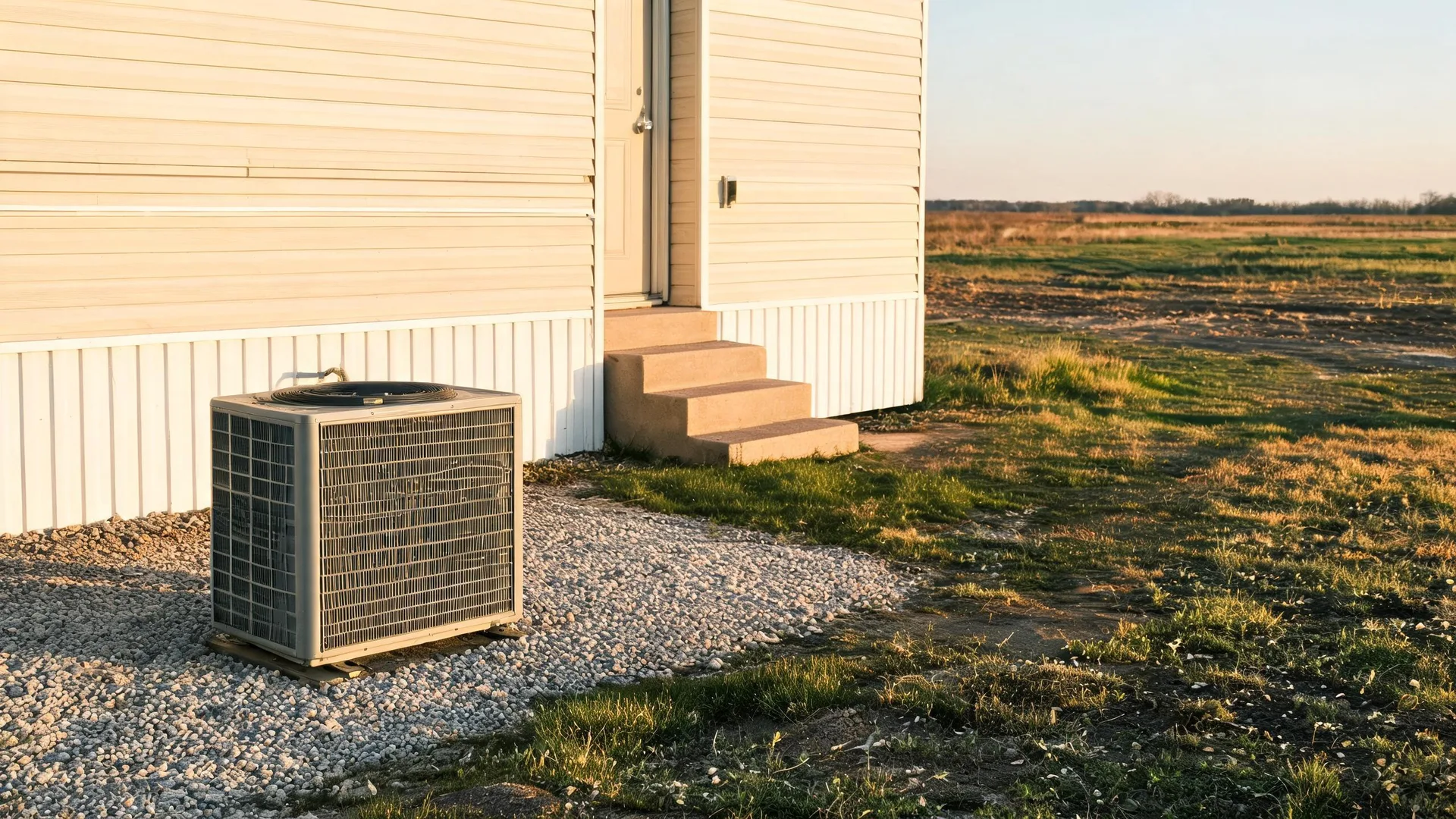
If the paperwork on your house shows 2002 or later, ask the contractor to confirm the install date against the unit itself. A system that age, in a climate that doesn't push the compressor hard, usually has more working years left than the failed part suggests. That's worth knowing before anyone talks about replacing it instead of fixing it. Some houses here are older, and a handful of homes are mobile homes that may have had equipment swapped out more than once, so the paperwork and the unit don't always tell the same story. Worth checking both before deciding anything.
A heat pump low on charge makes the compressor work harder to move the same heat. Keep running it that way and the compressor runs hotter than it was built to. A slow leak found early is a repair. Left running for weeks, it can take the compressor with it, and that's a different job entirely.
A weak capacitor makes the compressor or fan motor start harder than it should. A stuck reversing valve forces the system to fight itself. These parts are cheap next to a compressor. Run the system on a bad one long enough and the strain lands on whatever it's connected to.
Most calls start with something simple. The heat pump runs but the air coming out doesn't feel warm, or doesn't feel cold enough. Sometimes it short cycles, kicking on and off every few minutes instead of running a full stretch. Sometimes it won't switch between heating and cooling at all, stuck doing one job when you asked for the other. Ice building up on the outdoor unit outside of a normal defrost cycle is worth a call, not a wait and see. So is a hissing or bubbling sound near the lines, or a burning smell from the indoor unit. None of these mean the same thing every time, but none of them fix themselves either.
Repair versus replacement comes down to what actually failed and what it would take to fix. A capacitor, a contactor, a blower motor, even a reversing valve, these are contained problems. The part gets swapped and the system goes back to doing its job the way it did before. The compressor is different. It's the one part that's expensive enough and central enough that a tech will stop and think before recommending work on it, especially if it's failing on its own rather than because something else took it down first. The question underneath all of it is whether the system has been carrying damage quietly for a while or whether this is just the one part that gave out. A unit that's been low on refrigerant for months, or short cycling for a season before anyone called, has usually put strain on more than the part that finally broke. A unit that was running fine until one component quit outright is a much simpler case. Age matters less than people think, and a working system shouldn't be replaced just because it's not new.