White plantation-style houses with wraparound porches lit at night, surrounded by Spanish moss-draped live oak trees.

Heat Pump Repair in Griffin, GA

Tell us about the job

Takes about a minute. No obligation.

RepairHeat PumpSpalding County, GA
Step 1 of 2

What ZIP code is the job in?

Weather here is hard on outdoor units

Spalding County logged 110 severe weather events between 2015 and 2024, most of it damaging wind, plus tornadoes and a handful of hail events. A heat pump's outdoor unit sits through all of it, with the coil fins and fan exposed to whatever blows through.

Power loss hits heat pumps hardest

Nearly a third of Georgia households went at least a day without power in 2024. A heat pump runs on electricity with nothing like a standing pilot to fall back on, so an outage takes your heat and your hot water with it until the power comes back.

5 months
November through March, your system heats
5 months
May through September, it cools
36°F
the average winter night it heats against
89°F
the average summer afternoon it cools against
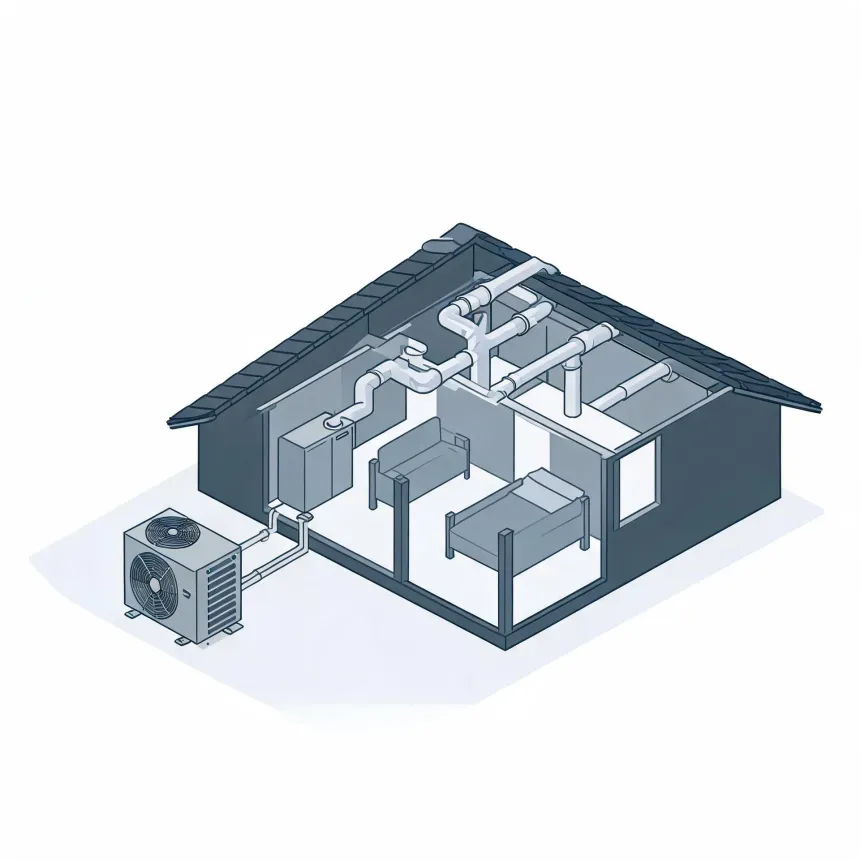
Isometric cutaway illustration of a house showing interior ductwork, an indoor air handler, and beds, with an outdoor condenser unit connected by lines outside the wall.
Your system heats November through March and cools May through September.

NOAA nClimDiv, 1991–2020 normals

Your heat pump sits idle from May through October, doing nothing but cooling work.

November's first cold snap puts a full heating load on a part that has not run in months, which is why repair calls cluster right when heat starts.

That working life is worth protecting with a repair rather than a replacement, when the failed part allows for it. A capacitor or contactor swap on a system with years ahead of it is the straightforward move. Mobile homes make up about 6% of the housing here, and the equipment behind the wall on one of those can differ from what's in a site-built house, so it's worth telling the tech which kind of home you have before they look at the unit. Either way, the question is the same. Does the system have enough life left to make the repair worth doing.

If this storm season left a mark on your outdoor unit, get it looked at

If your heat pump has been through wind or hail and something seems off, a straight visit isn't a bad idea. A bent fin or a cracked fan blade doesn't always stop the unit from running, but it can drag on the system until something else gives out.

Find a contractor
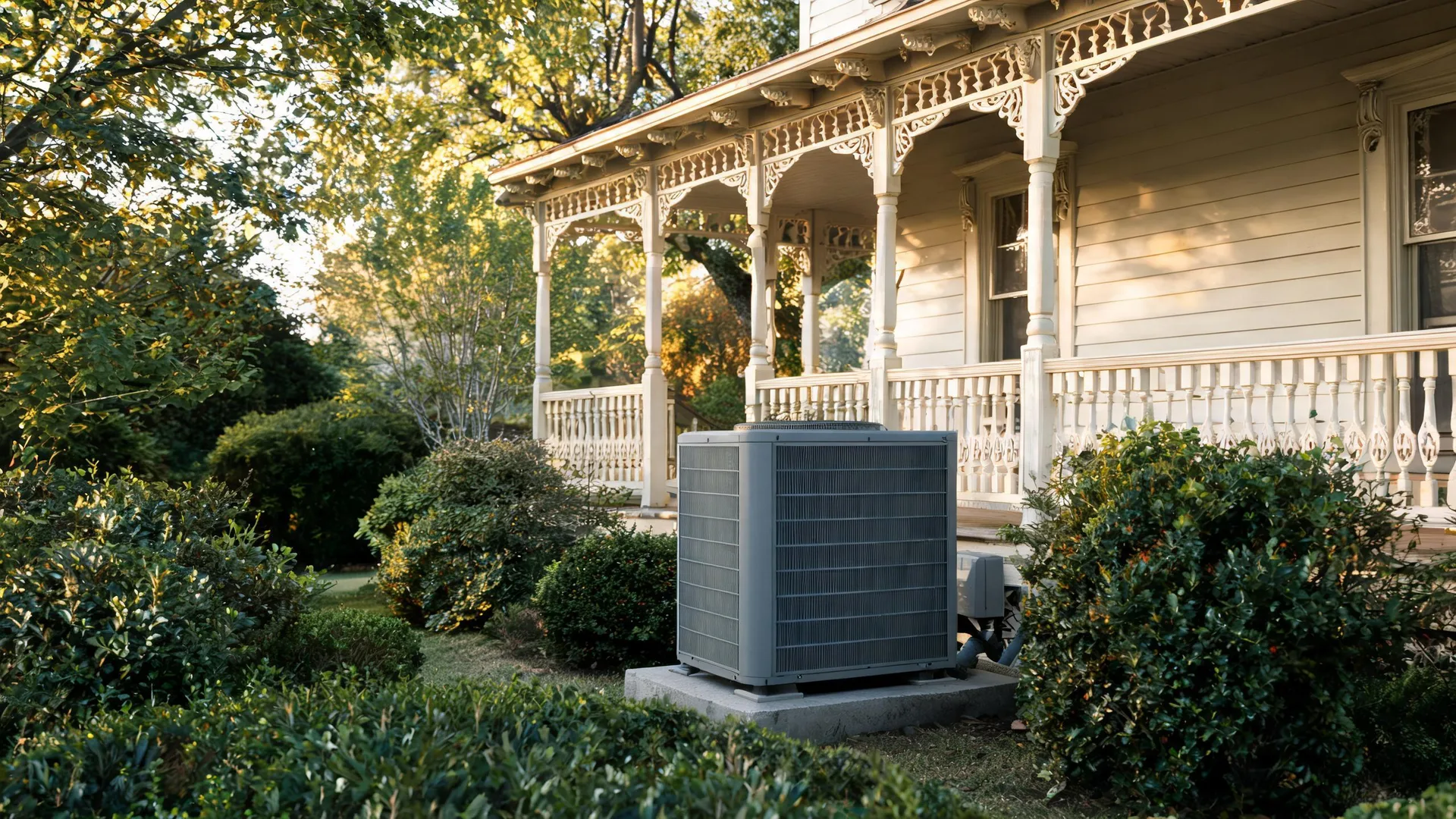
A gray outdoor HVAC unit mounted on a concrete pad beside a house with gray lap siding and a stone foundation.

A newer system has more life to protect

Half the homes in Spalding County were built in 1985 or later. If yours is one of them, your heat pump likely isn't that old either. A system installed with a newer build still has plenty of working life in it, which makes repair the straightforward call when something goes wrong. Worth checking when your unit went in, especially if it came with the house.

Check the simple things first

Look at the thermostat before anything else. Make sure it's set to heat and the temperature is actually above room temperature. Check the breaker panel for a tripped breaker on either the indoor or outdoor unit. Pull the filter and hold it up to a light. If you can't see light through it, that's enough to choke airflow and cause real problems down the line.

What tells you to stop and call

Ice building up on the outdoor coil beyond a light morning frost, a burning smell from the indoor unit, or the system running constantly without raising the temperature all mean something inside needs a trained eye. So does a breaker that trips again after you reset it. Those aren't things to keep testing on your own, and running the system through them can turn a simple repair into a bigger one.

A heat pump in trouble usually tells you in the air coming out of the vents before anything else happens. Heat that feels cool to the hand, or that cycles on and off in short bursts, points to a system struggling to move heat rather than one that's quit outright. Outside, listen for a compressor that hums but doesn't start, or a fan that spins slower than it should. A hissing sound near the lines can mean refrigerant escaping, which also shows up as the unit running longer and longer to do the same job. Rattling that wasn't there before is usually a loose panel or a motor mount working itself free, not something that settles down on its own. Any of these is worth a call before it turns into a unit that won't run at all.

Age isn't the only thing that decides whether a heat pump is worth fixing. What broke matters just as much. A failed capacitor, a bad contactor, a thermostat that's stopped talking to the unit. Those are inexpensive parts that any tech can swap out in one visit, and afterward the system runs like nothing happened. A compressor on its way out is a different matter. It's the most expensive part in the unit, and a compressor failure can mean the system ran low on refrigerant for a long time before anyone noticed. If a tech tells you the compressor is going, that's the point to ask what else on the unit is aging out, not just about this one repair.