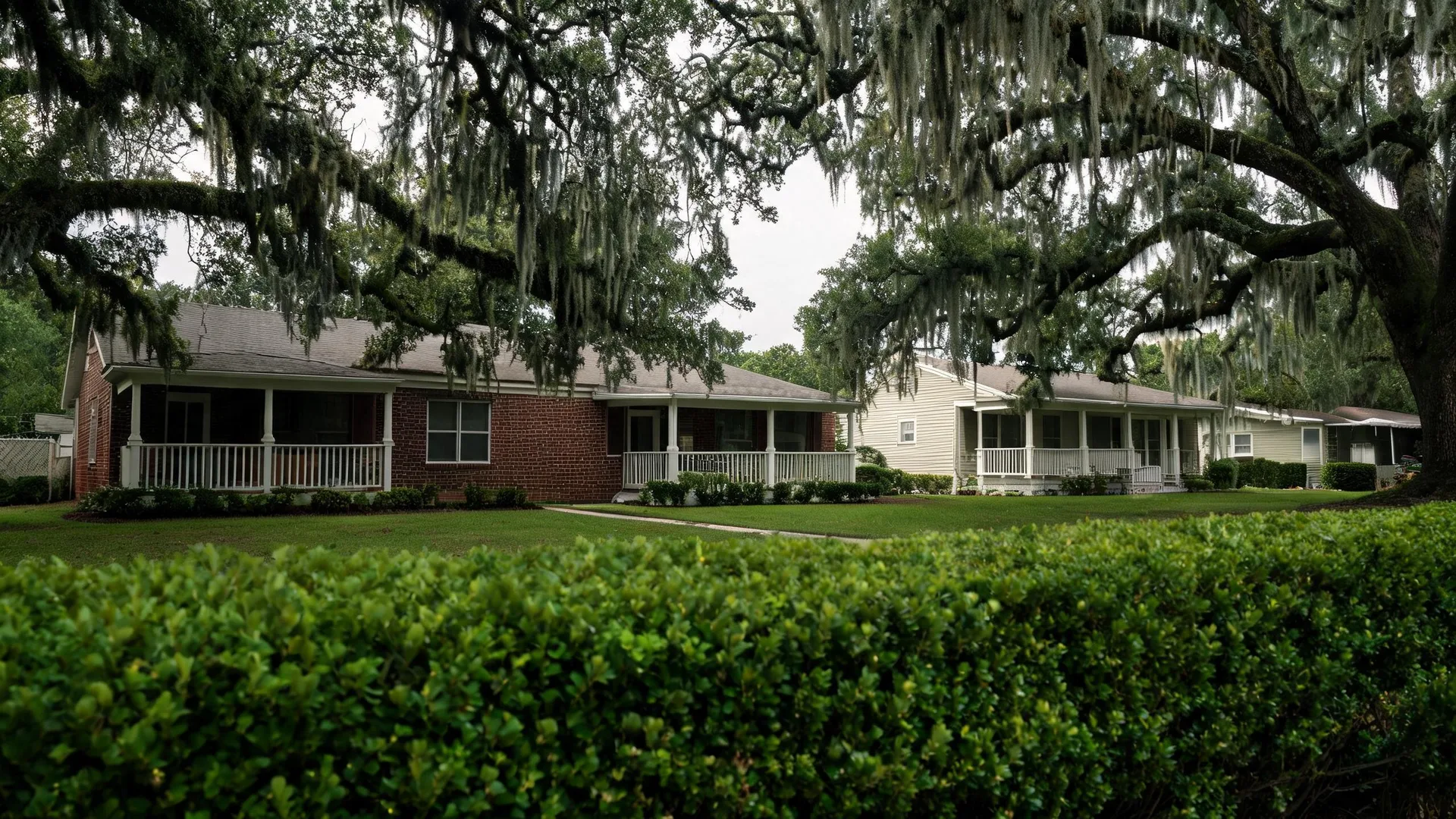
A row of single-story houses with covered porches, the nearest clad in red brick, seen behind a trimmed hedge and lawn beneath large moss-draped oak branches.

Heat Pump Repair in Columbus, GA

Tell us about the job

Takes about a minute. No obligation.

RepairHeat PumpMuscogee County, GA
Step 1 of 2

What ZIP code is the job in?

The air here holds more moisture

Summer dew points in Muscogee County average 69°F through June, July and August, higher than most of the country sees. A heat pump has to pull that extra moisture out of the air on top of cooling it, which means longer run times all summer.


Longer run times wear parts down sooner

A compressor or fan motor that runs long hours all summer logs more cycles than the same unit would somewhere drier. That extra work is often why a part fails earlier than you'd expect, not a sign the unit was installed wrong.

5 months
November through March, your system heats
5 months
May through September, it cools
37°F
the average winter night it heats against
90°F
the average summer afternoon it cools against
Isometric line illustration of a cutaway single-story house showing interior rooms with ducted air distribution, an indoor air handler, furniture, and an outdoor condenser unit connected by lines outside the wall.
Your system heats November through March and cools May through September.

NOAA nClimDiv, 1991–2020 normals

Heat here switches over in May and November, right when the first real load hits the system.

A heat pump that limped through March on a weak part usually fails in the first hot week of May, not before.

Muscogee County sees 74 severe weather events a decade, and the outdoor unit sits outside for all of them

74 severe weather events from 2015 to 2024
31% of homes statewide lost power a day or more in 2024
51 damaging wind events from 2015 to 2024

If a storm came through recently, walk out and look at the outdoor unit before you decide the noise or the short cycling is nothing. Hail dents the thin aluminum fins on the coil, and bent fins block airflow even when the fan still spins fine. Wind-blown branches and grit do the same thing from the side. A unit that took a hit can keep running for weeks and then trip out on a hot afternoon when it's working hardest. Worth having someone check the coil and the fan blade after any bad weather, even if the system seems fine right now.

Get the real cause found before it takes out another part

A heat pump that's been running long hours all summer doesn't fail for no reason. Have the compressor, fan motor, and coil checked together so whatever's actually worn gets fixed, not just patched.

Find a contractor
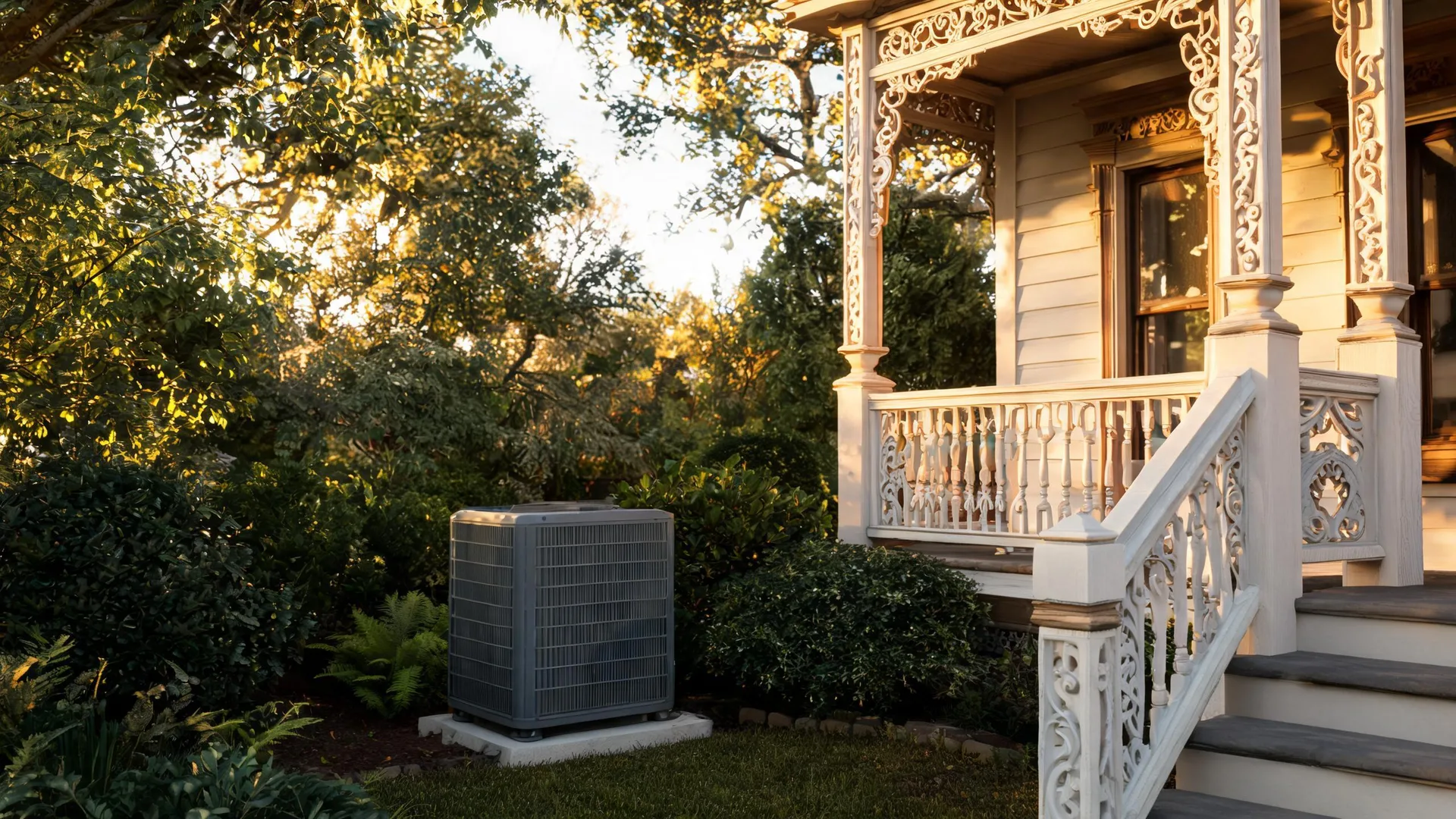
A gray heat pump outdoor unit mounted on a concrete pad next to a residential house with lap siding and stone accents.

What to watch for before it quits

A heat pump that needs attention usually tells you before it quits outright. It runs longer than it used to, cycling on and on without much of a break between. The air coming out of the vents feels cooler than before, not cold, like it's not quite keeping up. Ice shows up on the outdoor unit's coil at times of year when it has no business being there. You hear it too: a clicking at startup that wasn't there last year, a rattle from the fan, a hiss that means refrigerant is escaping somewhere it shouldn't. Some of these show up slowly over a couple of seasons. Others show up overnight, after a part finally gives out. Either way, the signs are worth catching early, because a heat pump that's struggling usually keeps running right up until the moment it doesn't.

A struggling compressor still runs

A compressor low on charge or drawing bad current doesn't usually quit outright. It keeps turning, working harder to move the same heat, running hotter than it should. Heat breaks down the oil that lubricates its internal parts. Once that starts, the wear speeds up each time the unit cycles, right up until the compressor seizes instead of just needing a repair.

A frozen coil feeds on itself

Low airflow or low refrigerant lets frost build on the indoor coil. Once ice forms, it blocks the airflow further, so more ice builds, and the cycle gets worse each hour the system keeps running. Left alone, the ice works down into the blower housing, and liquid refrigerant can return to the compressor, which isn't built to handle it.

Before you call anyone, there's a few things worth checking yourself. Start with the thermostat. Make sure it's set to heat or cool as needed, the batteries are good, and the set temperature actually differs from the room temperature. Next, go to the air handler and check the filter. A filter clogged with dust chokes airflow, and that alone can cause weak output, icing, or short cycling. Walk outside and look at the breaker panel or the disconnect box next to the outdoor unit. A tripped breaker is reset in a few seconds and costs nothing. Look at the outdoor unit itself. Clear away leaves, grass clippings, or anything stacked against it, since the fan and coil need open air on all sides to work right. If you see ice on the outdoor coil, turn the system off and let it thaw fully before running it again. If after all that it still won't run, won't heat or cool, or trips the breaker again, that's the point to stop and call someone rather than keep resetting it.

A diagnostic visit starts before the panels come off. A tech asks what the system's been doing, when it started, and whether it's constant or only shows up sometimes. Then they check static pressure, refrigerant charge, and the electrical draw on the compressor and fan motor, since those numbers point to what's actually wrong instead of just what's failing because of it. Reversing valve operation gets checked too, since a heat pump that heats fine but won't cool, or the other way around, often comes down to that one part. Only once the cause is found does the conversation turn to what it takes to fix it.