A red brick single-story house with a covered porch and a nearby cream-colored house with a wraparound porch, seen across a lawn behind a trimmed hedge, framed by large moss-draped oak branches.

Heat Pump Repair in Augusta, GA

Tell us about the job

Takes about a minute. No obligation.

RepairHeat PumpRichmond County, GA
Step 1 of 2

What ZIP code is the job in?

What the breakdown tells you

A heat pump that trips its breaker, leaks refrigerant, or has a compressor that hums but won't start is usually worth repairing if the rest of the unit is sound. A failed capacitor, a bad contactor, or a stuck reversing valve are normal wear items. They don't say anything about the condition of the rest of the system. What matters more than the breakdown itself is how old the unit is and what kind of shape it's been in.


When repair stops making sense

A failed compressor changes the math. It's the most expensive part in the system, and putting that kind of money into an older unit rarely makes sense next to putting it toward a new one. The same goes for a system that keeps needing service calls. Breakdowns that keep coming back usually mean the unit is wearing out across the board, not just in the one spot that failed this time.

5 months
November through March, your system heats
5 months
May through September, it cools
37°F
the average winter night it heats against
91°F
the average summer afternoon it cools against
Isometric cutaway illustration of a single-story house showing interior rooms, ceiling ductwork connected to an air handler, and an outdoor condenser unit linked by a line set.
Your system heats November through March and cools May through September.

NOAA nClimDiv, 1991–2020 normals

Your heat pump switches over to heat in November here.

Early November is when a weak part that made it through summer finally gives out.

Outdoor units here take hail and wind. If yours came through a storm, get it checked even if it still runs fine.

118 severe weather events from 2015 to 2024
31% of homes statewide lost power a day or more in 2024
87 damaging wind events from 2015 to 2024
This county takes a beating118 severe weather events in Richmond County between 2015 and 2024

If your heat pump came with a newer build, that history is worth telling the contractor when they get there. A unit installed with the house hasn't piled up years of hard use yet, and most of what fails on a heat pump, a capacitor, a contactor, a reversing valve, is a normal wear part that gets swapped out without touching the rest of the system. The compressor is the one part where age changes the decision, and on a newer system it's far less likely to be the problem. Worth mentioning what year the house went up, if you know it, before the repair call.

Get it looked at early

Problems tend to show up in the first weeks of the season, when the load hits a part that was already weak.

Find a contractor
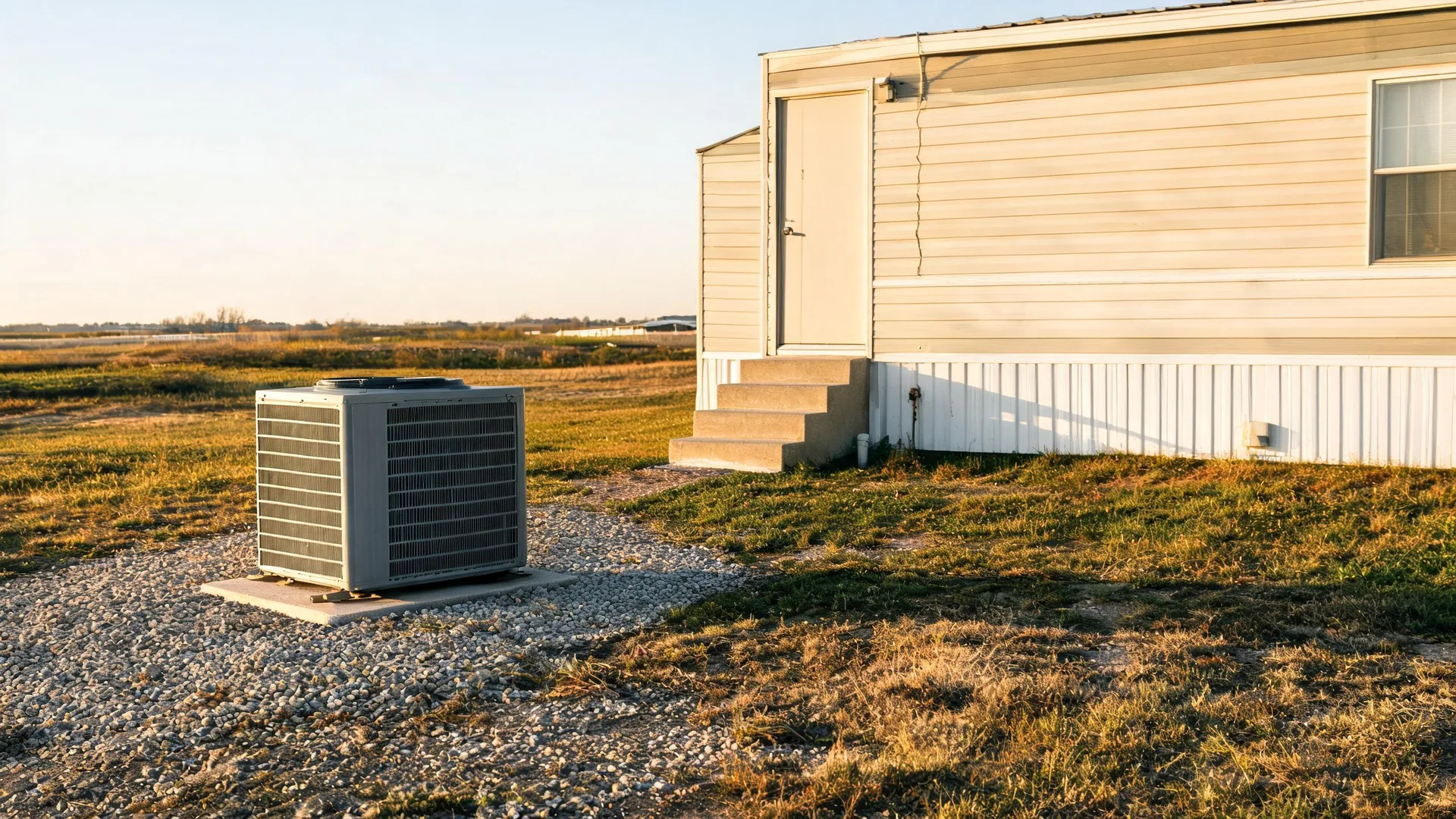
A gray heat pump condenser unit mounted on a concrete pad against the gray lap-siding exterior wall of a house.

Running it through a problem doesn't buy you time

A heat pump that's losing charge or struggling to start doesn't fix itself by staying on. A refrigerant leak gets worse every hour the system runs, because the compressor keeps trying to move charge that isn't there, and that's what burns a compressor out. A capacitor that's weak but still working makes the compressor pull extra current every cycle, and that extra heat is what finally kills it. A reversing valve that's sticking will stick more often the more it's cycled. None of these fail less by running more. If you hear a hum, a click that doesn't catch, or a breaker that trips and resets, that's the part asking to be shut off, not pushed through.

What you'll notice first

Warm air that isn't warm enough, a unit that runs long stretches without hitting the set temperature, or outdoor coil caked with ice are usually the first signs something's wrong. Short cycling, where the unit kicks on and off every few minutes instead of running a full cycle, points to a control problem or a refrigerant issue rather than something simple. A low hum with no fan movement outside means the compressor is trying to start and can't.

What the sound tells you

A clicking that repeats without the unit catching is usually a failed capacitor or a bad contactor, not the compressor itself. A buzzing that keeps going is often a contactor stuck closed. Grinding or squealing points to a motor bearing wearing out. Any of these is worth a call before the part it's protecting gets damaged too.

A heat pump fails the same handful of ways, year after year. The capacitor gives the compressor and fan motor the jolt they need to start, and it weakens with every cycle until one day it can't deliver enough. The contactor is the switch that sends power to the outdoor unit, and its contacts pit and burn from years of arcing until they stick or stop connecting. The reversing valve is what lets the system switch between heating and cooling, and it's often the first thing to stick when a unit sits unused in one mode for a long stretch. Refrigerant leaks show up at brazed joints and fittings that slowly work loose with years of vibration and temperature swings. The compressor itself usually isn't the first thing to go. It's more often the last, worn down by months or years of starting against a weak capacitor or running low on charge.

A diagnostic visit starts outside, at the unit itself, before anyone touches a wire. A tech checks the start capacitor and contactor first, since those fail the most and are quick to test. Refrigerant pressures get checked next, with gauges on the service ports, because a system low on charge behaves differently than one with a stuck valve or a bad motor. If the outdoor coil is iced over, that gets noted too, since ice changes what the pressures mean and has to be factored in rather than read at face value. Electrical readings come with a meter, checking what current the compressor is actually pulling against what it should pull. The reversing valve gets tested by switching the system between heat and cool and watching whether it actually changes over. None of this is guesswork. Each reading points toward one part or rules out another, and the tech is narrowing it down with every test before anything gets replaced.