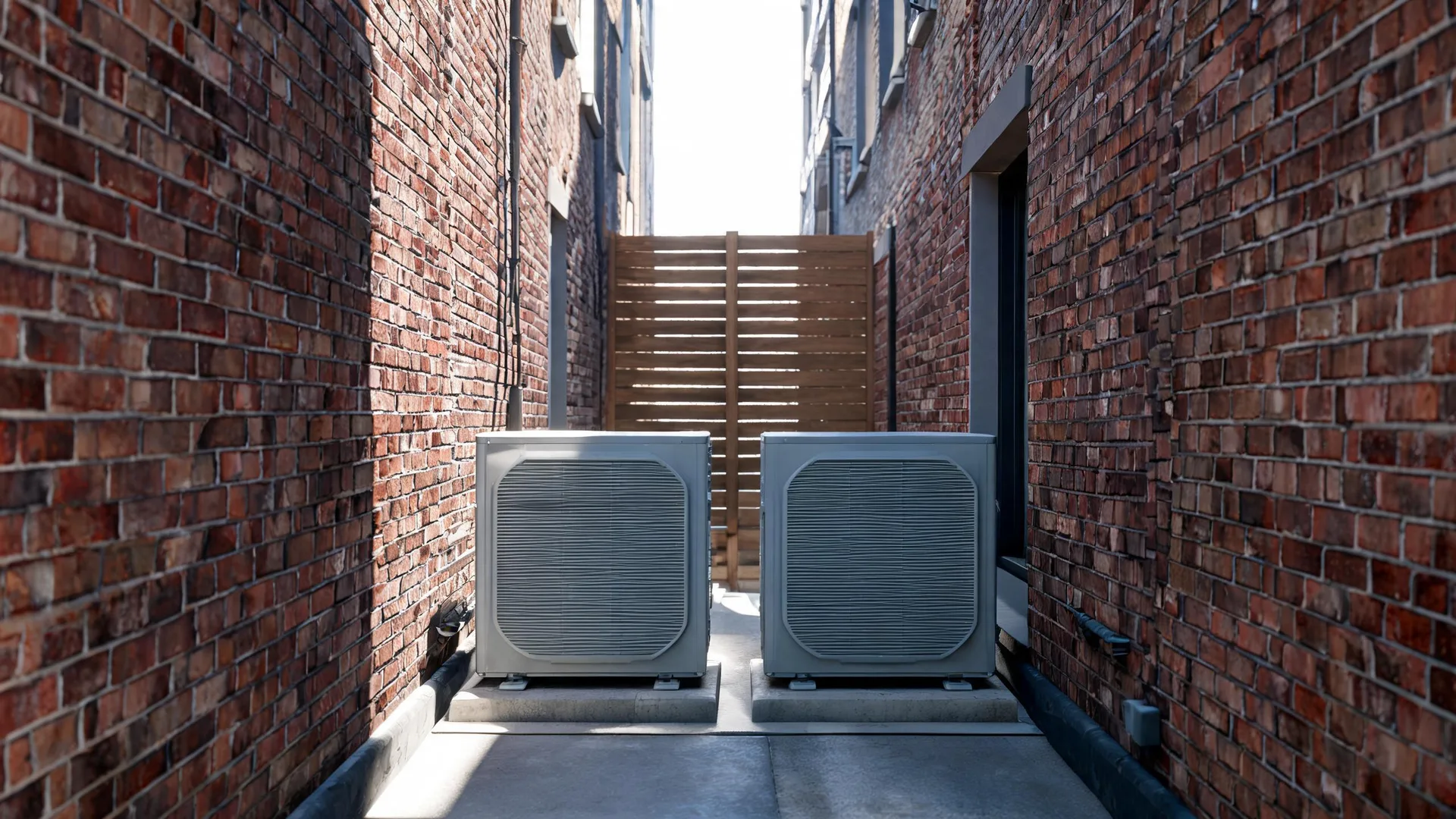
An outdoor air conditioning condenser unit mounted on a concrete pad beside a house at sunset.

Heat Pump Repair in Albany, GA

Tell us about the job

Takes about a minute. No obligation.

RepairHeat PumpDougherty County, GA
Step 1 of 2

What ZIP code is the job in?

Dougherty County sees its share of storms

Dougherty County logged 125 severe weather events between 2015 and 2024, including 105 damaging wind events, 11 hail events, 2 tornadoes and 5 tropical storms or hurricanes. That is a lot of chances for a heat pump sitting outside to take a hit.

The outdoor unit is exposed to all of it

Hail dents the fins on the outdoor coil. Wind throws branches and debris into the fan and cabinet. A heat pump can keep running after a storm and still have hidden damage, so it's worth a check after a bad one even if the system seems fine.

5 months
November through March, your system heats
6 months
May through October, it cools
40°F
the average winter night it heats against
91°F
the average summer afternoon it cools against
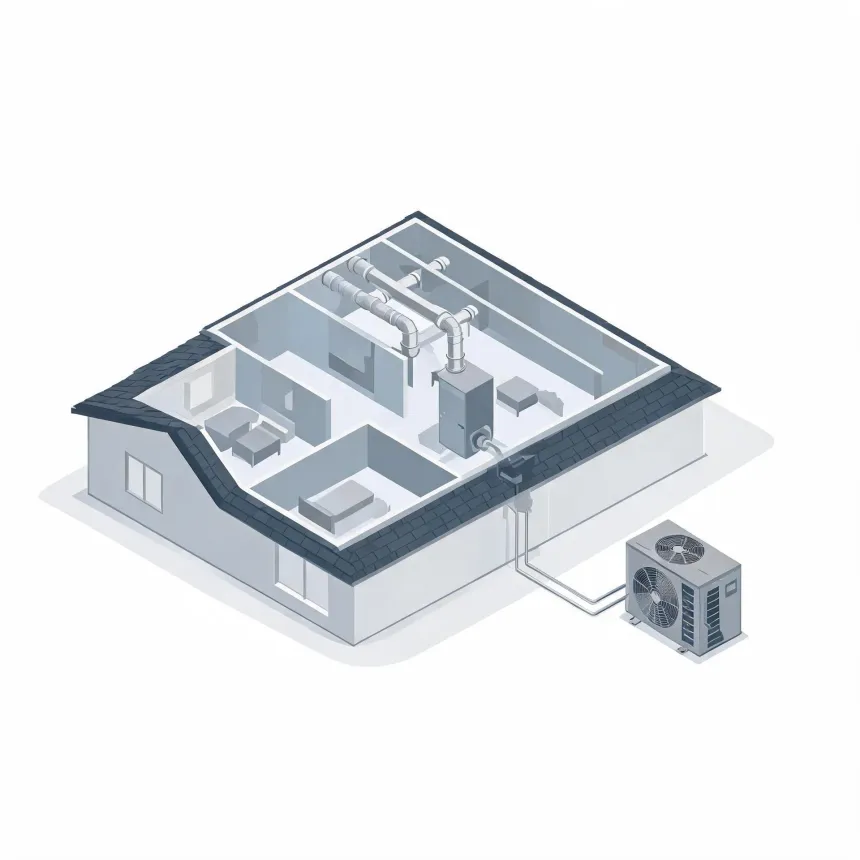
Isometric cutaway illustration of a single-story house showing interior rooms with ductwork, a furnace or air handler, and refrigerant lines running outside to a condenser unit on a pad.
Your system heats November through March and cools May through October.

NOAA nClimDiv, 1991–2020 normals

November is when heat pumps here switch over to heating after sitting idle since April.

A weak part that made it through summer often fails in the first cold snap.

Heat pumps here run hard, in heat most of the country doesn't see

Power here costs 14.42 cents per kilowatt-hour
Climate zone 2A
Cooling runs May through October

A heat pump that has been running hard all summer doesn't get a break before repair questions come up, and whatever is making noise, short cycling, or not keeping up is worth having looked at by someone who checks the whole system, not just the symptom. A refrigerant leak and a failing capacitor can show the same signs from inside the house. Someone licensed can tell which one it is, and whether the storms this area sees have anything to do with it. A unit that took a hit from wind debris or hail and kept running can still have a bent coil fin or a loose connection working against it months later. Getting it diagnosed properly now means the fix holds instead of coming back.

If the last storm reached your unit, get it checked now

After wind or hail, a heat pump can keep running and still have damage working against it. A bent coil fin or a loose connection from that hit won't always show up right away. Have it looked at before it turns into a bigger repair.

Find a contractor
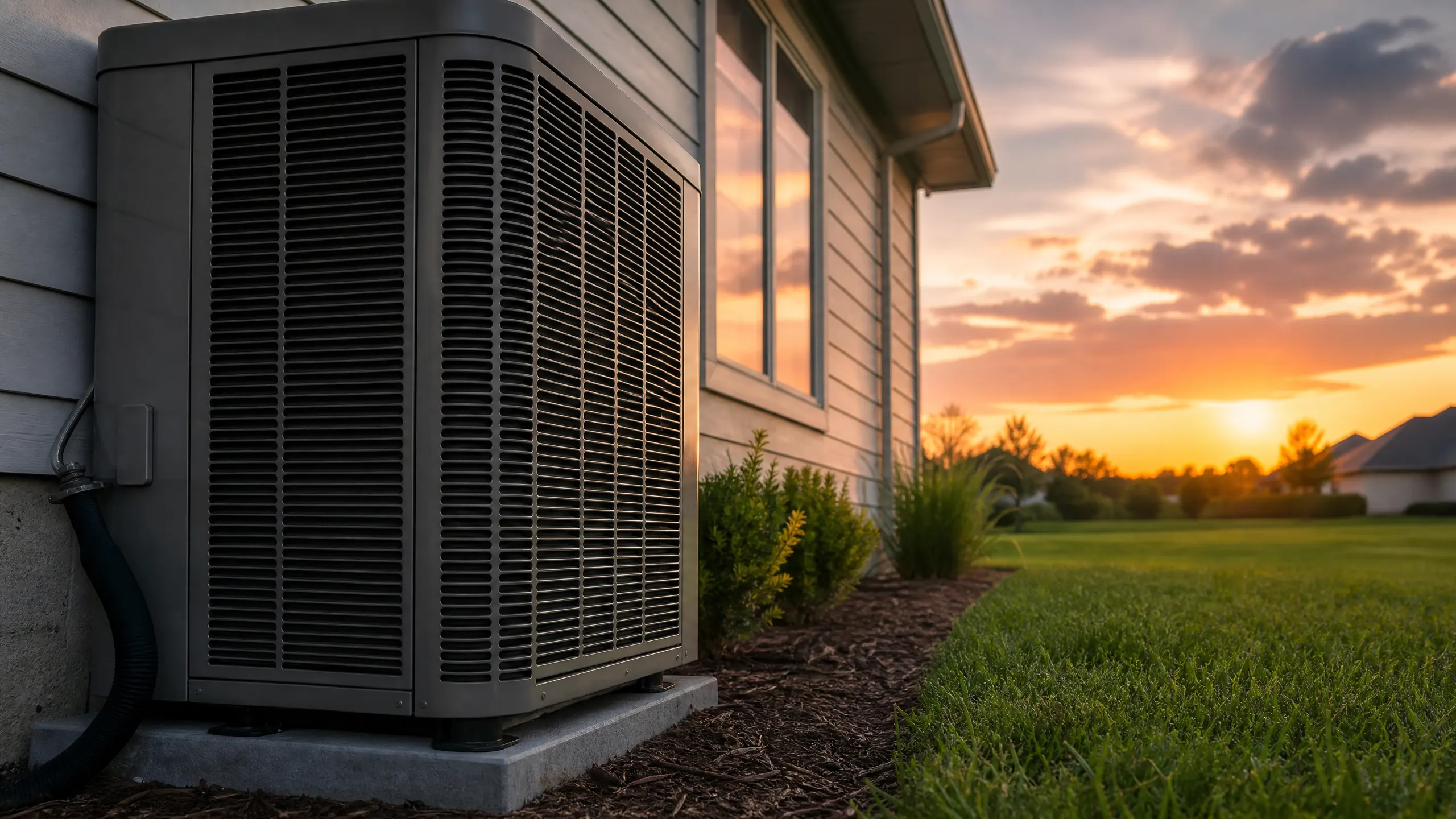
A gray outdoor HVAC unit mounted on a concrete pad beside a house with gray lap siding and a stone foundation.

This Runs Every Month, Not Just One Season

A heat pump doesn't get a season off. It runs on the hot days and the mild ones, then switches over and runs on the cold ones too, so the compressor and fan motor rack up hours a furnace never would. That steady use is what wears a contactor down to the point it chatters or sticks, and what shortens the life of a run capacitor until it can't hold the charge to start the motor smoothly. A system cycling on and off faster than it used to, or struggling to get going, is often telling you one of those parts is near the end. None of that means the whole unit is failing. It usually means one part has quietly worn out from being asked to work every day of the year, and swapping it is what gets the rest of the system back to running the way it should.

A struggling compressor gets worse, not better

A compressor low on refrigerant or straining against a bad start component still moves heat, just poorly. Left running, it draws more current than it should and builds heat inside the windings that insulation wasn't meant to handle. What starts as a repair can end as a compressor replacement if it keeps cycling under that strain.

Ice on the coil needs a shutdown, not a wait and see

Frost on the outdoor coil means airflow or refrigerant charge is off, and the fix is to turn the system off and let it thaw before anyone diagnoses it. Running a heat pump with an iced coil pushes liquid refrigerant back toward the compressor, which isn't built to compress liquid. That's a failure that didn't have to happen.

A few things are worth checking before anyone comes out. Look at the thermostat first. If it has batteries, swap them, and make sure it's actually set to heat or cool and not sitting in a mode that stopped it from calling. Go outside and look at the unit itself. Leaves, pine straw, and grass clippings packed against the cabinet block airflow, and clearing them away sometimes is the whole fix. Check that the outdoor fan is spinning when the system is running. If it's silent while the indoor side is blowing, that's worth mentioning to whoever you call. Inside, pull the filter and hold it up to a light. If you can't see through it, replace it. A clogged filter starves the system of airflow and can cause problems that look a lot worse than they are. Check the breaker panel too. A tripped breaker is a reset, not a repair, but if it trips again after you flip it, stop and leave that one to someone licensed.

At some point a heat pump stops being worth patching and the question comes down to a few plain things. Age matters less than what's failing. A contactor or capacitor is a small, ordinary repair on a unit of any age, and fixing it doesn't say anything bad about the rest of the system. A compressor is different. That's the part that does the actual work of moving heat, and there's no cheap way into or out of it. If a compressor is failing, replacing just that part often costs close to what a new outdoor unit costs, so most people replace the whole system instead. A unit that's needed a few unrelated repairs in close succession is usually telling you its parts are wearing out together, not that it had bad luck. One that's run fine for years and now has a single clear problem is usually worth fixing. The honest way to decide is to ask what's actually broken and what it would take to fix that one thing, not to guess from how old the unit looks.