






A illuminated white antebellum-style house with a wraparound porch, white columns, and Spanish-moss-draped oak trees, photographed at dusk.

Heat Pump Maintenance in Savannah, GA

Tell us about the job

Takes about a minute. No obligation.

Tune-up, service, or cleaningHeat PumpChatham County, GA
Step 1 of 2

What ZIP code is the job in?

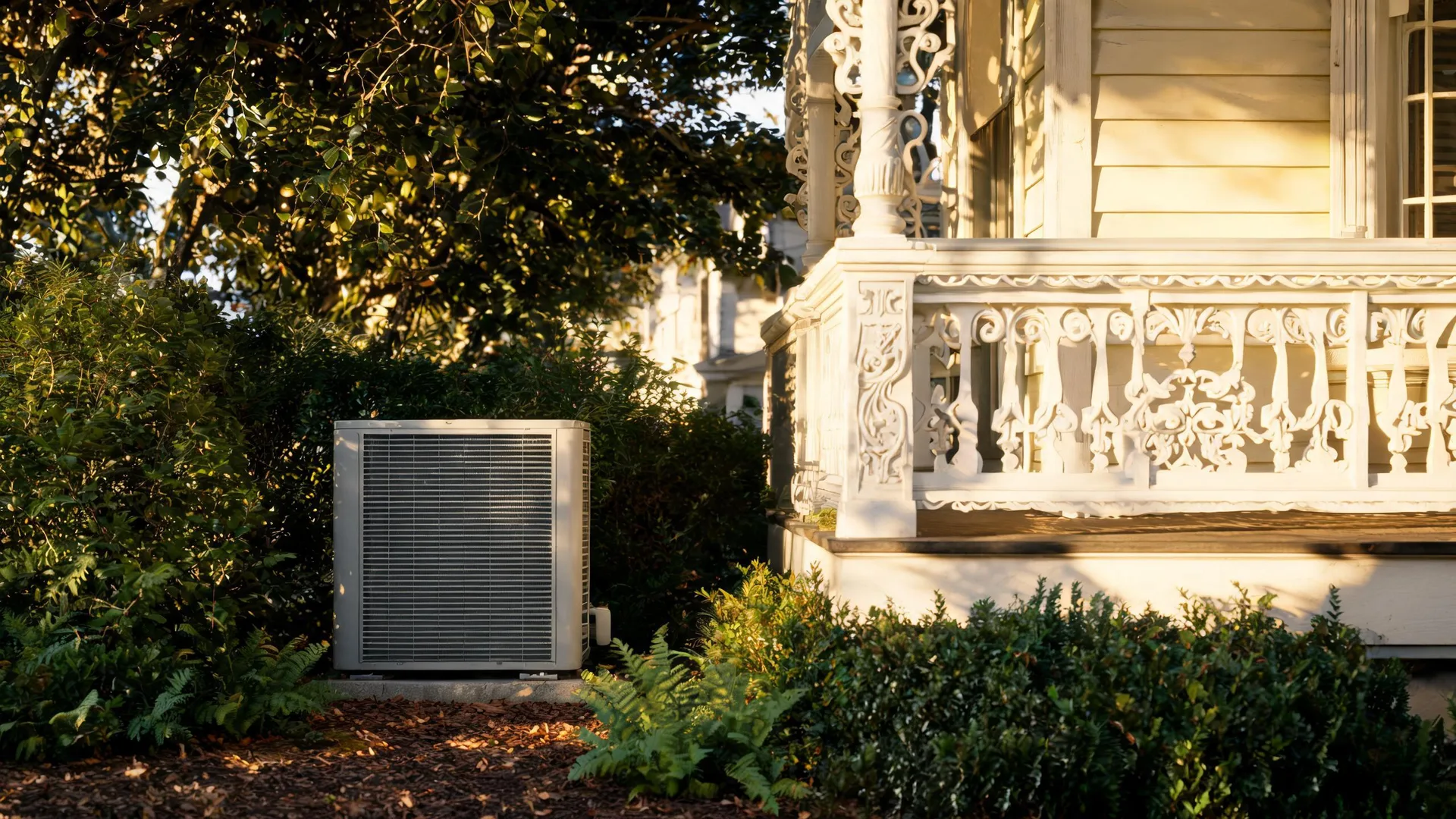
Chatham County logged 343 severe weather events between 2015 and 2024. Damaging wind and hail made up most of those, and your heat pump's outdoor unit sits outside taking all of it directly, from wind-blown debris to hail on the coil. Tropical storms and hurricanes are part of that count too, and those are the storms most likely to knock your power out along with your neighbors'. After a season of wind and hail, it's worth having the outdoor unit checked for bent fins, debris caught in the cabinet, or anything knocked loose, before the next cold snap asks it to run.

The filter is the only part of this job that's on you between visits.

Check it monthly and swap it when it's dirty, since airflow problems start there before they show up anywhere else.

October gets it ready for heat, April gets it ready for cooling

Cooling runs May through October
Heat runs November through March
246 damaging wind events from 2015 to 2024
Newer homes, newer systemsHalf the homes in Chatham County were built in 1986 or later.

A tune-up starts with the refrigerant charge, and that's not something you can eyeball from the yard. Too little and the system runs long and still comes up short on heat or cold air. A tech hooks up gauges and checks it against what the unit is rated for. They'll pull the panel off the outdoor unit too, something most homeowners never do, and look at the wiring and contactor for scorch marks or pitting, early signs a part is about to fail. Inside, the coil gets checked for dirt and mold buildup that cuts down how much heat it can move, even though the airflow at the vents might still feel fine. The reversing valve gets tested as well, since that's the part that switches the system between heat and cooling, and a sticking valve can leave you stuck in one mode without any warning until the day you need the other.

Keep a newer system running like one

A system built with a newer home still needs someone checking the charge and the wiring every year. That's what keeps it running the way it did on day one, year after year.

Find a contractor
A man in a beanie, dark jacket and tan work pants climbs porch steps toward a blue front door, carrying a canvas tool bag, with a potted shrub in a blue planter beside him.
A gray air-source heat pump mounted on a concrete pad next to a house with gray vinyl siding, surrounded by gravel and flanked by green shrubs and white hydrangea flowers.

It runs both jobs, all year

A heat pump here runs for heat and for cooling, so it logs more hours a year than a system that only does one job. More hours means more chances for a worn contact or a weak capacitor to make itself known. Have it looked at before the next swing in weather asks it to switch over.

Gauges on, panel off

A real tune-up checks the refrigerant charge with gauges against what the unit is rated for, and pulls the panel to look at the wiring and contactor. A quick visit skips both. Nobody can see a low charge or a pitted contact from across the yard.
What a rushed visit leaves behind

Skip the coil check and dirt or mold keeps building where you can't see it, even with good airflow at the vents. Skip the reversing valve test and a sticking valve won't show itself until the day you need the system to switch modes and it won't.

A heat pump rarely quits all at once. It gives you a sign first, if you know what to look for. Short cycling, where it kicks on and off every few minutes instead of running a steady stretch, usually means the charge is off or a sensor is reading wrong. Ice building up on the outdoor coil and staying there, instead of clearing during defrost, means the defrost cycle isn't doing its job. Air coming out the vents barely warm, or barely cool, with the system still running hard, points at a coil that can't move heat the way it used to. A contactor that hums or chatters when the system starts is wearing out, and it'll strand you on the day it finally sticks. None of these mean the system is done. They mean it's asking for a look before the part behind the symptom fails outright.

The filter is the one part of this job the homeowner can do between visits, but a tune-up checks what's past the filter too. The blower motor gets checked for noise and for how freely it spins, since a motor working harder than it should wears out faster than it's supposed to. The condensate drain gets cleared, because a clogged drain backs up and can shut the system down on a safety switch, or leave water where it shouldn't be. Outside, the tech checks the refrigerant lines for insulation that's cracked or missing, since bare line loses heat or cold the whole length of it. None of this shows up as a problem yet. That's the point of catching it now instead of after it does.