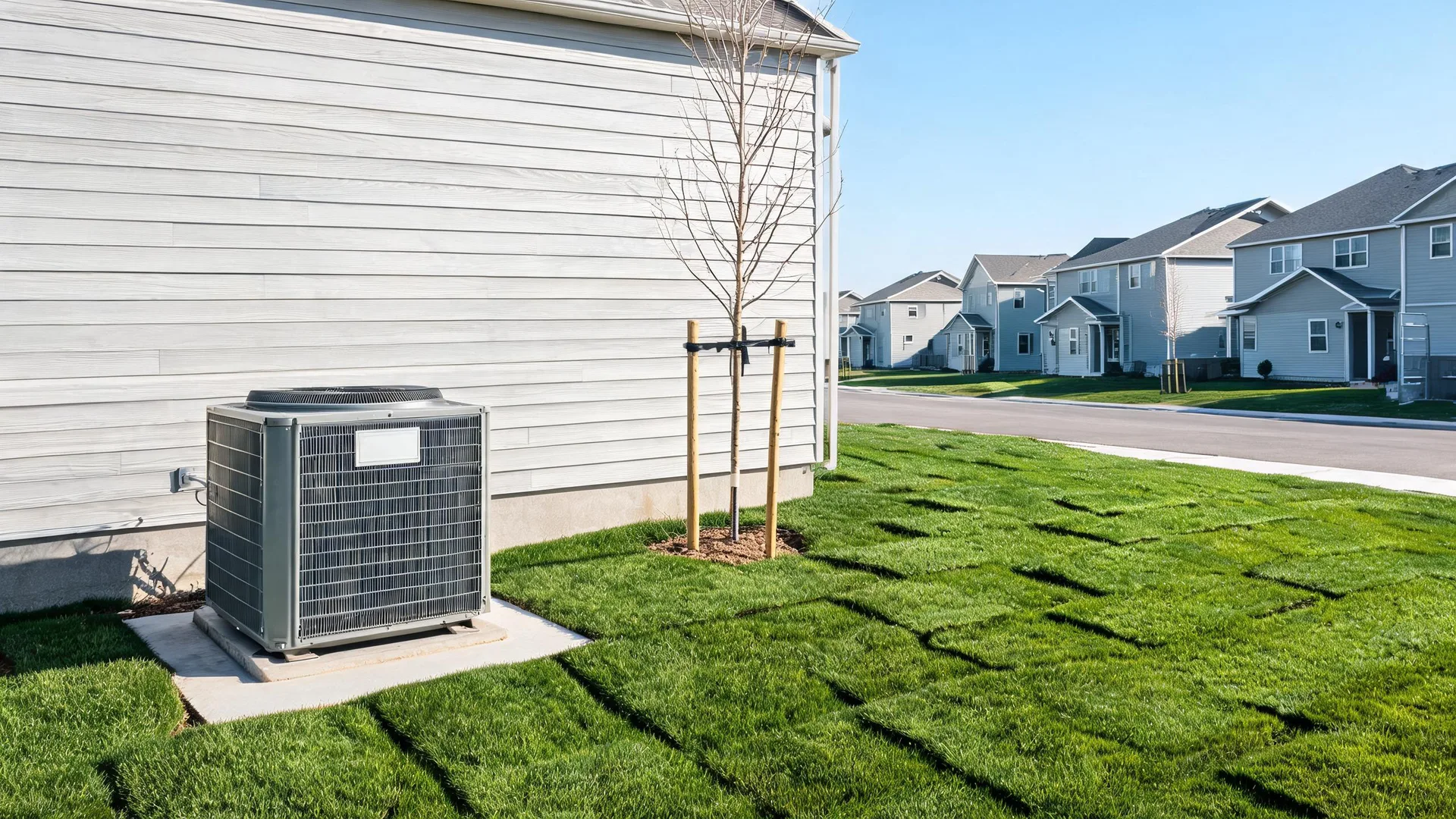
Most homes here already run on electricity
Electricity heats 78.6% of homes in Barrow County. A heat pump fits that setup directly, since it runs on the same fuel the house already has.

Takes about a minute. No obligation.
Electricity heats 78.6% of homes in Barrow County. A heat pump fits that setup directly, since it runs on the same fuel the house already has.
Gas heats only 18.1% of homes here, with LP gas even less common at 2.0%. For most homes, installing a heat pump means working with the electrical setup already in place, not adding a new fuel source.

NOAA nClimDiv, 1991–2020 normals
Heat pumps here run from October through April, about six months straight once the cold sets in.
Have the install done before October and the system is ready on day one of the cold, not halfway through its first job.




Georgia households paid 14.08 cents per kilowatt-hour in 2024, below what most of the country pays. That changes what's worth paying extra for. A higher SEER2 model will save something on the power bill every month, but at this rate it takes longer to earn back the difference in the sticker price. Put the weight instead on the balance point, the backup heat, and how the unit is sized for the house. Those decide how the system performs on the coldest nights of winter, and a lower power rate doesn't make a system that's sized wrong or leans hard on strip heat any cheaper to run.
Any heat pump installed here now has to hit 14.3 SEER2 and 7.5 HSPF2 at minimum, and if it's central air paired with it, 14.3 SEER2 under 45,000 Btu/h. That standard is already built into what a contractor can install, so the system that goes in is one sized and rated for zone 3A from the start. A federal tax credit is available on top of that for qualifying equipment.
Find a contractorSizing a heat pump comes down to a room by room heat loss and heat gain calculation, not the square footage of the house or whatever size the old system happened to be. A contractor measures the walls, windows, ceiling and floor area in each room and figures out how much heat escapes in the cold and builds up in the heat. That total tells them what the system needs to produce, no more and no less. Oversize it and the system short cycles, shutting off before it finishes a full heating or cooling run, which leaves rooms uneven and puts extra wear on the compressor every time it kicks on. Undersize it and the system runs constantly, struggling to catch up on the coldest or hottest days and never quite getting there. A heat pump that's sized right runs in long, steady cycles. That's what keeps the temperature even from room to room and what the compressor is built to do.
SEER2 and HSPF2 are seasonal averages, not a reading of how the system performs on any single day. A unit can hit its rating overall while running harder on the worst days of summer or winter than the label suggests. That's normal. The number tells you how the system performs across a full season of ups and downs, not what it draws at any one moment.
Equipment built to hit a higher SEER2 or HSPF2 rating uses a more efficient compressor and larger coils, and that shows up in the price of the unit. When you're comparing quotes, a lower rated system that costs less now and a higher rated one that costs more now are both valid choices. The right one depends on how long you plan to stay in the house and run the equipment, which is a question only you can answer.
When you're comparing quotes, ask what happens at the balance point, the outside temperature where the heat pump alone can no longer keep up and backup heat has to take over. A system with a lower balance point leans on that backup less, which matters because backup heat tends to be electric resistance strip heat and costs more to run than the compressor itself. Ask what the backup heat actually is, and at what outdoor temperature it kicks in. Ask about the sound rating too, since the outdoor unit sits close to a wall or window and some run louder than others at the same output. And ask what happens during a defrost cycle, how often it runs and whether the system has a way to avoid blowing cold air into the house while it does. These are the questions that tell you how a system behaves on the days that are hardest on it, not just how it's rated on paper.
Installation day starts before anyone touches the old equipment. The outdoor unit gets disconnected and the refrigerant lines drained or recovered, then the old indoor coil and air handler come out if they're being replaced too. Setting the new outdoor unit means a level pad, clearance on all sides for airflow, and a spot away from where runoff or ice tends to collect against a wall. Indoors, the coil and air handler go in, then the line set connecting them gets run, brazed, and pressure tested before any refrigerant goes in. A leak shows up on that test, not after the system is already charged and running. The electrical hookup is its own step, often a dedicated circuit and disconnect sized for the new unit rather than whatever the old system used. Once it's charged, wired, and the thermostat is set up, a tech runs the system through a full cycle in both directions and checks the temperature split at the vents to confirm it's producing what it should.