





Two illuminated white colonial-style houses with wrap-around porches, flanked by oak trees draped in Spanish moss, photographed at night.

Heat Pump Installation in Statesboro, GA

Tell us about the job

Takes about a minute. No obligation.

New system or replacementHeat PumpBulloch County, GA
Step 1 of 2

What ZIP code is the job in?

Georgia homes paid 14.08 cents per kilowatthour in 2024, well below the national average. That changes how you should think about a heat pump purchase here. The highest efficiency model on the market will cost more upfront and take longer to earn that back in lower bills, because electricity is already inexpensive. Picking a system still matters, just for different reasons. What should drive the decision is whether the unit is sized right for your house and whether it holds up through the kind of outages this area sees. A heat pump that runs reliably through a storm and restarts cleanly once power comes back is worth more here than a few extra points of efficiency.

5 months
November through March, your system heats
6 months
May through October, it cools
39°F
the average winter night it heats against
91°F
the average summer afternoon it cools against
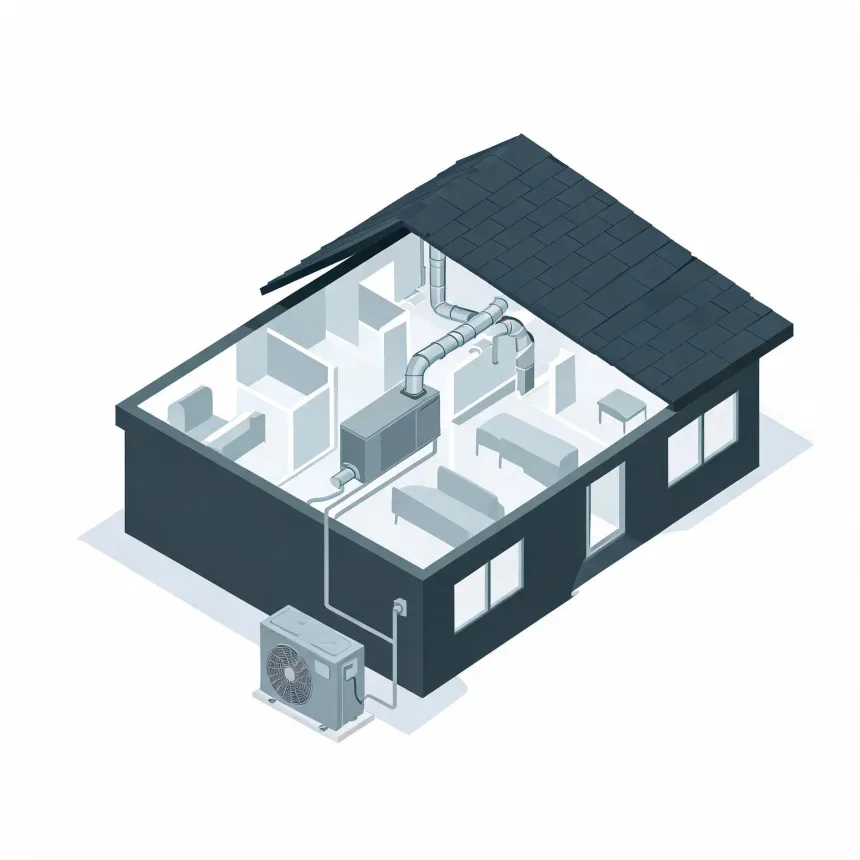
Isometric cutaway illustration of a single-story house showing interior rooms, ceiling ductwork connected to an air handler, and an outdoor condenser unit linked by a line set.
Your system heats November through March and cools May through October.

NOAA nClimDiv, 1991–2020 normals

Heat here runs from October through March.

Get the new system in before October and it's already proven itself by the time the cold sets in.

Statesboro sees storms often enough to plan around losing power, not just losing efficiency

174 severe weather events from 2015 to 2024
31% of homes statewide lost power a day or more in 2024
135 damaging wind events from 2015 to 2024

Bulloch County is zone 3A, hot and humid with a short winter. Any split-system heat pump installed here has to meet a federal minimum of 14.3 SEER2 for cooling and 7.5 HSPF2 for heating. That floor applies to equipment built from 2023 on, so it is not something a contractor can shop around. Central air systems sold in the Southeast are held to a similar line, set higher than what manufacturers meet nationally. None of this narrows your choice down to one unit. It means whatever gets installed already clears a bar set for this climate, so the real question is less about chasing the highest efficiency number and more about confirming the model you want meets what the zone requires.

Electric heat is the norm here, and a heat pump is the straightforward replacement

90% of homes in Bulloch County heat with electricity. A heat pump is already the standard choice here, not a departure from it. Replacing what's there with another heat pump keeps the wiring and ductwork doing the same job they already do.

Find a contractor
A man in a dark T-shirt, backwards cap and brown work pants, seen from behind, climbs porch steps toward a blue paneled front door while carrying a canvas tool bag, with a potted shrub in a blue planter to the right.
A dark gray heat pump unit mounted on a concrete pad next to a house with gray siding and a stone veneer wall.

This unit takes more hits than most

Bulloch County saw damaging wind 135 times between 2015 and 2024. That is the outdoor unit taking a hit roughly once a month, year after year, on top of whatever heating and cooling load it's already carrying. Debris, branches, grit kicked up in a storm, all of it lands on the coil and the fan before the unit gets a chance to rest. A system built for calmer weather doesn't see that kind of wear. Size it right and pick equipment that can take the repeated hits, because here that matters as much as how efficiently it runs.

The old unit gets disconnected and hauled off

A contractor breaks the refrigerant line connections, disconnects the power, and removes the outdoor unit and the indoor air handler or coil. The refrigerant gets recovered, not vented, that's required. What's left of the old system goes out with the contractor, not left behind for the homeowner to deal with.
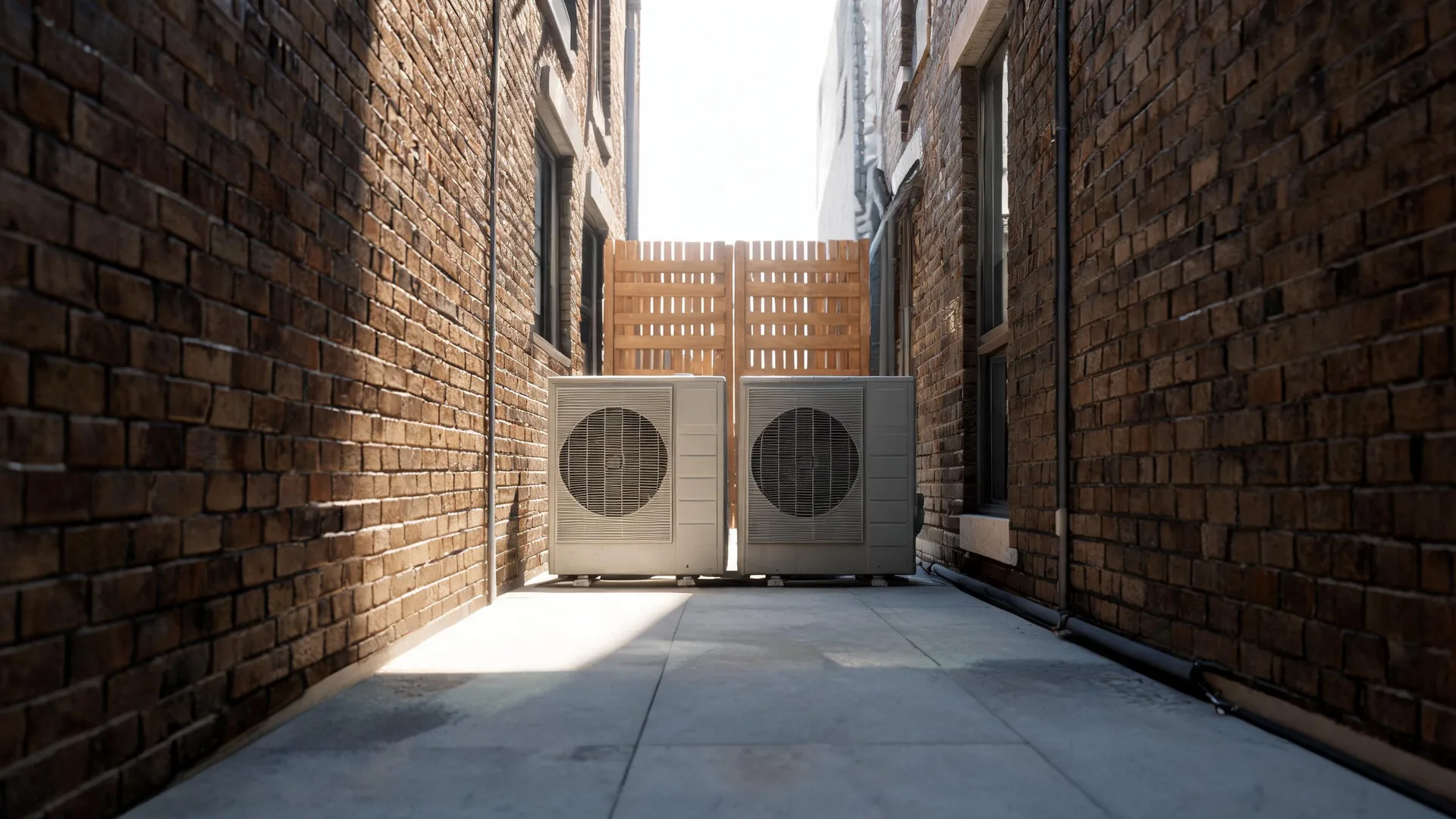
What stays depends on what's compatible

If the new heat pump uses the same duct layout and electrical setup, the line set and ductwork can often stay in place and just get tied into the new equipment. If the old system ran on a different refrigerant or a different voltage, more of it has to come out, including the line set itself. That's something to ask about before the install, not after.

A heat pump that's too big for the house will short cycle, kicking on, satisfying the thermostat fast, and shutting off again before it's pulled the moisture out of the air. That leaves rooms feeling clammy even when the temperature reads fine. One that's too small runs constantly during the coldest or hottest stretches and still can't keep up, leaning hard on backup heat strips to close the gap. Getting it right means a contractor works out a room by room heat loss and heat gain calculation, looking at square footage, window area, insulation, and ceiling height, not just matching the tonnage of whatever's being replaced. Ductwork matters too. A correctly sized unit pushing air through ducts that are too small for the airflow will struggle no matter what the nameplate says. The old equipment can be a starting point for that conversation, but it's not the answer on its own.

What you pay for an installation comes down to what the job actually requires, not just the equipment sitting in the driveway. A straight swap, same duct layout, same electrical setup, same refrigerant type, is a simpler job than one where the line set has to come out or the panel needs work to handle the new unit. Ductwork plays into it too. If the existing ducts are undersized or leaky, bringing them up to where they need to be for the new system adds real labor on top of the equipment itself. Install quality matters as much as any of that. A refrigerant charge that's off, or a line set that wasn't brazed right, shows up later as a system that never runs the way it should, no matter how good the equipment was going in. The size of the house and how it's laid out factor in too, since more zones or a longer line run mean more time and material. None of this is about picking the priciest option. It's about matching the job to what the house actually needs.