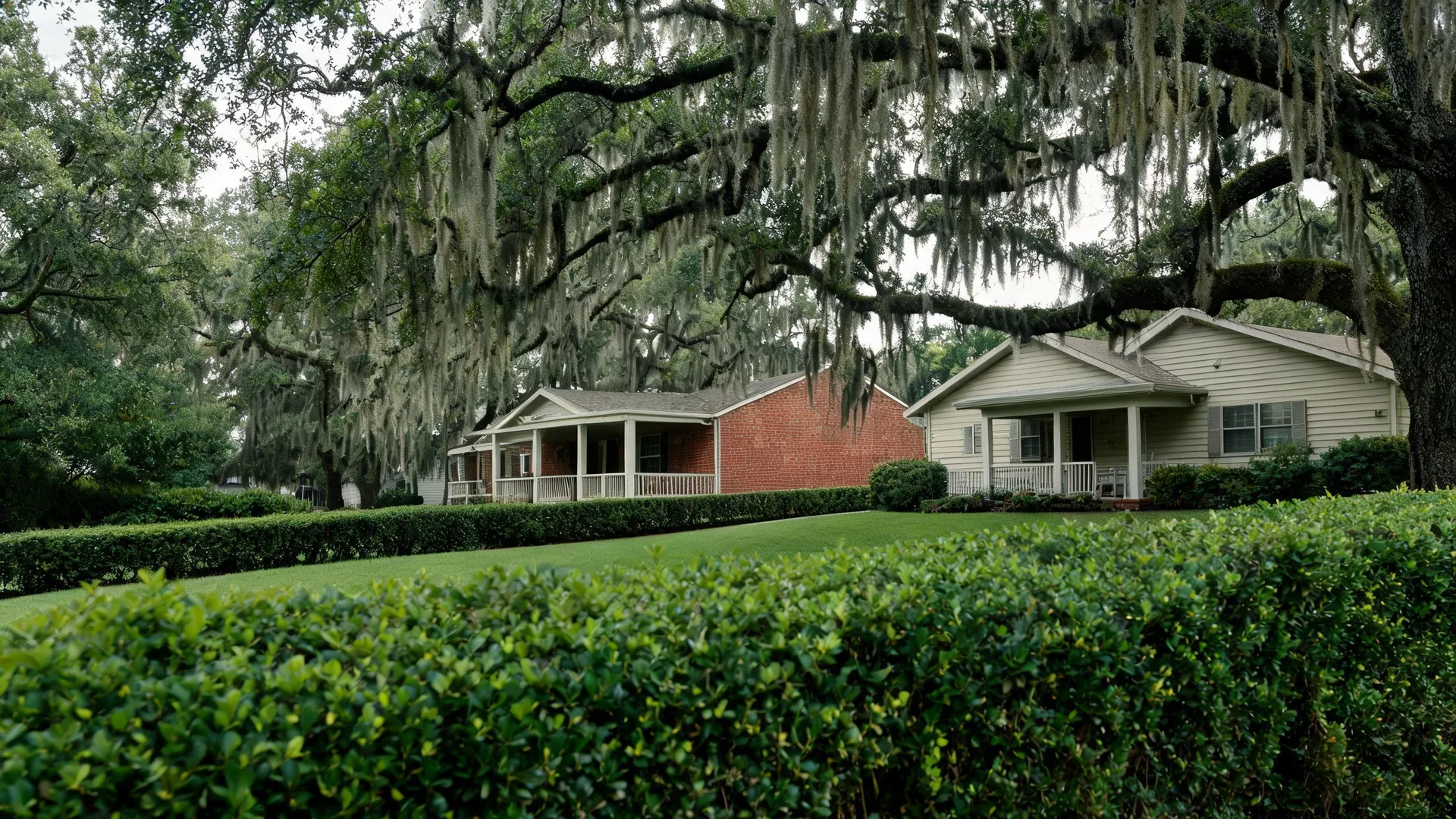





Two single-story houses, one with red brick and one with light siding, behind a trimmed hedge and lawn under large oak trees draped with Spanish moss.

Heat Pump Installation in Rincon, GA

Tell us about the job

Takes about a minute. No obligation.

New system or replacementHeat PumpEffingham County, GA
Step 1 of 2

What ZIP code is the job in?

Effingham County logged 161 severe weather events between 2015 and 2024, most of it damaging wind. A heat pump installer here should walk the yard with you before picking a spot for the outdoor unit, clear of falling limbs and away from where runoff collects. Nearly a third of Georgia households lost power for a full day or more in 2024, and a heat pump won't heat or cool through that without backup. Ask what happens to the system when power cuts out and comes back, and whether a generator hookup makes sense for your home.

5 months
November through March, your system heats
6 months
May through October, it cools
39°F
the average winter night it heats against
91°F
the average summer afternoon it cools against
Isometric grayscale illustration of a cutaway house showing interior rooms, ducted air handler and duct runs, connected by pipes to an outdoor condenser unit beside the building.
Your system heats November through March and cools May through October.

NOAA nClimDiv, 1991–2020 normals

Heat pumps here get picked out in spring or fall, ahead of the months they'll actually run hard.

October puts a new system in place before heat season starts in November, not after the first cold snap.

Electricity here runs 14.08 cents a kWh, cheaper than most states, so a heat pump earns its keep on steady running, not on shaving the bill

Power costs 14.08 cents a kWh statewide
116 damaging wind events from 2015 to 2024
Climate zone 2A

Wind is the thing that gets this outdoor unit, not the heat itself. Damaging wind hit Effingham County 116 times between 2015 and 2024, and your heat pump sits outside through all of it, running through summer afternoons and winter mornings both. A unit sized to the house, not just matched to whatever was there before, holds up better across that kind of year. This isn't the place to pick a system on name alone or whatever's quickest to install. The installer who sizes it right and anchors the outdoor unit well is doing the part that matters most here.

Most homes here already run on electric heat

Electricity already heats 91 percent of homes in Effingham County. A heat pump runs on that same power, the wiring your house already has. No gas line to run, no new fuel to plan around.

Find a contractor
A dark gray heat pump unit mounted on a concrete pad next to a house with gray siding and a stone veneer wall.

Sized for this house, not the last one

A heat pump that sits outside year-round, through wind events like these, earns its keep in the sizing, not the brand on the unit. Ask whatever installer you're comparing to walk the property and run a load calculation on this house, not a guess based on square footage or the old system's tonnage. Get that number in writing before you get a quote.

The old equipment comes out

Whatever heated or cooled the house before gets disconnected and hauled away as part of the install. If there's an outdoor unit, it gets unbolted from its pad. If there's a furnace or air handler in a closet or attic, that comes out too, along with the old thermostat and any line sets that aren't being reused. The crew doing the install should handle the removal and disposal, not leave it for the homeowner to deal with.
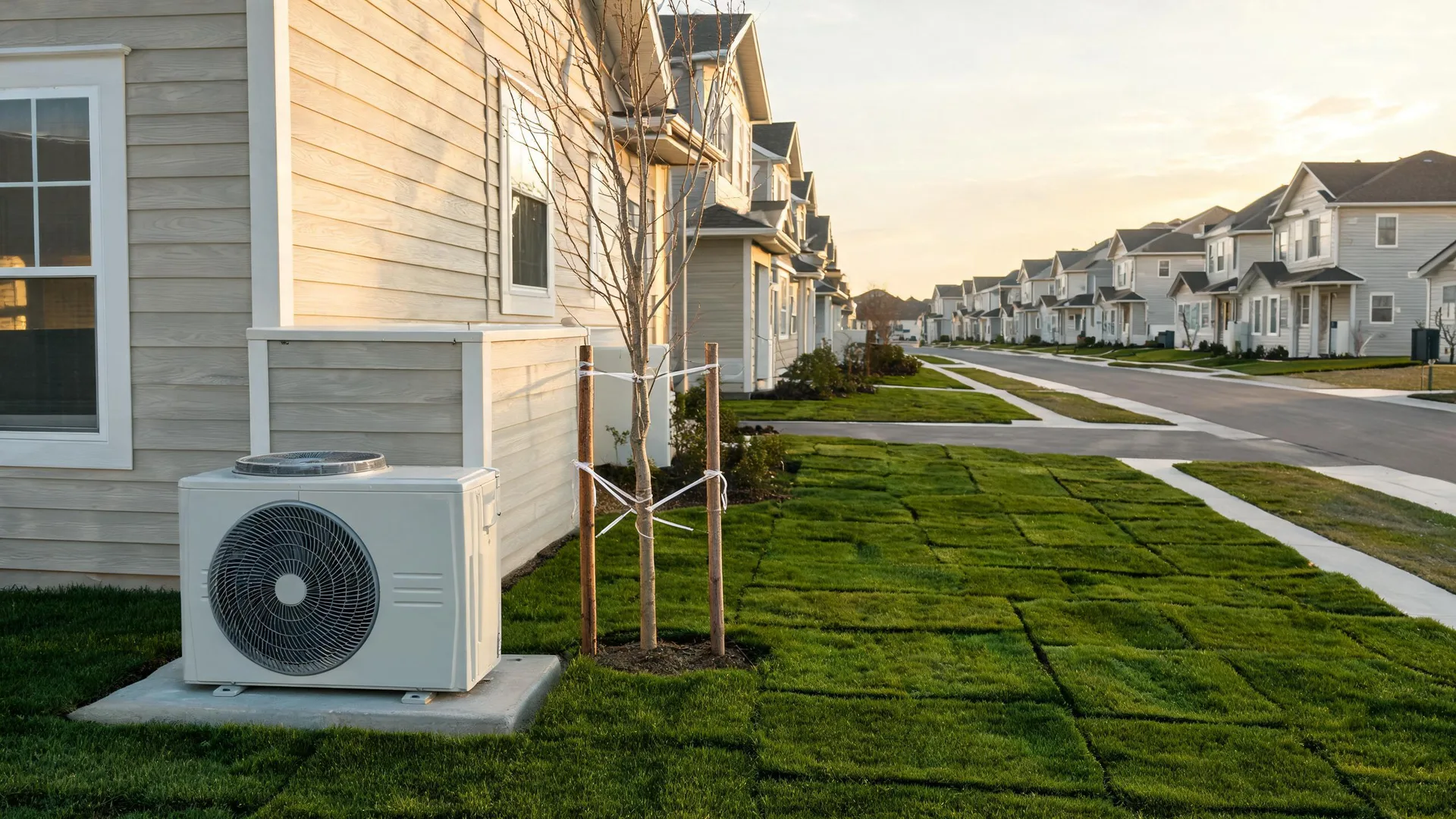
The refrigerant has to be recovered first

An old system still holds refrigerant, and that can't just be vented into the air. A tech has to recover it into a tank before any lines get disconnected, the same way it would be handled on a repair call. If the old system is a straight air conditioner being swapped for a heat pump, this step happens no matter how old or worn out the unit is.

A load calculation looks at more than floor space. It factors in window area, ceiling height, how many exterior walls a room has, and where the sun hits the house through the day. Homes of the same size can need different sized systems because of that. Oversize the heat pump and it short cycles, kicking on, satisfying the thermostat fast, then shutting off again before it's pulled the moisture out of the air. That leaves the house feeling clammy even when the temperature reads fine. Undersize it and it runs constantly on the hottest and coldest days, struggling to keep up and wearing down faster for the effort. The right size runs longer, steadier cycles, which is what a heat pump is built to do.

Installation day starts with the parts of the job that have nothing to do with the new equipment. Line sets get run between the outdoor unit and the air handler, and if the old system used a different line size or a different refrigerant, those lines usually get replaced rather than reused. The electrical side gets checked too. A heat pump often draws differently than whatever was there before, so the disconnect box and breaker get sized to match the new unit, not left as they were. Once the outdoor unit is set on its pad and leveled, the lines get connected, the system gets charged with refrigerant, and the crew tests it running in both directions, heating and cooling, before they call it done. A new thermostat gets wired in and set up last, since that's what actually ties the whole system together. None of this runs on the same schedule as a repair. A breakdown gets patched and you're back running the same day. An install is slower by design, because every connection is new and every one of them gets checked before the crew leaves.