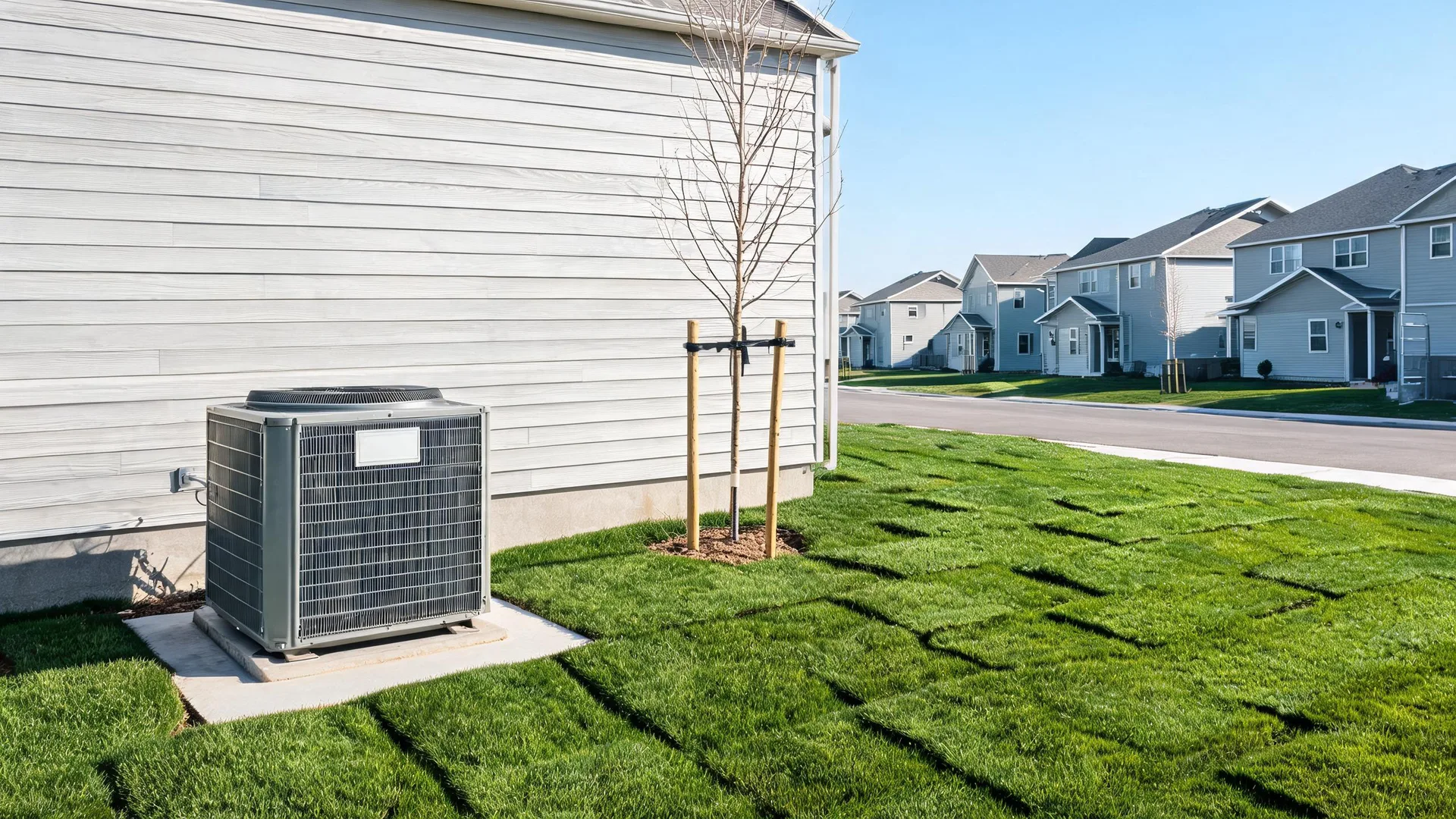
Most homes here already run on electricity
Electricity heats 78 percent of homes in Jackson County. A heat pump fits a house wired for electric heat without adding a gas line or running new fuel piping.

Takes about a minute. No obligation.
Electricity heats 78 percent of homes in Jackson County. A heat pump fits a house wired for electric heat without adding a gas line or running new fuel piping.
Replacing an electric furnace or electric baseboard with a heat pump means working with the wiring and ductwork already in the house, not building a new fuel path for it.

NOAA nClimDiv, 1991–2020 normals
Georgia electricity ran 14.08 cents per kilowatt-hour in 2024.
At that rate a heat pump earns its keep on comfort and reliability more than on the power bill.



Jackson County gets its share of rough weather. Damaging wind hit the county 46 times between 2015 and 2024, with hail, tornadoes and a couple of tropical storms mixed in. None of that calls for anything special in a heat pump. A standard unit, properly sized for the house, holds up against wind and hail the way any outdoor condenser does. What's worth planning for is the power going out. Close to a third of Georgia households lost power for a full day or more in 2024. A heat pump needs electricity to run, same as the electric heat or central air it would replace, so an outage affects it the same way. That's a question of backup power, not of buying a bigger or pricier system.
Power is cheaper here, so the most efficient model takes longer to pay off. Reliability and fit matter more.
Find a contractor
Jackson County stays warm most of the year, with a short, mild winter. A heat pump here spends more time on easy cooling days than on hard cold ones, nothing like what a unit in the north has to cover. The compressor isn't pushed the way it would be in a harder climate. That means a well-built standard unit can run for years without strain. You don't need the top efficiency tier to get a system that holds up here.
Every heat pump loses capacity as the outdoor temperature drops. Most add a backup heat source for the coldest days. Ask what kicks in when the heat pump can't keep up on its own, electric resistance strips or something else, and at what temperature it switches over. That changeover point tells you more about comfort on a cold morning than any spec sheet number.
A heat pump sized by square footage alone can end up too big or too small for the house. The right size comes from a load calculation that accounts for insulation, windows and duct layout, not a rule of thumb. An oversized unit short cycles and struggles to pull moisture out of the air. An undersized one runs constantly and still falls behind on the hottest or coldest days. Ask to see the calculation, not just the tonnage.
A load calculation looks at more than the square footage on a listing sheet. It accounts for how many windows face the afternoon sun, how much attic insulation sits overhead, how the ductwork is laid out, and how many people and appliances add heat to the place day to day. Houses the same size can need different size systems once you factor all that in. Sizing a heat pump off square footage alone skips all of that, and it shows up later as a unit that cycles too often or one that never quite catches up. The calculation takes longer than a tape measure, but it's what decides whether the system fits the house or just fits the budget.
Installation day starts with the old equipment coming out, not the new unit going in. The indoor coil, the outdoor unit and the line set connecting them all have to come apart before anything new goes up. On a heat pump swap the crew also checks whether the existing line set and electrical circuit can be reused or need replacing. Once the old system is clear, the new outdoor unit gets set on its pad and the indoor coil goes in above or beside the furnace or air handler. The line set gets connected, pressure tested and evacuated to pull out moisture and air before refrigerant goes in. Trapped air or moisture left in the line set causes problems down the road that are hard to trace back to the install. A heat pump often draws differently than what it replaces, so the breaker and wiring get checked against what the new unit actually needs. Last comes startup. The system runs through a full cycle, heating and cooling, while refrigerant charge and airflow get checked against the manufacturer's numbers rather than eyeballed.