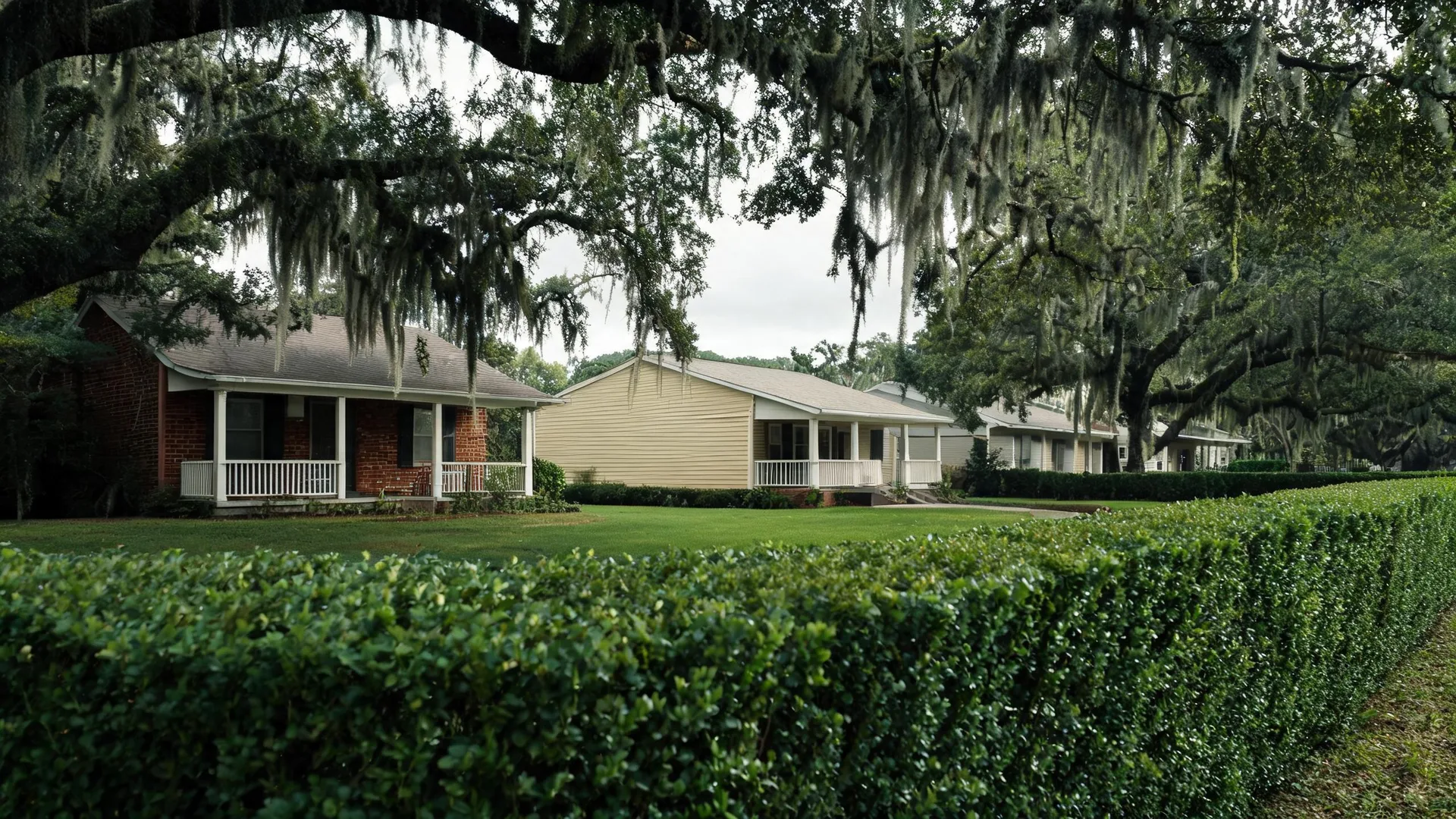
A row of single-story houses, one brick and others with pale siding and covered porches, behind a trimmed hedge and lawn, under large oak trees draped with Spanish moss.

Heat Pump Installation in Gainesville, GA

Tell us about the job

Takes about a minute. No obligation.

New system or replacementHeat PumpHall County, GA
Step 1 of 2

What ZIP code is the job in?

Hall County sees its share of storms

Hall County logged 106 severe weather events between 2015 and 2024, most of it damaging wind, along with hail and a handful of tornadoes. The outdoor unit of a heat pump sits outside through all of it, exposed to wind-blown debris and hail.

Plan for the outage, not just the storm

Nearly a third of Georgia households went without power for 24 hours or more at some point in 2024. A heat pump runs on electricity for both heating and cooling, so when the power goes out, so does the heat and the air conditioning until it's back.

7 months
October through April, your system heats
5 months
May through September, it cools
34°F
the average winter night it heats against
87°F
the average summer afternoon it cools against
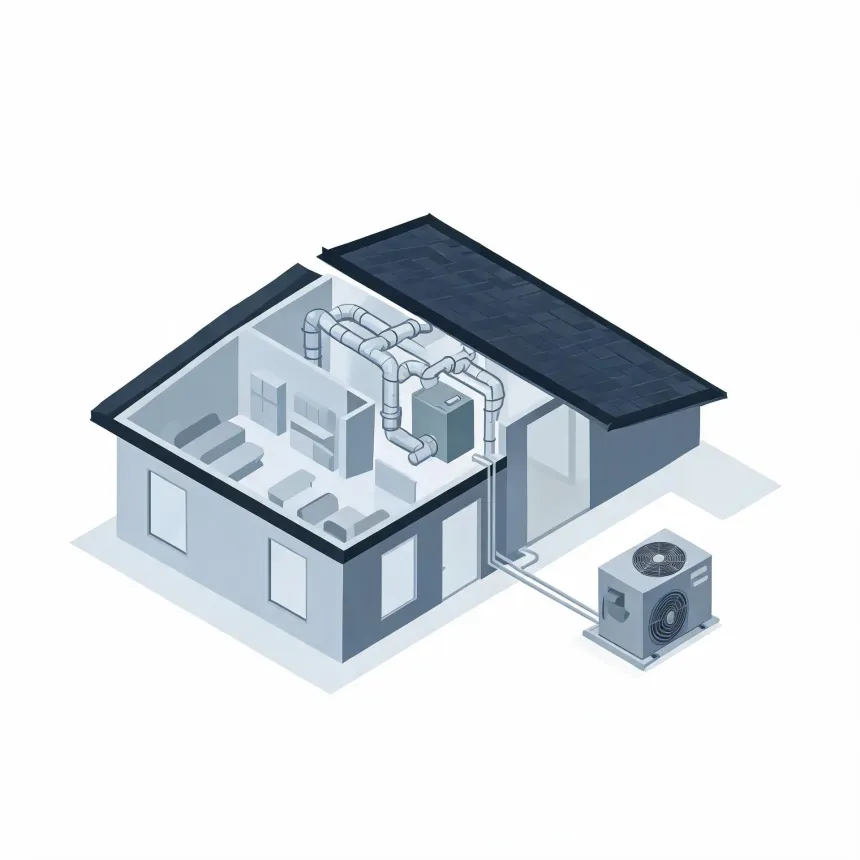
Isometric illustration of a cutaway single-story house showing interior ductwork and an air handler connected by lines to an outdoor condenser unit on a pad beside the building.
Your system heats October through April and cools May through September.

NOAA nClimDiv, 1991–2020 normals

Electricity heats 66.5% of homes in Hall County.

A heat pump replacing electric heat is swapping one electric system for another, nothing new for the panel to handle.

Power here runs 14.08 cents a kWh, cheap enough that payback isn't the point, holding up through wind and hail is

Power costs 14.08 cents a kWh statewide
78 damaging wind events from 2015 to 2024
8 hail events from 2015 to 2024

A heat pump here spends more of the year heating than cooling. October through April is seven months of heat. May through September is five months of cooling. Installing before either season starts means picking September or April on your own schedule. A system going in after the old one quits gets whatever crew and whatever unit are available that week. One going in before the season has time to get checked and fixed, if anything needs it, before you have to depend on it.

A new heat pump here has to meet this region's efficiency minimum, and doing it now earns a federal credit

Any heat pump installed here now has to hit 14.3 SEER2 for cooling and 7.5 HSPF2 for heating, the federal minimum for this region. Installing one that meets it also qualifies for the federal tax credit available this year. Get a system that clears the bar and get credit for it.

Find a contractor
A man in a cap, gray long-sleeve shirt and brown work pants walks up porch steps toward a dark blue front door, carrying a canvas tool bag with tools in its side pockets, beside a potted shrub.
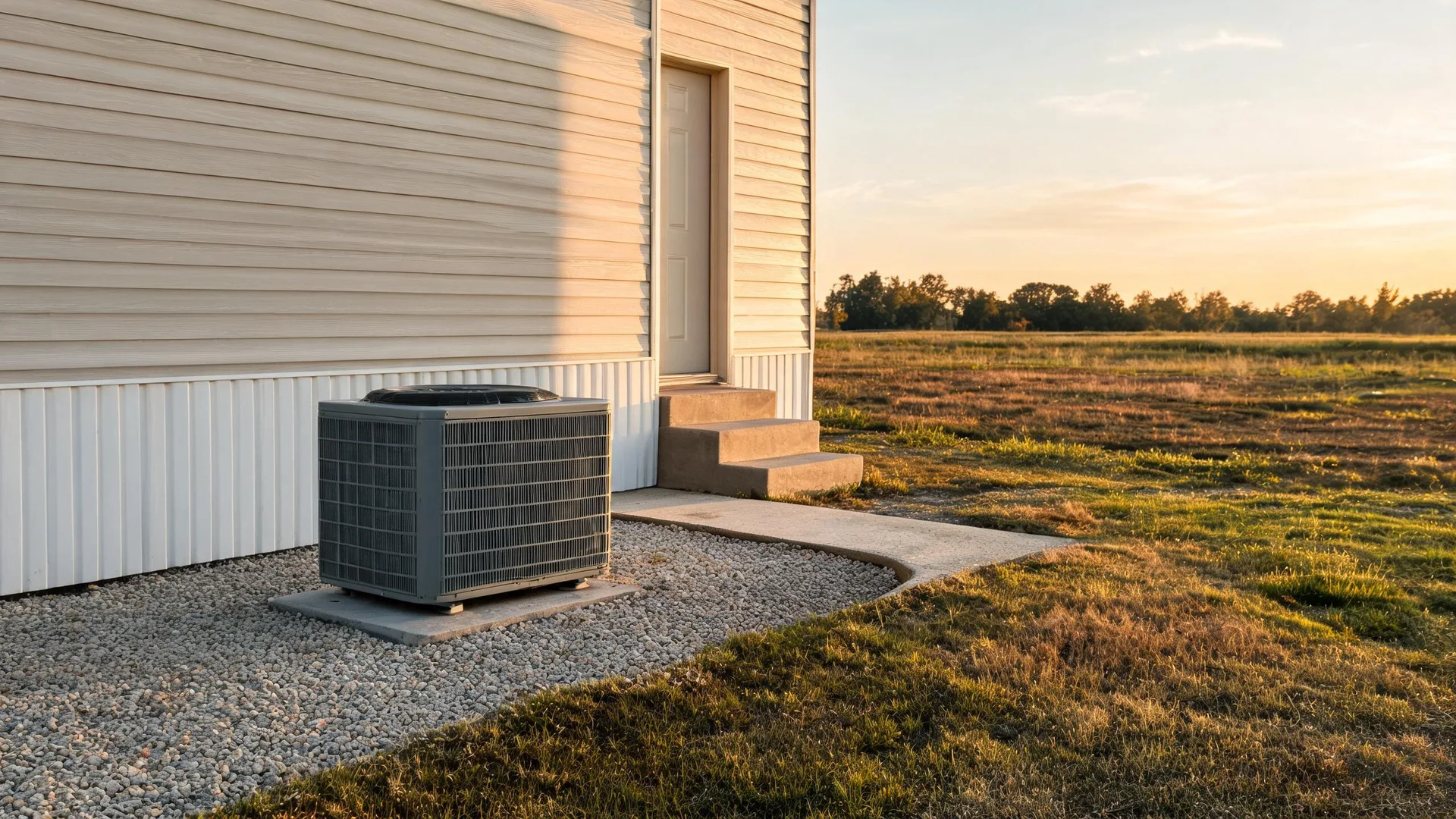
A residential heat pump outdoor unit mounted on a concrete pad next to a house with gray vinyl siding.

A mild climate means less wear, not no wear

Hall County stays mild. Winters are short, and even summer here doesn't push a heat pump to its limit the way it does further south. That's an easier load on the outdoor unit, year after year, than most of the country sees. A compressor under less strain stays worth repairing longer before it makes sense to replace the whole system. Easier doesn't mean no wear, though. What tends to wear a heat pump out here is age or a skipped tune-up, not the weather.

The ductwork decides more than the unit does

If the ducts already in place are undersized, leaky, or routed wrong for a heat pump's longer, steadier airflow, fixing that before the new system goes in costs more than the equipment itself. A heat pump that moves warm air at a lower temperature than a furnace needs ducts that can carry that air without a fight.

Matching the system to the house costs more than matching it to the old one

A proper installation starts with a load calculation, room by room, not a swap of the same tonnage that's coming out. A unit sized off the old system instead of the house can end up oversized or undersized, and either mistake shows up later in comfort and wear, even though it doesn't show up on the invoice.

The old system has to come out before the new one goes in, and that means dealing with the refrigerant inside it first. A licensed contractor recovers that refrigerant into a tank rather than venting it, because venting it is against the law and bad for the atmosphere besides. The indoor coil and the outdoor unit both get disconnected, and the line set between them either gets reused or replaced depending on its condition and what the new system needs. Old electrical whips and disconnects at the outdoor pad usually get swapped too, since a new heat pump often has different power requirements than what was there before. Whatever's left, the cabinets, the coils, the compressor, gets hauled off as scrap metal. None of it gets left behind as a backup, because a heat pump that's been sitting unused doesn't start up reliably when you need it to.

Sizing a heat pump is not like sizing a furnace. A furnace that's a little big just short cycles and wastes some fuel. A heat pump that's oversized struggles to dehumidify in cooling mode because it satisfies the thermostat before it's run long enough to pull moisture out of the air, so the house feels clammy even at the right temperature. One that's undersized runs flat out on the coldest and hottest days and leans hard on backup heat strips to make up the difference, putting more hours on the system than it should need. The only way to land in between is a room by room load calculation that accounts for insulation, window area, and duct losses, not a guess based on square footage or what the old unit was rated for. Get the size wrong and the system can run for years without ever working the way it should.