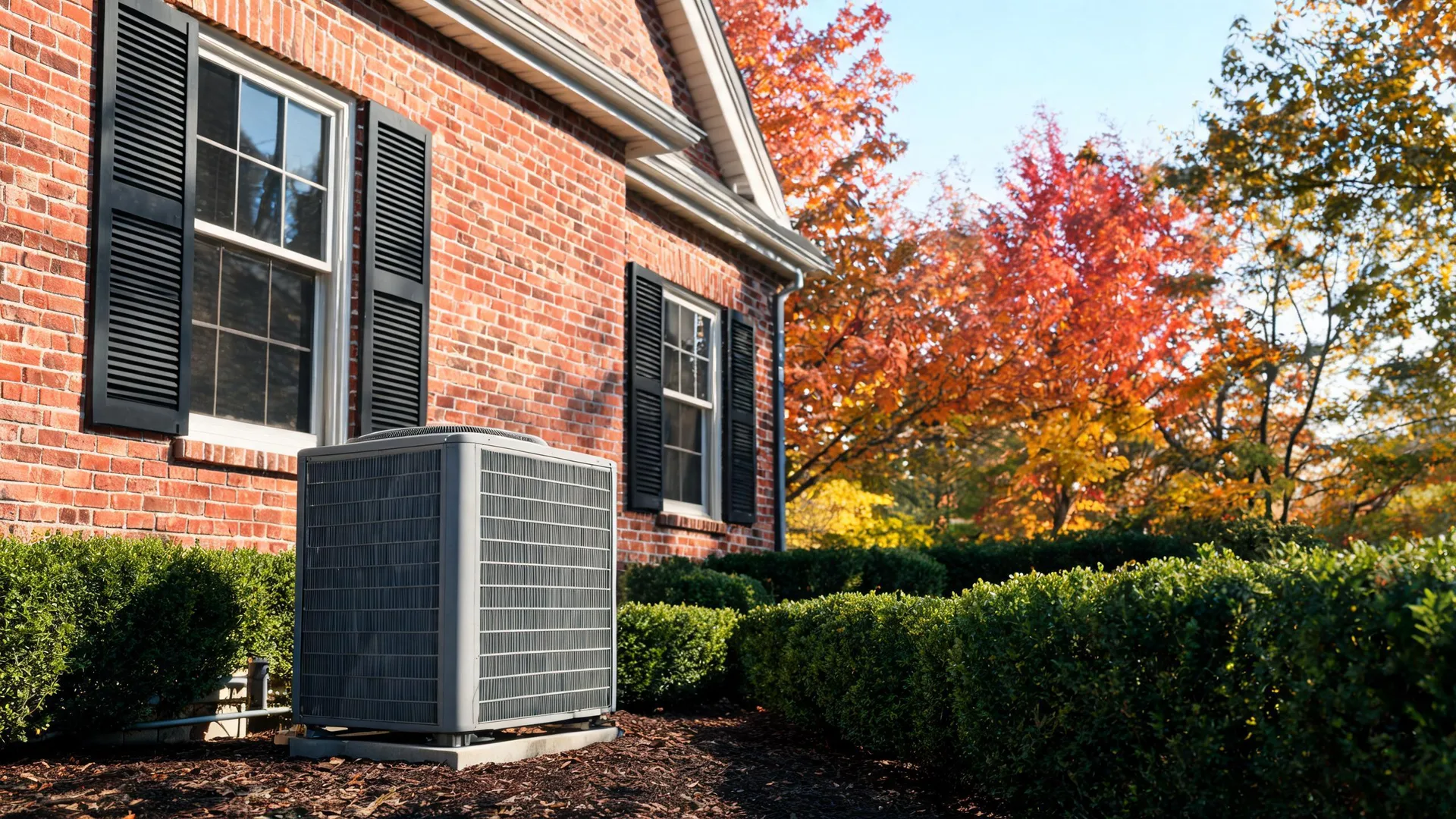
Electricity already runs most homes here
Electricity heats 80.7% of occupied homes in Catoosa County. A heat pump fits a house already wired for electric heat without adding a gas line or anything new to the panel in most cases.

Takes about a minute. No obligation.
Electricity heats 80.7% of occupied homes in Catoosa County. A heat pump fits a house already wired for electric heat without adding a gas line or anything new to the panel in most cases.
When the old system already ran on electricity, a heat pump works with what's already there. Same power supply, same ductwork. That keeps the installation closer to a straight replacement than a rebuild.
NOAA nClimDiv, 1991–2020 normals
Fort Oglethorpe stays warm most of the year, with a short, mild winter.
A heat pump here isn't working against long hard freezes, so a solid mid-range system is enough.




Catoosa County is zone 3A, warm and humid with a long stretch of cooling weather. Any heat pump installed here new has to meet 14.3 SEER2 for cooling and 7.5 HSPF2 for heating. Those are federal minimums, not local extras, so every qualifying model on the market already clears them. Central air conditioners face a tighter rule for the Southeast, higher than what a cooler state requires, which is why the stripped-down units sold up north don't show up here. A federal tax credit is available on top of that for equipment that qualifies. Worth asking about when you're comparing models.
Georgia power runs 14.08 cents a kilowatt-hour, cheaper than most of the country. That makes a high-efficiency heat pump pay itself back slower here than it would somewhere with pricier electricity. Worth knowing before you spend extra on the top-tier model. A solid mid-range system that fits this house and gets installed right will cost less to run into than a system picked for a spec sheet.
Find a contractor
The SEER2 and HSPF2 numbers on the label are lab ratings, measured under set conditions that don't match a real roof in real weather. They tell you how the equipment compares to other equipment, not what your house will see day to day. A higher rated heat pump squeezes more heating or cooling out of the same electricity, but only when it's sized right and the ductwork can move the air it produces. An oversized top-tier unit run through leaky or undersized ducts can land worse than a smaller mid-range system installed clean. The rating also describes the system new. A dirty coil, a low refrigerant charge, or a filter that never gets changed will pull real performance below the number on the label no matter how high that number started.
A contractor measures the house room by room, checking window area, insulation, and how the house is laid out, then runs that through a load calculation. That number, not the square footage alone, tells you what size heat pump the house needs. Square footage alone skips over what actually changes the number.
Too big and the heat pump short cycles, reaching the thermostat setting fast and shutting off before it finishes pulling moisture out of the air, so the house feels clammy even at the right temperature. Too small and it runs constantly without catching up on the hottest or coldest days. Either way the compressor works harder than it should.
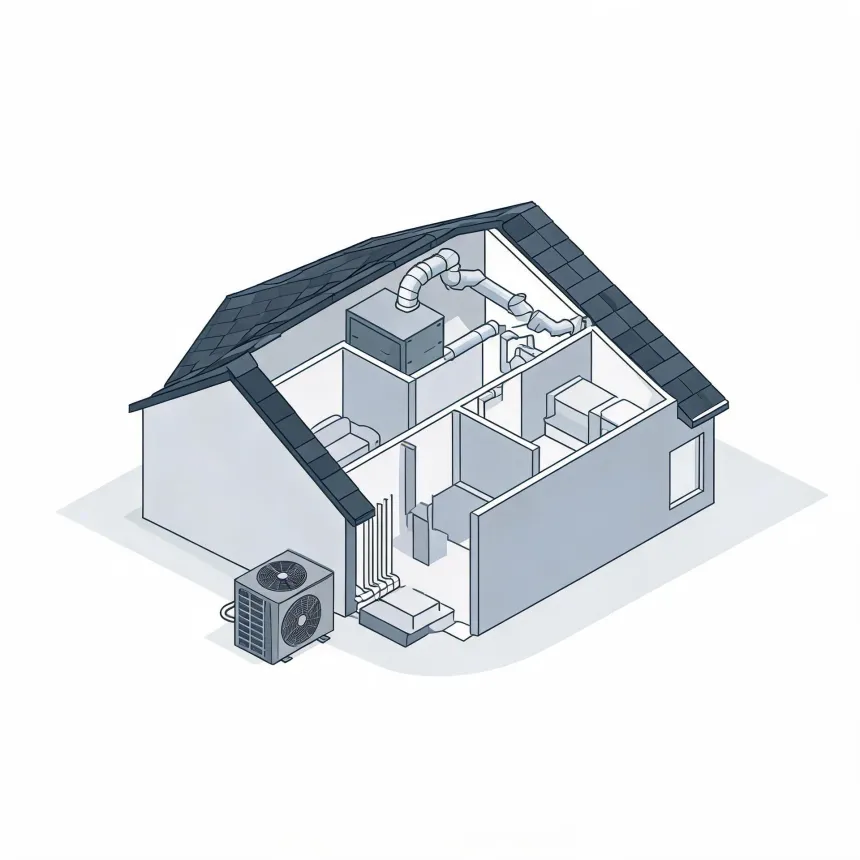
Once the new heat pump is in, the old system still has to come out. If it was a furnace paired with a separate AC unit, the installer disconnects both the indoor coil and the outdoor condenser, along with the furnace itself if it's being replaced rather than kept for backup heat. Refrigerant in the old outdoor unit gets recovered, not vented, that's required regardless of what the equipment is being replaced with. Any old ductwork modifications or electrical connections get tied into the new system rather than left live. Hauling away the old equipment is usually part of the installation job, worth confirming before work starts so it doesn't sit in the yard afterward. If the old system had a gas furnace, the installer caps the gas line rather than leaving it open, even if the heat pump takes over heating duty entirely.
The equipment itself is only part of what you're paying for. Labor to run new refrigerant lines, modify ductwork where it doesn't match the new unit, and tie into the electrical panel often costs as much as the heat pump. A straight swap, where the new outdoor unit sits on the same pad and connects to the same lines, takes less work than one where the lineset has to be replaced or rerouted. The indoor coil has to match the outdoor unit for the system to run at its rated efficiency, so mismatched equipment either costs more upfront or underperforms for years. Ductwork condition matters too. Leaky or undersized ducts force a contractor to choose between fixing them now or living with a system that never quite hits its numbers. None of this shows up on a spec sheet, but it's most of what separates one quote from another.