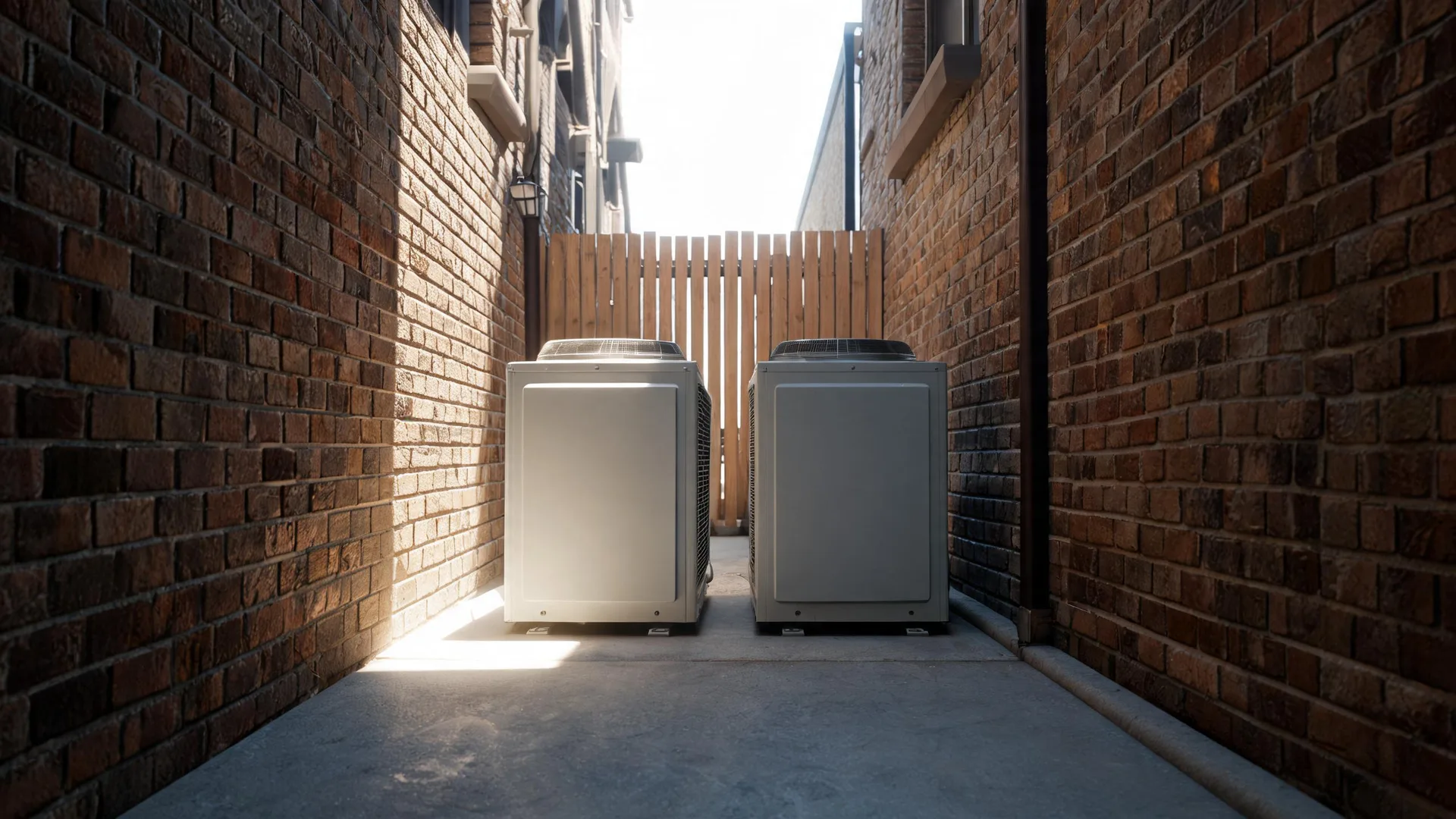
Ask where the pad goes
Walk the yard with the installer before the pad gets set. Clear of the downspout, clear of anything overhead that could drop a limb, and high enough that water runs away from it instead of pooling under the coil.
Takes about a minute. No obligation.
The size of the unit matters more than the brand. A contractor should size a heat pump to the house through a load calculation, not by matching whatever was there before. Too large and it short cycles, turning on and off without properly controlling humidity. Too small and it runs constantly without keeping up on the coldest days. Ductwork plays into it too. If the existing ducts are too small or leaky for the new system, they may need sealing or modification, and that work adds to the job. The condenser's placement outside, the line set run to the indoor unit, and whether the electrical panel can support the new equipment all factor in before a contractor can give a firm number.

NOAA nClimDiv, 1991–2020 normals
Gas heats 54 percent of homes in Douglas County.
A heat pump replacing a gas furnace here is the exception, not the rule, so the installer needs to plan for that change, not just swap boxes.




Douglas County saw 141 severe weather events between 2015 and 2024, most of it damaging wind, with hail, tornadoes, tropical storms and a few winter ice events mixed in. A heat pump's outdoor unit sits outside through all of it. Where a contractor sets the condenser matters. It should sit clear of falling limbs, away from the downspout, and up on a pad that keeps it above standing water. Statewide, close to a third of Georgia households lost power for a full day or more in 2024. A heat pump runs on electricity for both heat and cooling, so an outage leaves no backup burner to fall back on the way a gas furnace has. Worth asking the installer what backup heat looks like for your house, and whether a generator connection makes sense alongside the new system.
Power is cheaper here, so the most efficient model takes longer to pay off. Reliability and fit matter more.
Find a contractor
The old system doesn't just vanish once the new one is running. A contractor disconnects the refrigerant lines, recovers whatever refrigerant is left in the old unit, and hauls away both the outdoor condenser and the indoor air handler or coil. If the old system ran on gas, there's also a furnace to remove and a gas line to cap off properly. The ductwork usually stays, though a contractor may open it up to check for leaks or damage before connecting the new equipment. None of this is a quick swap. The old equipment has to come out clean before the new line set, wiring and refrigerant charge go in, which is part of why installation takes real time on site rather than a few hours.
Walk the yard with the installer before the pad gets set. Clear of the downspout, clear of anything overhead that could drop a limb, and high enough that water runs away from it instead of pooling under the coil.
A gas furnace keeps a backup burner. A heat pump has none, it runs on electricity for both heat and cooling. Ask the installer what your house falls back on in an outage, and whether wiring in a generator connection now makes sense while the new system goes in.
That yellow sticker on the side of the unit tells you how much electricity it takes to move a given amount of heat. A higher rating means the compressor is doing more work per unit of power, usually through a better coil design or a compressor that can run at variable speeds instead of just on and off. That number is tested in a lab, though, not in your ductwork, so a high-efficiency unit still needs correct sizing and good airflow to actually deliver what the label promises. A variable-speed compressor tends to hold a steadier temperature and pull more moisture out of the air than one that just cycles on and off. Higher-rated equipment usually costs more up front and can carry more electronics that need service down the line, so it's worth weighing against how long you plan to stay in the house.
Installation day starts with the old system coming out, so expect the crew there most of the day rather than a couple hours. Once the old equipment is clear, the line set gets run between the outdoor condenser and the indoor air handler or coil, and those lines get brazed, pressure tested, then pulled down into a vacuum before any refrigerant goes in. That vacuum step matters more than it sounds. Any moisture or air left in the lines will damage the compressor over time, so a contractor who skips it or rushes it is cutting a corner you won't see until the system starts failing early. While that's happening, someone is usually setting the new electrical whip and disconnect by the condenser and checking the breaker can handle the new load. Indoors, the thermostat gets wired and the airflow gets checked, since a heat pump depends on steady airflow across the coil to work right in both directions. Expect the crew to run the system through a cooling cycle and a heating cycle before they leave, checking refrigerant charge and temperature split rather than just confirming it powers on.