







A row of single-story houses with covered porches, the nearest clad in red brick, seen behind a trimmed hedge and lawn beneath large moss-draped oak branches.

Heat Pump Installation in Columbus, GA

Tell us about the job

Takes about a minute. No obligation.

New system or replacementHeat PumpMuscogee County, GA
Step 1 of 2

What ZIP code is the job in?

Muscogee County saw 74 severe weather events between 2015 and 2024. Most of that was wind, 51 events, with 14 hail events and 4 tornadoes mixed in. A heat pump's outdoor unit sits outside through all of it, exposed to whatever the storm throws at it. And storms here don't just risk the equipment, they risk the power that runs it. Statewide, 31% of Georgia households lost power for 24 hours or more in 2024. When the power drops, so does your heat pump, electric heat with no backup to fall back on.

5 months
November through March, your system heats
5 months
May through September, it cools
37°F
the average winter night it heats against
90°F
the average summer afternoon it cools against
Isometric cutaway illustration of a gray house showing interior rooms, a central air handler with ducts in the attic, and refrigerant lines running to an outdoor condenser unit beside the building.
Your system heats November through March and cools May through September.

NOAA nClimDiv, 1991–2020 normals

Heat here runs November through March, five months a year.

October is the month to get a new heat pump in, before the cold and the storms that come with it arrive.

Most homes here already run on electricity, which is why a heat pump fits

56.5% of homes heat with electricity
Power here costs 15.82 cents per kilowatt-hour
Climate zone 3A
Built for air this heavySummer dew points here average 69°F, higher than most of the country.

Any split-system heat pump installed here now has to hit 14.3 SEER2 for cooling and 7.5 HSPF2 for heating, the federal minimums as of 2023. Muscogee County falls in climate zone 3A, warm and humid, with a cooling season that runs long. That's part of why the Southeast has its own higher bar for central air equipment too, 14.3 SEER2 under 45,000 Btu/h and 13.8 SEER2 above it, stricter than what the rest of the country requires. A heat pump that meets these numbers is built to carry the cooling load this climate puts on it, not just the mild winters. Installing one now also qualifies for a federal tax credit, worth looking into before you pick a system.

Plan this installation around the outages and storms that come with living here

Ask about where the outdoor unit will sit and what, if anything, will shield it from wind and hail. Ask what happens to your heat and hot water if the power goes out, and whether backup is worth adding now while the system is already being put in.

Find a contractor
A man in a cap, navy T-shirt and brown pants carries a waxed canvas tool bag up the steps toward a blue front door of a shingled house, beside a potted shrub.
A gray heat pump outdoor unit mounted on a concrete pad next to a residential house with lap siding and stone accents.

Running most months of the year

This unit runs nearly year round here, cooling through the long muggy summer, then switching over once winter sets in. That's a lot of hours on one outdoor unit, exposed to whatever weather comes through. A heat pump installed now already meets the regional minimum built for this cooling load. What matters at install is sizing it to your house, not just meeting the rating on paper. A unit too big or too small for the space cycles more and wears faster than one sized right from the start. Ask the contractor to run a load calculation on your house rather than going by the old system's size.

The old equipment comes out

Disconnecting a heat pump means breaking the electrical connection, capping or removing the refrigerant lines, and taking out both the outdoor unit and the indoor air handler or coil. Old refrigerant has to be recovered into a tank rather than released, that's a federal rule, not a preference. Any line set that's corroded or the wrong size for a new system usually gets replaced rather than reused.
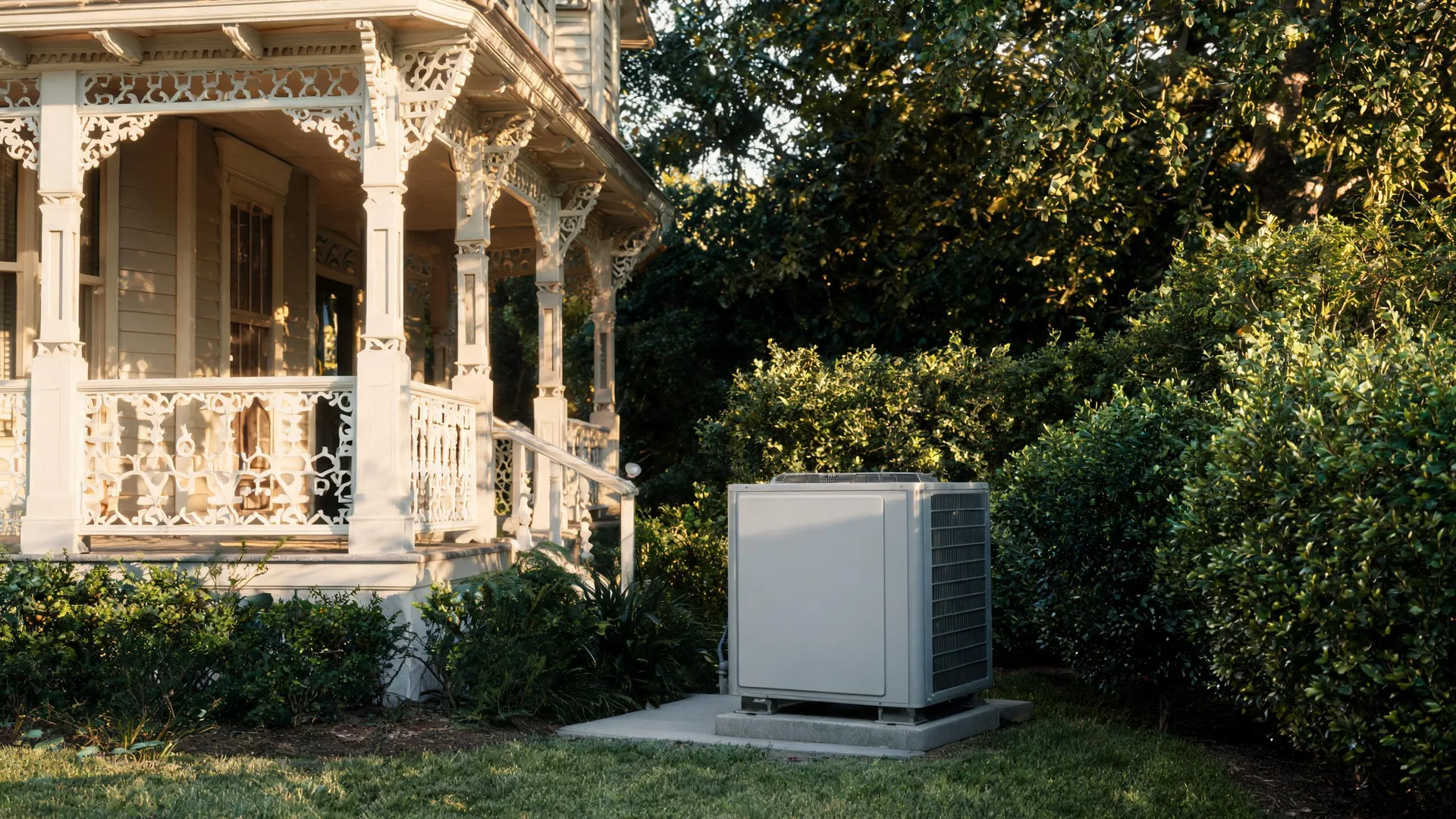
The pad, wiring and ductwork get a look

A new heat pump doesn't always mean starting from bare ground. If the concrete pad the old unit sat on is level and intact, it can often stay. The disconnect box and wiring get checked against what the new unit draws, since a bigger or more efficient system can call for different wire gauge or breaker size. Ductwork gets inspected too, a system that heats and cools well still underperforms if the ducts leak or were sized for different equipment.

Sizing a heat pump starts with a load calculation, not a tape measure around the old unit. That calculation looks at square footage, but also window area, insulation, ceiling height, and how much sun the walls take through the day. Two houses the same size can need different sized systems once those details are counted. A unit sized too big cools or heats the air fast, then shuts off before it pulls the moisture out, so the house feels clammy even at the right temperature. A unit sized too small runs constantly and never quite catches up on the hottest or coldest days, and the extra run time wears on the compressor. Either mistake shortens the life of the equipment. The only way to avoid both is to size off the house itself, not off habit or the old system's rating plate.

Install day starts with the outdoor unit set in place and the indoor air handler or coil connected to the ductwork, then the line set run between them and checked for leaks before anything gets charged with refrigerant. The electrical connections get tied in next, matched to what the new unit draws rather than what the old one did. Once it's wired and charged, the system gets tested in both directions, cooling and heat, not just whichever mode the weather happens to call for that day. A contractor should also walk the ductwork and confirm airflow at the vents before calling the job done, since a well-installed unit still falls short if air isn't moving the way it should. Expect some noise and some time with the power off in that part of the house. The job isn't finished until the thermostat is set up and the system's been run long enough to show it holds steady.