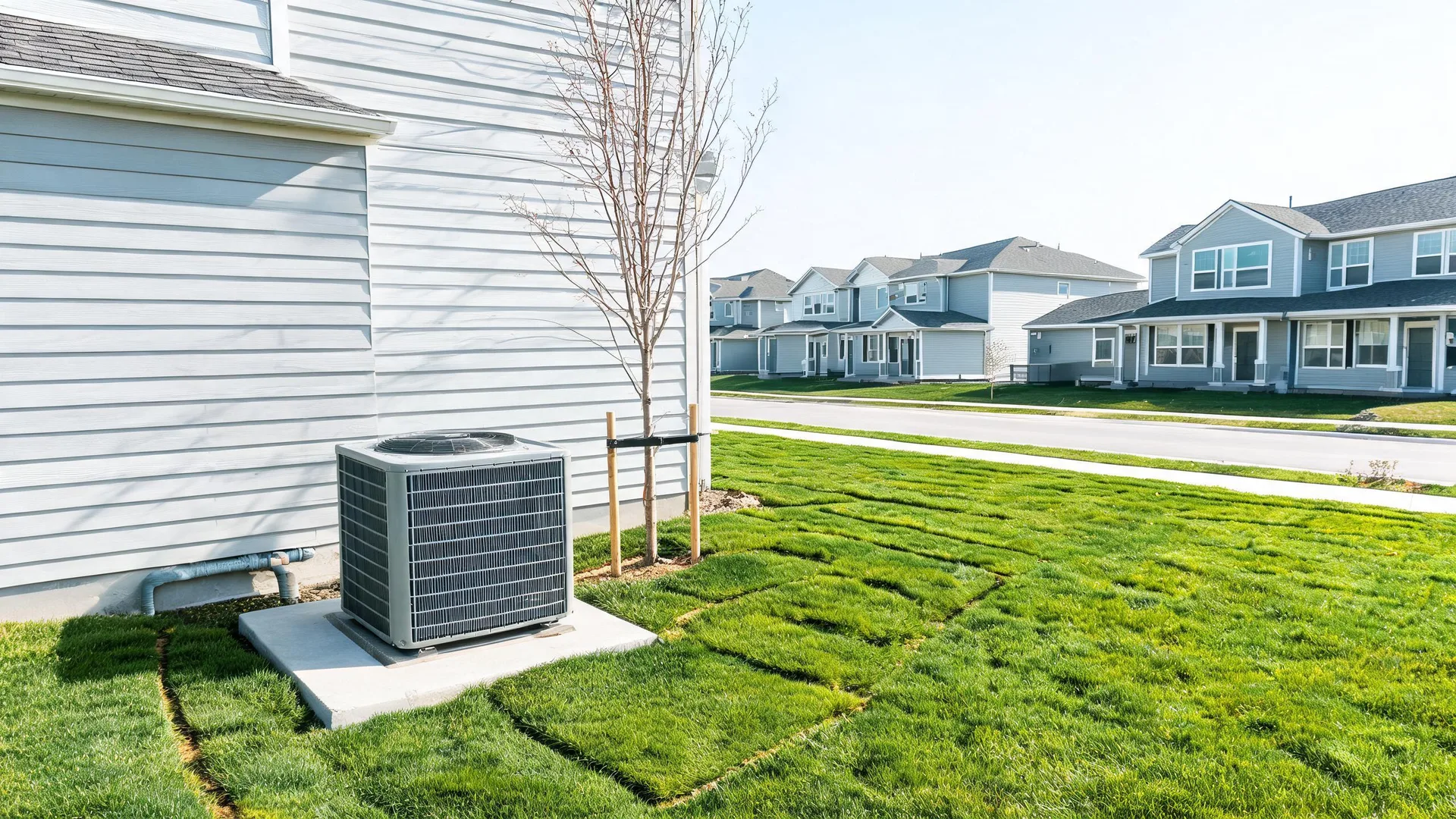
Weather here is hard on outdoor equipment
Bartow County logged 117 severe weather events between 2015 and 2024, with damaging wind the most common. An outdoor heat pump unit sits exposed to all of it, year round.
Takes about a minute. No obligation.
Bartow County logged 117 severe weather events between 2015 and 2024, with damaging wind the most common. An outdoor heat pump unit sits exposed to all of it, year round.
Nearly a third of Georgia households lost power for a day or more in 2024. A heat pump needs electricity to produce either heat or cooling, so where the unit goes and how it is protected is worth deciding before installation, not after a storm.

NOAA nClimDiv, 1991–2020 normals
Electricity already heats 63 percent of homes in Bartow County.
A heat pump fits the power this house already has, no new gas line to run.



Bartow County is zone 3A, warm with mild winters and summers that run long. Any split-system heat pump installed new here has to meet 14.3 SEER2 for cooling and 7.5 HSPF2 for heating at minimum. A central air system alone has to clear that same 14.3 SEER2 below 45,000 Btu/h, higher than what most of the country requires. That narrows what a contractor can put in, but it also means every option on the table is already built for this climate. A federal tax credit is available on top of that for equipment that qualifies.
Storms and outages are common here. Plan where the outdoor unit goes, how it's protected, and how you'll keep heat and hot water in an outage.
Find a contractor
Cooling runs May through September here. Heat takes over in October and stays on through April. Between the two, this heat pump is working most months of the year. Install it in April, before the first hot week hits, and it goes in on a day a contractor can take their time on. Wait until the house is already too hot or too cold, and the schedule is not yours anymore. Same logic holds in September, ahead of the October start. A system put in before it has to carry the load gets checked out and running right before it matters.
Every heat pump loses some capacity as the outdoor temperature drops, and at some point it needs backup heat to keep up. Ask what that backup is, whether it's electric resistance strips or something else, and at what temperature the system switches over. That answer tells you how the house gets heated on the coldest nights of the year, not just the mild ones.
The right size heat pump comes from a room by room load calculation that accounts for insulation, windows and duct layout, not a quick estimate based on square footage or what the old system was rated for. A unit sized too big will short cycle and wear out faster. A unit sized too small will run constantly and still struggle to keep up on the hardest days.
The old system doesn't just get hauled off. A contractor recovers the refrigerant from the lines before anything is disconnected, since it's against the law to vent it into the air. The outdoor unit, the indoor coil, and the air handler or furnace all come out. If the old system shared ductwork with the new heat pump, that ductwork gets inspected first, since it was sized for different airflow than what's going in. Line sets usually get replaced rather than reused, because old refrigerant oil left in the lines can contaminate the new system. What's left goes to scrap, since the metal in a condenser and coil has value. None of it gets left behind for the next storm to take care of.
Installation day starts with the equipment already on site and the spot for the outdoor unit already picked out, not decided that morning. The crew sets the outdoor unit on its pad or bracket, then runs new line sets between it and the indoor coil. Those lines get pressure tested and checked for leaks before any refrigerant goes in, because a leak found after charging means pulling the charge and starting over. The indoor coil ties into the air handler or furnace, and any ductwork being reused gets sealed at every connection the new system touches. Once everything is connected, the system gets charged to the manufacturer's spec and run through both heating and cooling before anyone calls it finished. A contractor should walk through the thermostat settings and the backup heat before leaving, not just point at the breaker panel.