




Single-story brick and cream-sided houses with covered porches behind a trimmed hedge and lawn, shaded by large oak trees draped with Spanish moss under an overcast sky.

Heat Pump Installation in Albany, GA

Tell us about the job

Takes about a minute. No obligation.

New system or replacementHeat PumpDougherty County, GA
Step 1 of 2

What ZIP code is the job in?

Dougherty County saw 125 severe weather events between 2015 and 2024. Most of that was damaging wind, 105 times in that stretch, along with 11 hail events, 2 tornadoes, and 5 tropical storms or hurricanes coming through. An outdoor heat pump unit sits outside through all of it, exposed to whatever the wind carries or the hail drops. When storms knock out power, a heat pump can't run until it's back, so there's no heat and no hot water until it does. Statewide, close to a third of Georgia households lost power for a day or more in 2024. That's worth planning around before the unit goes in, not after a storm passes through.

5 months
November through March, your system heats
6 months
May through October, it cools
40°F
the average winter night it heats against
91°F
the average summer afternoon it cools against
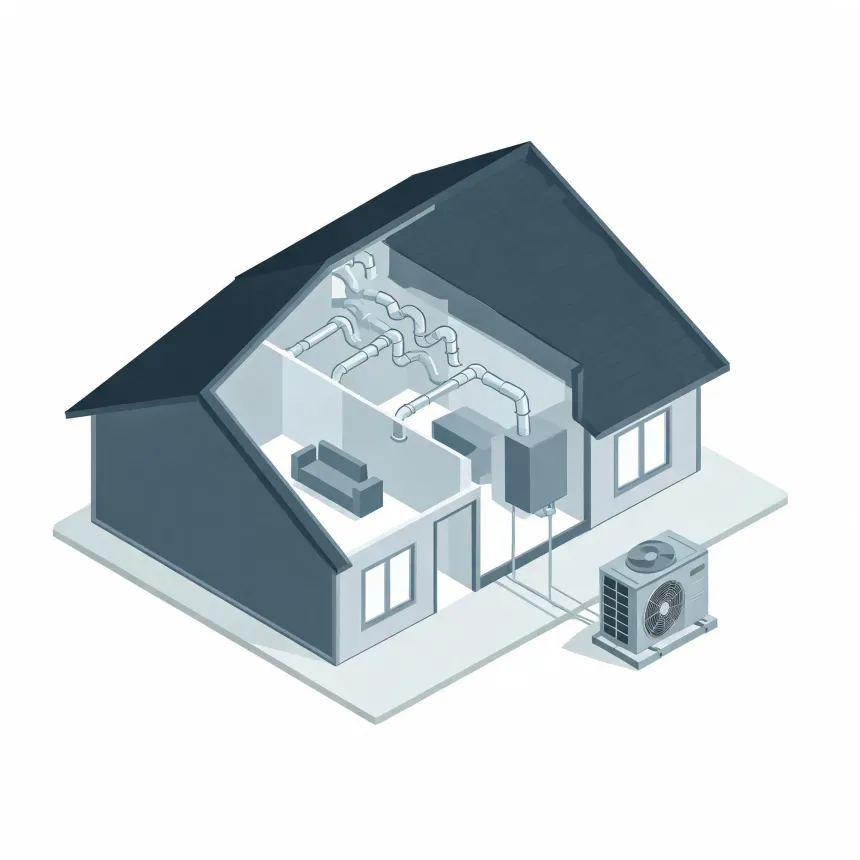
Isometric cutaway illustration of a house showing interior ductwork, an indoor air handler unit, and an outdoor condenser unit beside the building.
Your system heats November through March and cools May through October.

NOAA nClimDiv, 1991–2020 normals

Electricity in Dougherty County runs 14.42 cents per kilowatt-hour, close to the national average.

The priciest high-efficiency heat pump won't earn its keep on the power bill here, so pick one that can ride out a storm instead.

This heat pump works nearly year-round here, so a storm has more chances to catch it off

Cooling runs May through October
Heat runs November through March
Climate zone 2A

Four out of five homes in Dougherty County already heat with electricity. A heat pump fits right into that, since it's wired and set up the way an electric furnace or electric resistance system already is. That makes installation a known job for a contractor here, not a special case. It also means parts, thermostats, and know-how for this kind of system are already common in the area. Given everything that can knock out power here, going with what's already standard keeps the installation itself simple, even if the storm readiness still has to be planned for separately.

Plan the installation around the outages, not just the heat

Where the outdoor unit sits, what guards it, and how you'll keep heat and hot water running without power are all decisions made at installation. Settle them now, with the contractor, while the system is going in.

Find a contractor
A residential heat pump outdoor unit mounted on a concrete pad next to a house with gray vinyl siding.

A long work year, then a storm on top of it

A heat pump here runs cooling duty most of the year and takes over heating when it turns cold, so it doesn't get much rest. Summer is the hard part. The dew point in Dougherty County averages 70°F across June, July and August, higher than most of the country sees. That heavy air means the system is wringing moisture out of the house on top of cooling it, every time it kicks on. That's more load on the compressor than the same machine would see in a drier place. Year after year of that work wears parts down sooner, and when a storm hits the unit sitting outside, it's the already-worn part that gives out first. Sizing the system for that load, not just for the square footage, keeps it from working harder than it has to.

Ask what happens when the power goes out

A heat pump stops the moment power drops, and it won't restart on its own logic any differently than before the outage. Ask whether the system can be set up to run on a generator or battery backup, and whether that backup covers just the air handler or the outdoor unit too. Some control boards also need a minute to reset after power returns, so ask how the one you're considering handles that.

Ask what the outdoor unit is rated to take

The outdoor unit is the part sitting exposed, so ask about the cabinet gauge and the coil guard, not just the efficiency numbers. A thin fin coil bends under hail and debris easier than a heavier one. Ask too about the mounting pad or bracket, since a unit anchored well stays put when wind gets under it instead of rocking the refrigerant lines loose.

Taking out the old system is its own job, separate from putting in the new one. A straight swap, heat pump for heat pump or furnace, usually means the old refrigerant lines, pad, and electrical whip can be reused or just need minor changes. Going from a furnace and separate AC to a heat pump is more work, since the old gas line has to be capped off safely and the ductwork checked to make sure it matches what the new system needs. Whatever comes out has refrigerant in it that has to be recovered properly, not vented, and that's true of the oldest units especially. The old equipment also has to go somewhere, and a contractor pulling the system should be able to say how it's hauled off and whether any of it gets recycled. None of that shows up in the price of the new unit, but it still has to happen before the new one goes in.

Any heat pump installed here now has to hit 14.3 SEER2 for cooling, the federal minimum for equipment built from 2023 on, and the Southeast standard is the same number below 45,000 Btu/h. Dougherty County falls in climate zone 2A, a hot and humid zone where cooling runs most of the year, so that side of the rating is the one doing the work. On the heating side, the minimum is 7.5 Btu of heat for every watt-hour used, lower stakes here since winters stay mild. Anything rated below those numbers can't legally go into a new install here. A federal tax credit exists for heat pumps that beat the minimum by enough, but running up the price for top-tier efficiency doesn't pay for itself on a power bill that's already close to average. The better use of that money is a unit built to take the wind and hail this area sees, with the efficiency rating as a baseline it has to clear, not the deciding factor.