







White plantation-style houses with wraparound porches lit at night, surrounded by Spanish moss-draped live oak trees.

Furnace Repair in Monroe, GA

Tell us about the job

Takes about a minute. No obligation.

RepairFurnace or heatingWalton County, GA
Step 1 of 2

What ZIP code is the job in?

Walton County saw 191 severe weather events between 2015 and 2024. Most of that was wind, 176 events, with 3 tornadoes and 6 tropical storms or hurricanes mixed in. That kind of weather doesn't ask permission before it throws a branch at your outdoor unit or drives debris into the cabinet. A furnace that still fires up afterward can be running with bent fins or a cracked line nobody's spotted yet. If a storm has come through since the last time someone looked at your system, that's worth a check on its own, separate from whatever's acting up now.

6 months
November through April, your furnace is on duty
35°F
the average winter night it heats against
Isometric cutaway illustration of a house showing interior rooms with furniture, a furnace unit with a tall flue pipe outside, and ductwork running through the attic.
Your furnace works hardest from November through March.

NOAA nClimDiv, 1991–2020 normals

Half the homes in Walton County were built in 1997 or later.

A furnace that came with a newer house still has working life in it, and that favors fixing what's wrong over replacing the whole system.

Six months of heat means the first cold snap finds the weak part

Heat runs November through April
Climate zone 3A
Winter nights average 35°F
Six months a year isn't a hard lifeFurnaces in Walton County run heat November through April, then rest.

If your furnace came with a newer house here, that's a reason to get it looked at before you get it replaced. A failed igniter or a bad flame sensor doesn't mean the unit is done, it means that part is done. Ask the contractor what's actually broken before you ask about a new system. On a furnace with years left in it, that's usually the cheaper question and the right one.

If a storm has come through, have it checked before it shows up as a breakdown

If a storm has come through since the last time anyone looked at your furnace, get the outdoor unit checked even if the heat still works. Bent fins or a line nicked by debris won't always show up as a problem right away.

Find a contractor
A man in a dark cap, dark shirt and tan pants, seen from behind, carries a canvas tool bag up concrete steps toward a blue front door, with a potted green plant in a blue planter beside the entry.
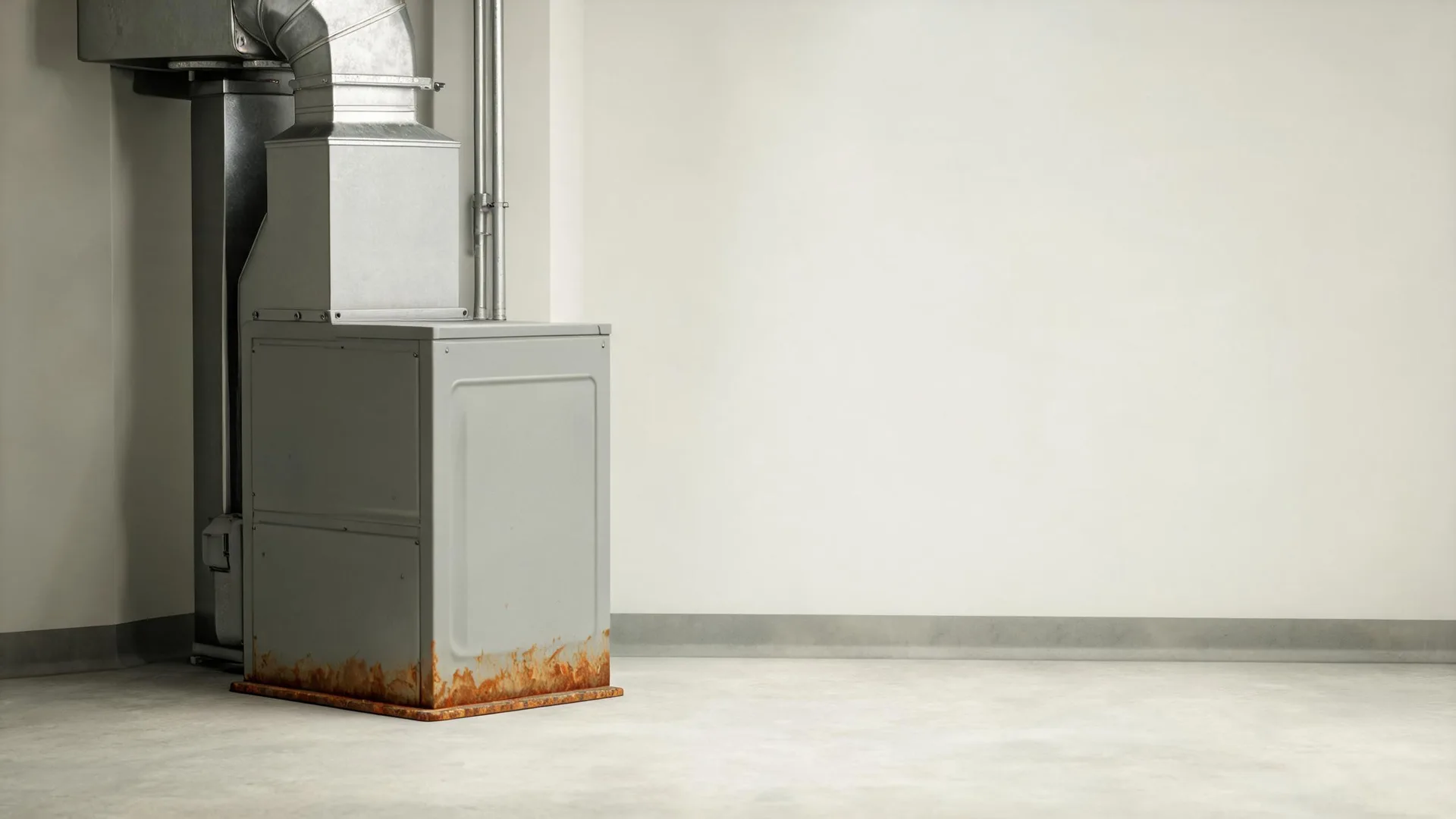
A gray residential gas furnace installed in an unfinished basement, surrounded by ductwork, a metal flue pipe, and a gas supply line.

Light use means a named part, not a guess

Six months of run time a year adds up slower than people think. A part that fails on this kind of schedule has usually just worn out on its own, not been pushed into failing early. That makes the repair call simpler: find the part that quit, not the system around it. Ask the contractor what failed before asking what it costs to replace the whole unit.

What a failing furnace sounds and feels like

A furnace that's struggling usually says so before it quits. It might take several tries to light, or the burner lights and then the flame drops out partway through the cycle. Air coming out of the vents feels cooler than it should, or only some rooms get warm while others stay cold. A clicking igniter that never catches, a blower that runs but never seems to stop, or a burning smell that doesn't fade after the first few minutes of the season are all worth a call, not a wait and see.
Why it's worth naming the symptom exactly

The more specific you can be about what the furnace is doing, the faster a contractor can tell you what's wrong. A short in the control board acts different from a cracked heat exchanger, and both act different from a clogged flue. Short cycling, a smell, a sound, a cold room: each one points somewhere specific. Write down when it happens and what triggers it before the contractor shows up, because that detail often matters more than how old the unit is.

A furnace that's struggling rarely fixes itself by staying on. A cracked heat exchanger gets worse with every cycle, because the metal keeps flexing under heat it's already failed under. A clogged flue forces exhaust to find another way out, and that doesn't improve by running longer. Even something as simple as a dirty flame sensor can lead the burner to shut off and relight over and over, and each of those cycles puts more strain on the igniter. The part that's struggling is usually working harder to make up for it, and that's what turns a small repair into a bigger one. If something seems off, the safer move is to shut the furnace down and get it looked at, not to see if it works itself out.

A good rule: if the problem is a part, fix the part. Igniters, flame sensors, pressure switches and control boards all fail on their own, one at a time, and replacing one doesn't mean the rest are close behind. The heat exchanger is the one part that changes the math. If it's cracked, that's the whole furnace, because it can't be patched and it's not safe to run. Age matters less than people think. A furnace that's been maintained can run well past when someone guesses it should quit, and one that's been neglected can fail early. Ask the contractor to name the failed part before you let anyone talk replacement. If they can't name it, they haven't finished diagnosing it yet.