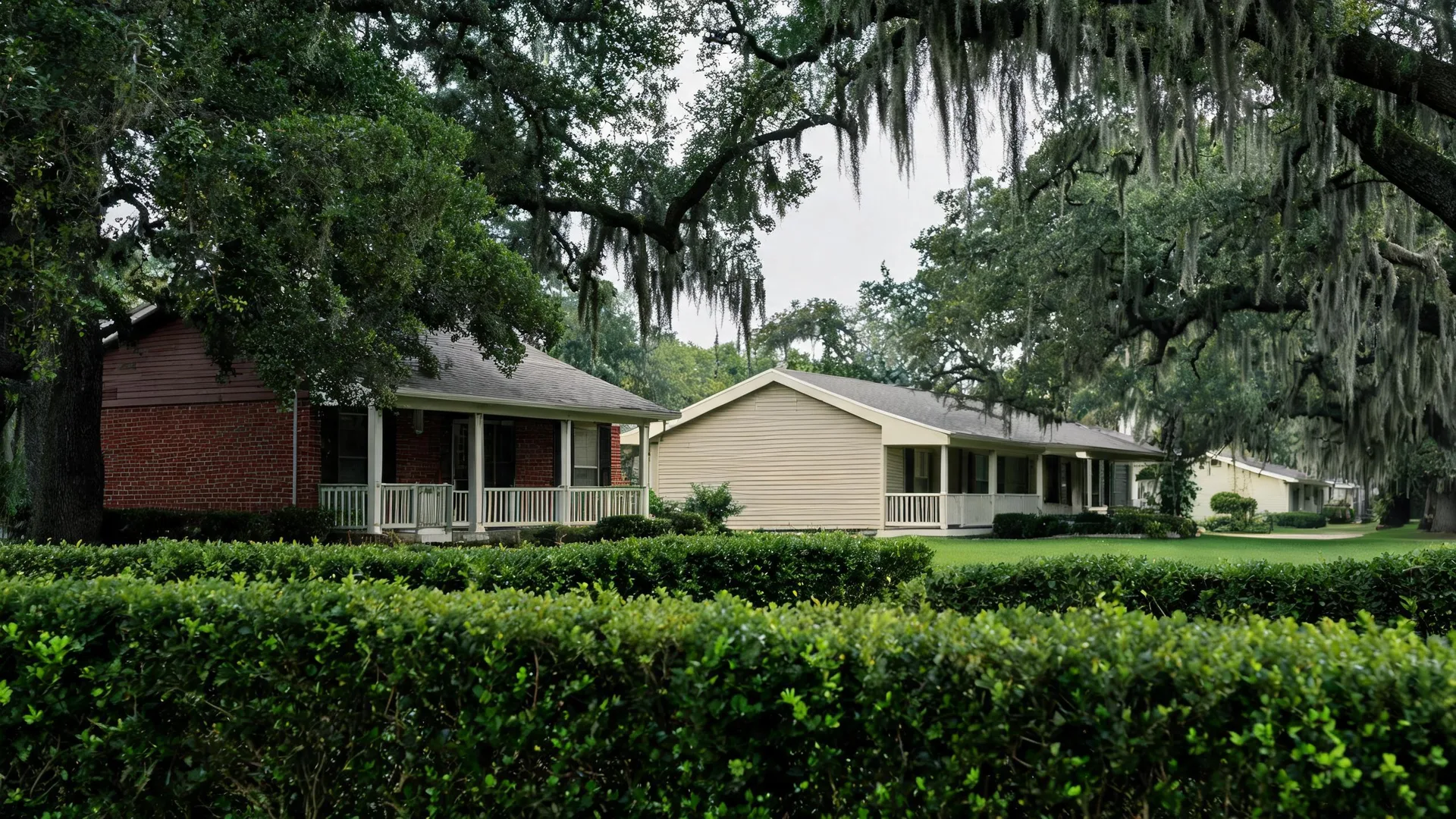




Single-story brick and cream-sided houses with covered porches behind a trimmed hedge and lawn, shaded by large oak trees draped with Spanish moss under an overcast sky.

Furnace Repair in Macon-Bibb County, GA

Tell us about the job

Takes about a minute. No obligation.

RepairFurnace or heatingBibb County, GA
Step 1 of 2

What ZIP code is the job in?

Furnaces here sit idle most of the year and get asked to work in November. That first cold snap is when a weak igniter or a cracked flame sensor finally gives out, because the part was already failing and the load finished it off. October is worth a check before that happens, especially if anything seemed off near the end of last winter. Once it's running, five months straight through March is a long stretch to be without heat while a part gets ordered. Catching the problem in October means it gets fixed before the house actually needs the heat.

5 months
November through March, your furnace is on duty
36°F
the average winter night it heats against
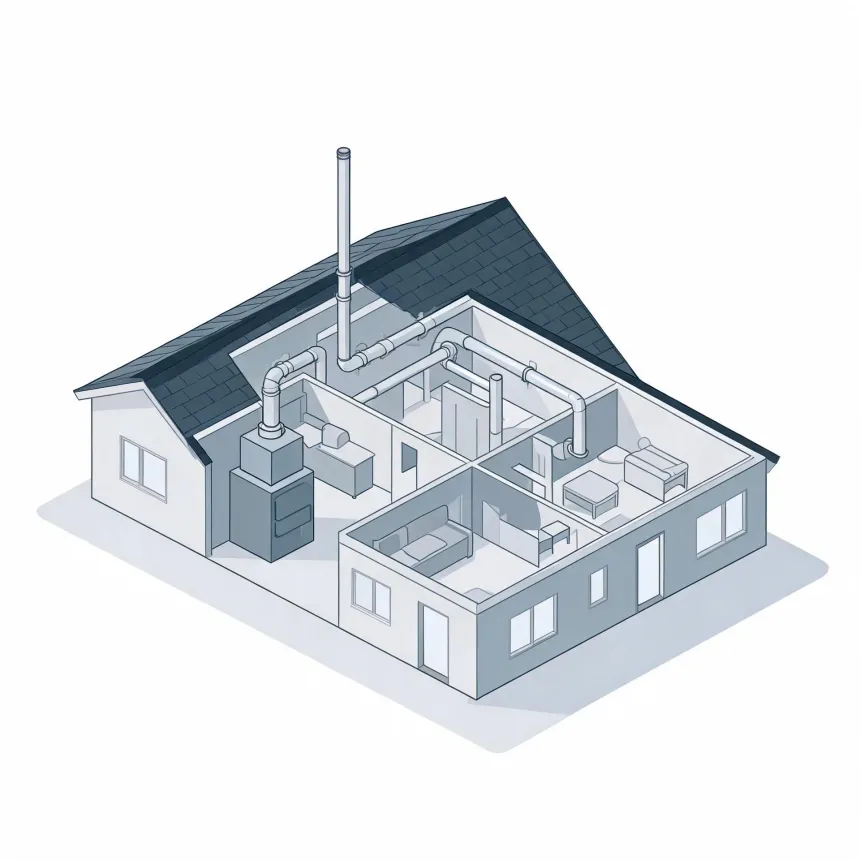
Isometric cutaway illustration of a single-story house showing interior rooms with furniture, a furnace unit connected to ductwork and a tall flue pipe extending through the roof.
Your furnace works hardest from November through February.

NOAA nClimDiv, 1991–2020 normals

Your furnace only has to work five months a year here, November through March.

A furnace with that little strain on it is usually still worth repairing instead of replacing.

A furnace this ordinary usually just needs the usual fix

Half the homes here were built by 1977
Climate zone 3A
Heat runs November through March

Get it looked at early

Problems tend to show up in the first weeks of the season, when the load hits a part that was already weak.

Find a contractor
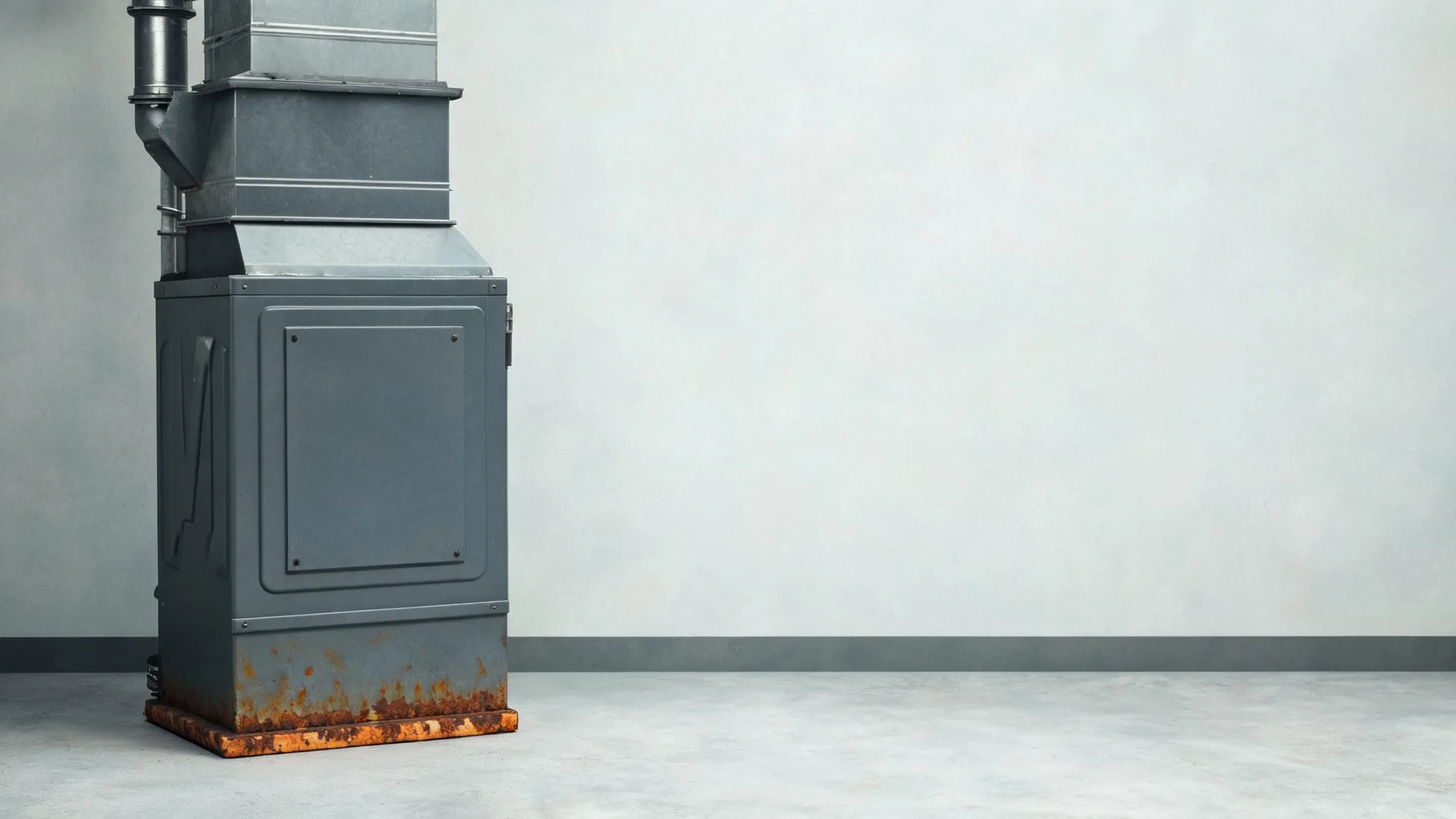
A gray residential gas furnace installed in an unfinished basement, surrounded by ductwork, a metal flue pipe, and a gas supply line.

What you can check yourself

Before anything, check the thermostat is set to heat and the temperature is set above room temperature. Check the furnace switch, it looks like a light switch on or near the unit, and make sure nothing bumped it off. Go to the breaker panel and look for a tripped breaker. If the furnace has a standing pilot, check whether it's lit. If it uses an igniter instead, you won't be able to see it work, but you can listen for it trying. Check the air filter. A filter clogged with dust can cause the furnace to shut itself off before it overheats, and swapping it is something anyone can do without tools. Look at the vents around the house and make sure none are closed or blocked by furniture. If the furnace has a condensate line, check for a clog or a float switch that's tripped, since that will stop the whole system cold. None of this involves opening the furnace itself. If you've checked all of it and the furnace still won't run, or it runs and shuts off again within a few minutes, that's a sign the problem is inside the unit, and that's where it stops being a homeowner job.

Short cycling means something's cutting it off

A furnace that starts, runs briefly, then shuts off and tries again is sensing something wrong and protecting itself. It could be airflow blocked by a dirty filter, a flame sensor coated enough that it can't see the flame anymore, or a limit switch tripping because the heat exchanger is running hotter than it should. The furnace isn't going to fix that on its own, and running it over and over in that state isn't doing the parts any favors.
A yellow flame or soot means stop using it

A gas flame should burn blue. If it's yellow or orange, or there's soot around the burner compartment, the gas isn't burning clean, and that points to a combustion problem that can put carbon monoxide into the air handler instead of up the flue. That one isn't a wait and see. Shut the furnace off at the switch and get it looked at before running it again.

A cracked heat exchanger is a good example of why running a struggling furnace makes things worse instead of better. A small crack lets heat through at first, and the limit switch may not catch it right away. Keep running the furnace and the metal keeps flexing with every heat cycle, and a small crack opens into a bigger one. A flame sensor coated with a thin film will still sense some flame, so the furnace keeps firing even though it's working harder to stay lit. Left alone, that film thickens until the sensor can't see the flame at all, and now it's a no heat call instead of a cleaning. The part rarely fails less by being used more.

A tech starts by asking what the furnace was doing right before it quit. A smell, a sound, a short cycle, cold air from the vents, each points somewhere different. Then the cover comes off and the checks go in order. Power reaching the board. The ignition sequence trying to light. The flame once it catches. The sensor that's supposed to watch that flame. A multimeter checks the parts you can't see working, like whether the igniter still has the resistance it needs or whether the flame sensor is reading any current at all. The pressure switch and the limit switch get tested too, since either one will shut the furnace down on purpose if it senses something wrong. Most visits end with one part named as the cause, not a guess at several.