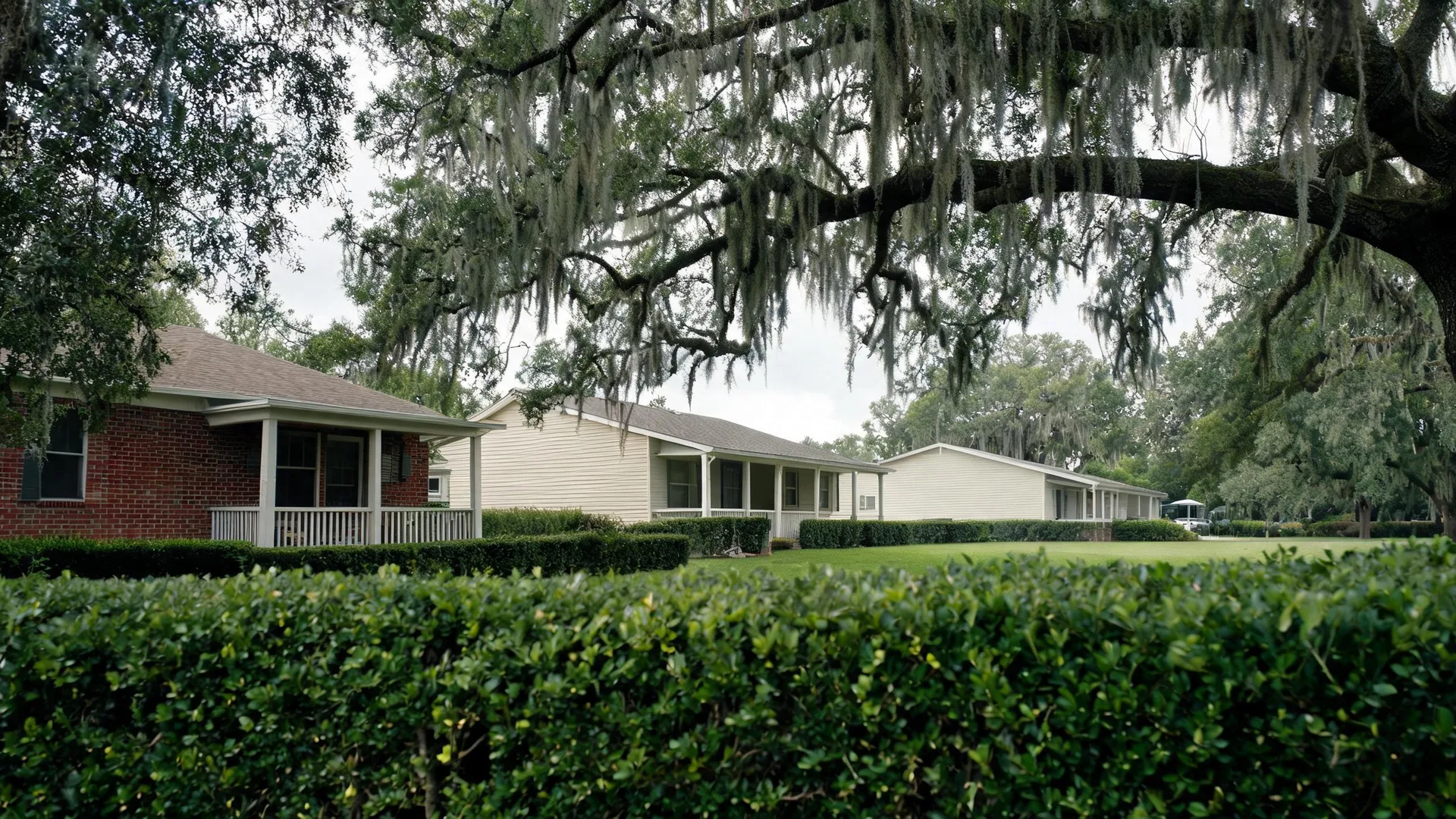





Single-story buildings with pale siding and one brick section with a covered porch stand behind a trimmed hedge and lawn, under a large moss-draped oak branch.

Furnace Repair in Hinesville, GA

Tell us about the job

Takes about a minute. No obligation.

RepairFurnace or heatingLiberty County, GA
Step 1 of 2

What ZIP code is the job in?

Liberty County saw 128 severe weather events between 2015 and 2024, including damaging wind, hail, tornadoes and hurricanes. That's a lot of chances for an outdoor unit or vent to take a hit. A furnace that's still lighting and running fine can have a dented cabinet, a cracked vent cap, or debris pulled into the intake from one of those storms. None of that shows up as a problem until it does. Worth a look if your system has been through any of that.

5 months
November through March, your furnace is on duty
41°F
the average winter night it heats against
2 winter storms
in ten years, the nights a failure hurts most
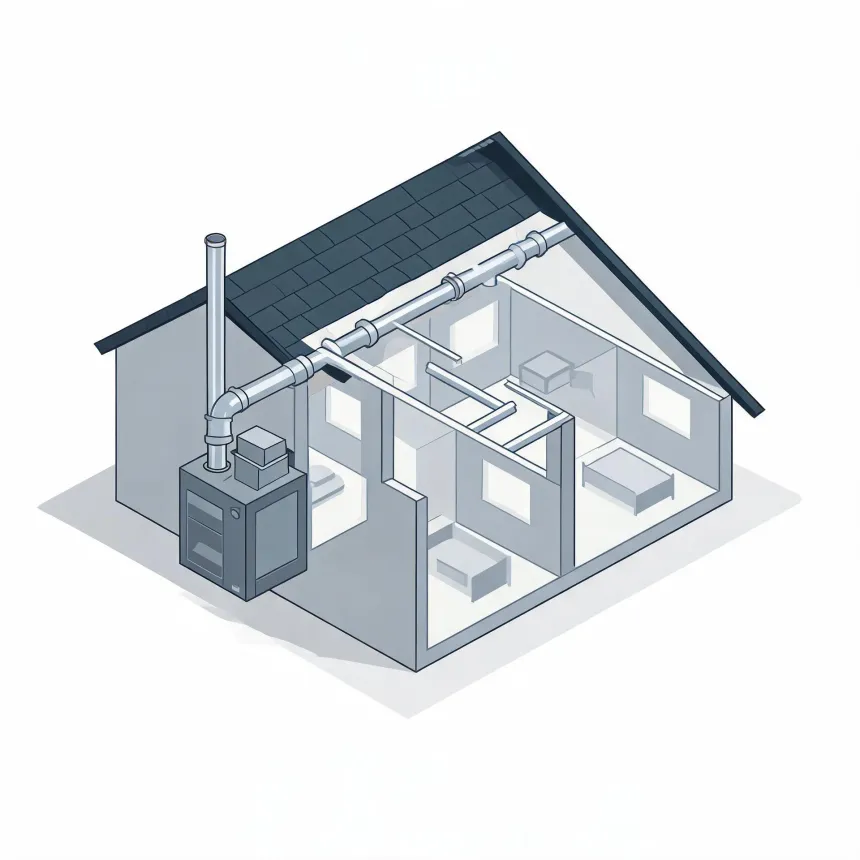
Isometric cutaway illustration of a small house showing interior rooms, ductwork running through the attic, and a furnace unit with a vertical flue pipe on the exterior wall.
Your furnace works hardest from December through February.

NOAA nClimDiv, 1991–2020 normals

Furnaces here only run about five months a year, November through March.

A furnace that's not working hard most of the year is usually still in good shape underneath, worth fixing rather than replacing.

Get it looked at in October, before the first cold night finds the weak spot

Heat runs November through March
Winter nights average 41°F
Climate zone 2A
Half the homes here were built in 1994 or laterHalf the homes in Liberty County were built in 1994 or later. If yours is one of them, the furnace is likely still well within its working life.

If the outdoor parts of the system or the vent took a hit in one of those storms, a tech can check them while they're already out for the repair call. Ask them to look at the flue cap, the intake, and the cabinet for dents or cracks, not just the part that's acting up. Worth asking too what the furnace does if the power cuts out, since 31% of Georgia households lost power for a day or more in 2024. A furnace won't light without power to the control board, storm damage or not.

A newer furnace is worth repairing

A newer furnace still breaking down usually means one part failed, not that the system is wearing out. Get it diagnosed and fixed rather than planning around a replacement.

Find a contractor
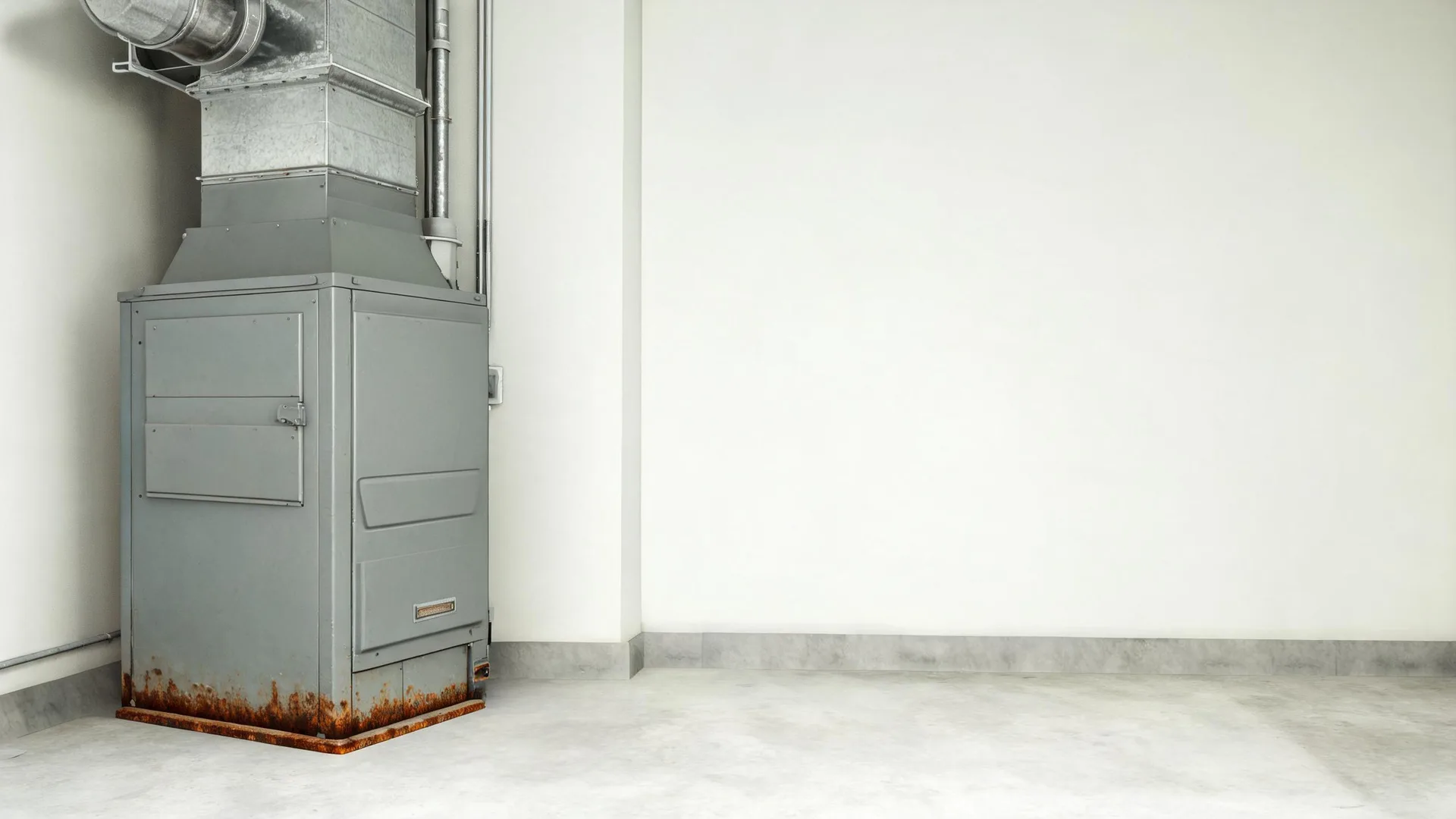
A gas furnace with attached ductwork, gas piping, and condensate lines installed in a concrete-block basement.

Five months a year, against a 41 degree low

Those overnight lows only average 41 in December and January, so the burner isn't lighting against hard cold even on its coldest nights here. Five months of light duty, mild temperatures to work against. If it's running rough now, that's one bad part doing it, not a system worn out from the job. Get the part found and replaced.

What you'll notice first

Short cycling is usually the first thing a homeowner picks up on. The furnace fires, runs for a few minutes, shuts off, then starts again before the house even feels warm. Sometimes it's paired with a burner that sounds different than it used to, a louder bang on startup or a whoosh that wasn't there before. Cold air blowing from the vents when the system is clearly running is another one worth paying attention to, since it usually means the burner isn't lighting even though the blower kicked on.
What those signs are worth telling a tech

Describe what you're hearing and when it happens, not just that something's wrong. A bang on startup points somewhere different than a furnace that runs fine for a while then trips off on its own. Cold air from the vents with the blower running points at the igniter or the flame sensor, not the blower itself. The more specific you can be about what happens and in what order, the faster a tech can narrow down which part is actually failing.

Before you call, check the thermostat first. Make sure it's set to heat and the setting is a few degrees above room temperature, not just sitting where it's always been. Go look at the filter next. A filter clogged with dust can choke off airflow until the furnace overheats and shuts itself down as a safety measure. Check that the switch on the furnace itself, usually looks like a light switch on or near the unit, is flipped on, and that it's getting power at the breaker. If you've got a window near the vent cap or intake outside, take a look and clear away anything blocking it, leaves, debris, anything pressed up against it. None of this is risky to check yourself, and it rules out the simple stuff before a tech has to.

A furnace is a simple machine underneath. A burner lights, a heat exchanger warms the air, a blower pushes it through the house. Most of what goes wrong is one part in that chain failing, not the whole thing wearing out together. An igniter weakens and stops glowing hot enough to catch the gas. A flame sensor gets a film of residue and can't tell the burner it's lit. A blower motor's bearings go and it starts running loud or not at all. Any one of those is a repair, usually a quick one, because the rest of the system around it is fine. What actually points toward replacement is a heat exchanger that's cracked. That's the part that isn't sold on its own and isn't safe to patch. Short of that, if the cabinet's solid and the parts around it are original, fixing the one thing that broke is almost always the right call.