





A lit antebellum-style two-story house with white columns and a wraparound porch at night, framed by live oak trees draped in Spanish moss.

Furnace Repair in Douglasville, GA

Tell us about the job

Takes about a minute. No obligation.

RepairFurnace or heatingDouglas County, GA
Step 1 of 2

What ZIP code is the job in?

A furnace that's about to need a repair usually tells you first. It might take a few tries to light, or light and then shut back off before the room warms up. The blower might kick on and run louder than it used to, or keep running after the house hits temperature. Some furnaces start blowing air that never gets properly warm, which often points to the igniter or a flame sensor that's stopped reading right. A burning or metallic smell in the first few minutes is worth paying attention to, though a faint dusty smell when it first kicks on for the season is normal and clears fast. If the furnace is cycling on and off in short bursts instead of running a full stretch, don't wait that one out.

6 months
November through April, your furnace is on duty
34°F
the average winter night it heats against
54%
of homes here heat with gas, so most furnaces here burn gas
3 winter storms
in ten years, the nights a failure hurts most
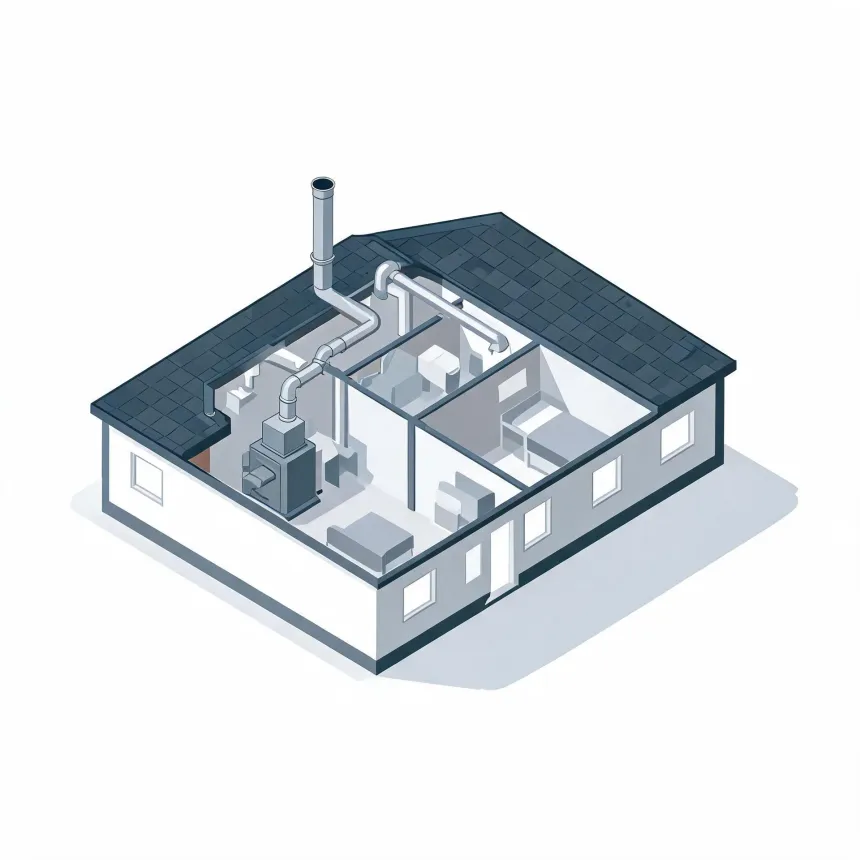
Isometric cutaway illustration of a single-story house with a dark shingled roof, showing interior rooms with furniture and a furnace connected to ductwork and a flue pipe extending above the roof.
Your furnace works hardest from November through March.

NOAA nClimDiv, 1991–2020 normals

Half the houses in Douglas County were built in 1996 or later.

A furnace that came with a newer house still has years in it, and that usually means repair over replacement.

Six months of work a year is not much to ask of a furnace

Heat runs November through April
Winter nights average 34°F
Climate zone 3A

November is when Douglas County furnaces go back to work after sitting idle since spring. That first cold stretch is when a weak igniter or a bad flame sensor finally gets found out, because the part that was marginal in October has to hold up to real use now. Furnaces run here through April, so a repair in November isn't just fixing today's problem, it's the difference between six steady months and six months of callbacks. Getting it looked at early in the season, rather than waiting through a few bad nights, catches the part before it fails completely.

Repair it

If your system came with a newer house, it likely has plenty of life left. Repair is usually the right call.

Find a contractor
A man in a dark T-shirt and tan work pants, seen from behind, climbs porch steps toward a blue front door while carrying a canvas tool bag filled with hand tools.
A gray high-efficiency gas furnace installed in an unfinished basement, surrounded by gas lines, a condensate drain, and sheet-metal ductwork.

A lighter load than you'd think

34°F is the average overnight low here in December and January, not the kind of cold that runs a furnace at its limit all night. That lighter load is one more reason a repair is worth doing rather than skipping. If yours is struggling now, six mild months in, the cause is more likely a single worn part than a system that's been pushed hard. Have it looked at before putting money toward anything bigger.

A cracked heat exchanger gets worse with every cycle

A heat exchanger that's starting to crack will flex more each time the burners fire and the metal heats up. Running the furnace keeps opening that crack a little further. Left alone, it stops being a repair and turns into a straight swap of the exchanger, or the furnace entirely.

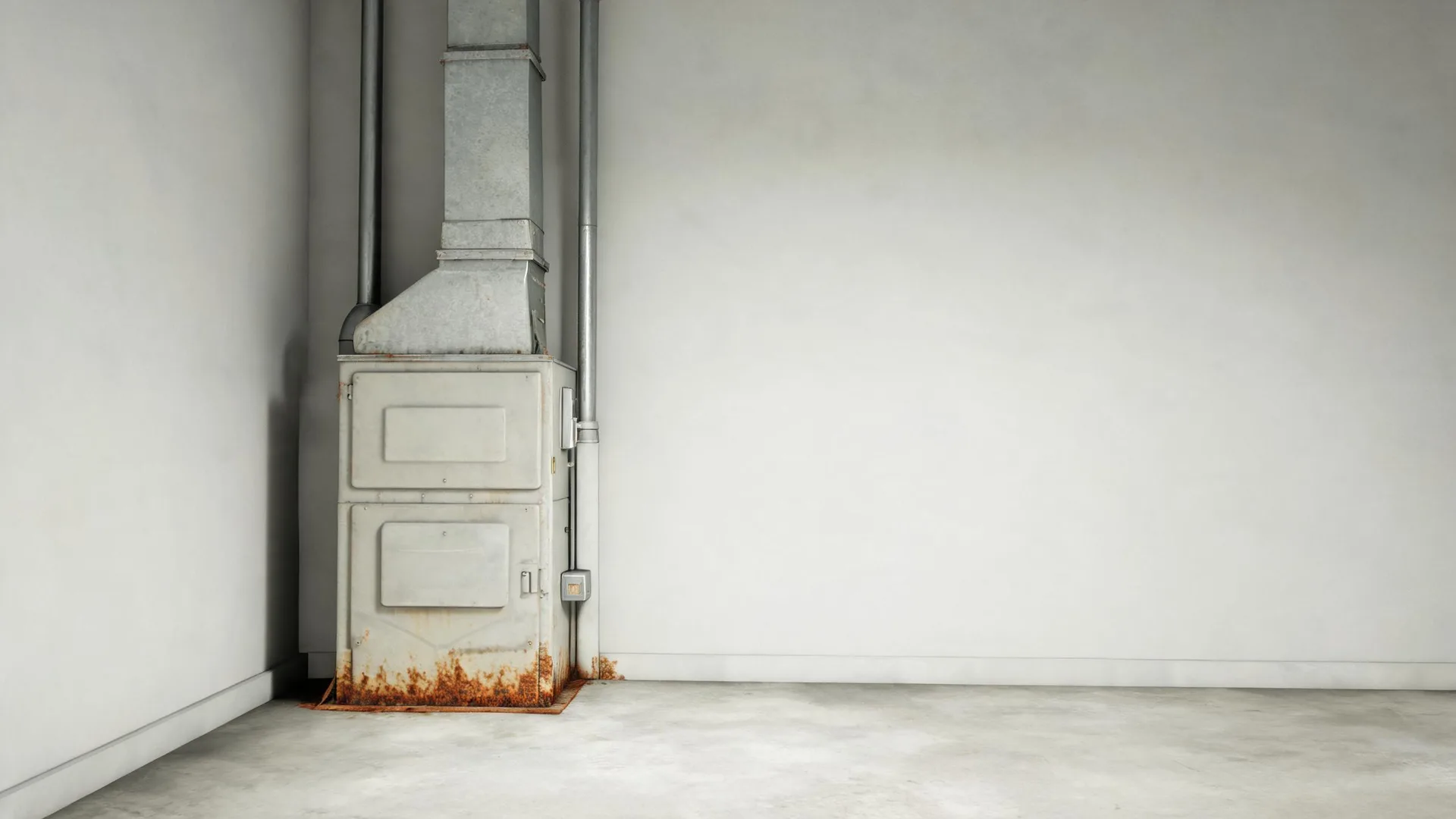
A dirty flame sensor turns into a dead one

A flame sensor coated in a thin layer of residue will still work, just poorly, shutting the furnace off a few seconds early. Keep running it that way and the buildup thickens until the sensor can't read the flame at all. At that point the furnace won't stay lit no matter how many times it tries.

An unfinished basement featuring a grey forced-air furnace with metal ductwork, concrete block walls, exposed wooden joists, and a single hanging bare bulb.

A new furnace would cut about $120 a year off heating for a typical Douglas County home.

  • A new high-efficiency furnace$590 a year
  • An older furnace$710 a year

Estimates for a typical Douglas County home, compared with an older unit built to the previous federal minimum, from EIA household energy data, Georgia fuel prices and NOAA climate normals. Your home will differ.

Repair makes sense when one part has failed and the heat exchanger is sound.

Replacement makes sense when the heat exchanger is cracked or the furnace keeps needing parts.

A technician weighing repair against replacement is looking at more than the furnace's age. What matters most is which part failed and whether that failure stayed put. A bad igniter or a failed flame sensor is a clean swap. The rest of the furnace doesn't know or care that part was bad, so once it's replaced the furnace runs like it did before. A cracked heat exchanger is different, because the crack doesn't sit still, and the burners and blower have been running alongside a problem that kept getting worse. So alongside how old the system is, it's worth asking whether this failure is one part wearing out on its own, or a sign the furnace has been compensating for something for a while.