






Two illuminated white Southern-style houses with wraparound porches and staircases, framed by a Spanish moss-draped tree on a quiet street at night.

Furnace Repair in Dalton, GA

Tell us about the job

Takes about a minute. No obligation.

RepairFurnace or heatingWhitfield County, GA
Step 1 of 2

What ZIP code is the job in?

Whitfield County saw 115 severe weather events between 2015 and 2024. Most of that was damaging wind, 100 times in the same stretch, along with 8 hail events and a tornado. That kind of weather doesn't ask whether your furnace is the gas kind with a blower or the heat strips in an electric system. Wind-driven debris and ice can hit the outdoor parts of your system or knock the power out while the fallout gets sorted. Statewide, close to a third of Georgia households went at least a full day without power in 2024. If your system took a hit from weather like this, even one that still runs, it's worth having someone look at it.

7 months
October through April, your furnace is on duty
33°F
the average winter night it heats against
3 winter storms
in ten years, the nights a failure hurts most
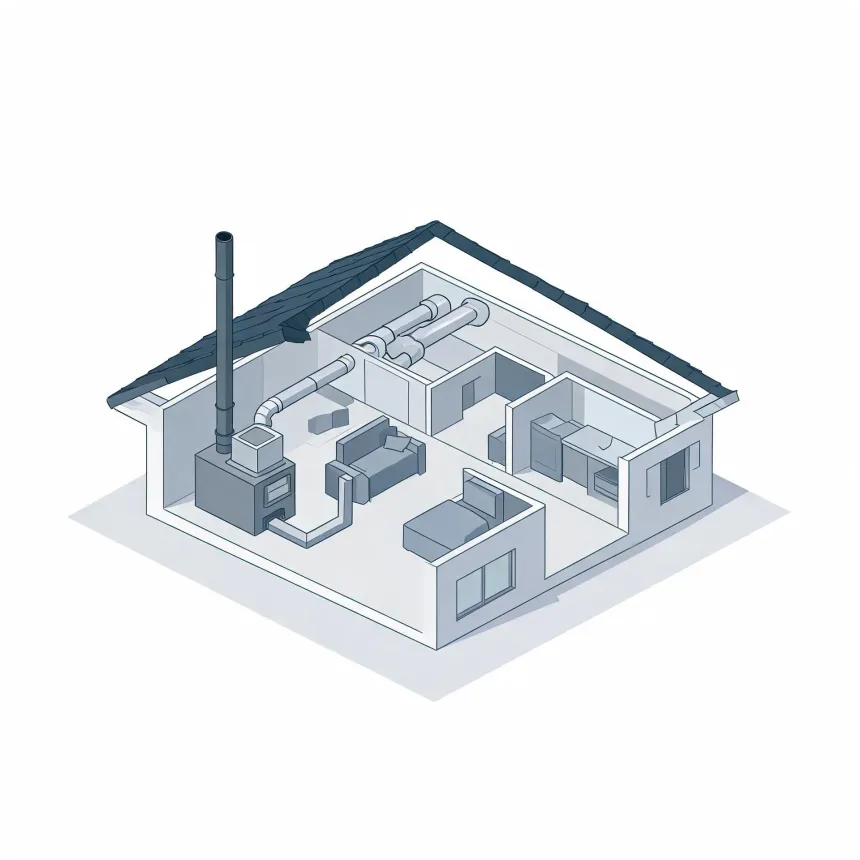
Isometric line illustration of a cutaway single-story house showing interior rooms with furniture, a furnace unit with a tall flue pipe, and connected ductwork running under the pitched roof.
Your furnace works hardest from November through March.

NOAA nClimDiv, 1991–2020 normals

Half the homes in Whitfield County were built in 1987 or later.

A furnace that came with a newer house like that has probably got years left in it, so repair is likely the right call.

October starts seven months of heat here, and a weak part shows itself fast

Heat runs October through April
Winter nights average 33°F
Climate zone 3A
A furnace here isn't working that hardHeat runs about seven months a year here, October through April.

If your furnace came with the house and the house is newer, that's worth checking before you assume the worst. A repair call can confirm what's actually wrong instead of you guessing it's time to replace. Most issues that show up in a system still within its working life come down to one part failing, not the whole unit giving out. A tech can tell you quickly whether what you're dealing with is a cheap fix or a sign of something bigger. Either way, you'll know instead of wondering.

Storm damage doesn't always show up right away

If hail or wind came through recently and your furnace started acting up around the same time, that's not a coincidence worth ignoring. Have the outdoor parts checked even if the furnace is still running.

Find a contractor
A man in a dark long-sleeved shirt and tan work pants, seen from behind, carries a canvas tool bag up porch steps toward a blue front door beside a potted shrub.
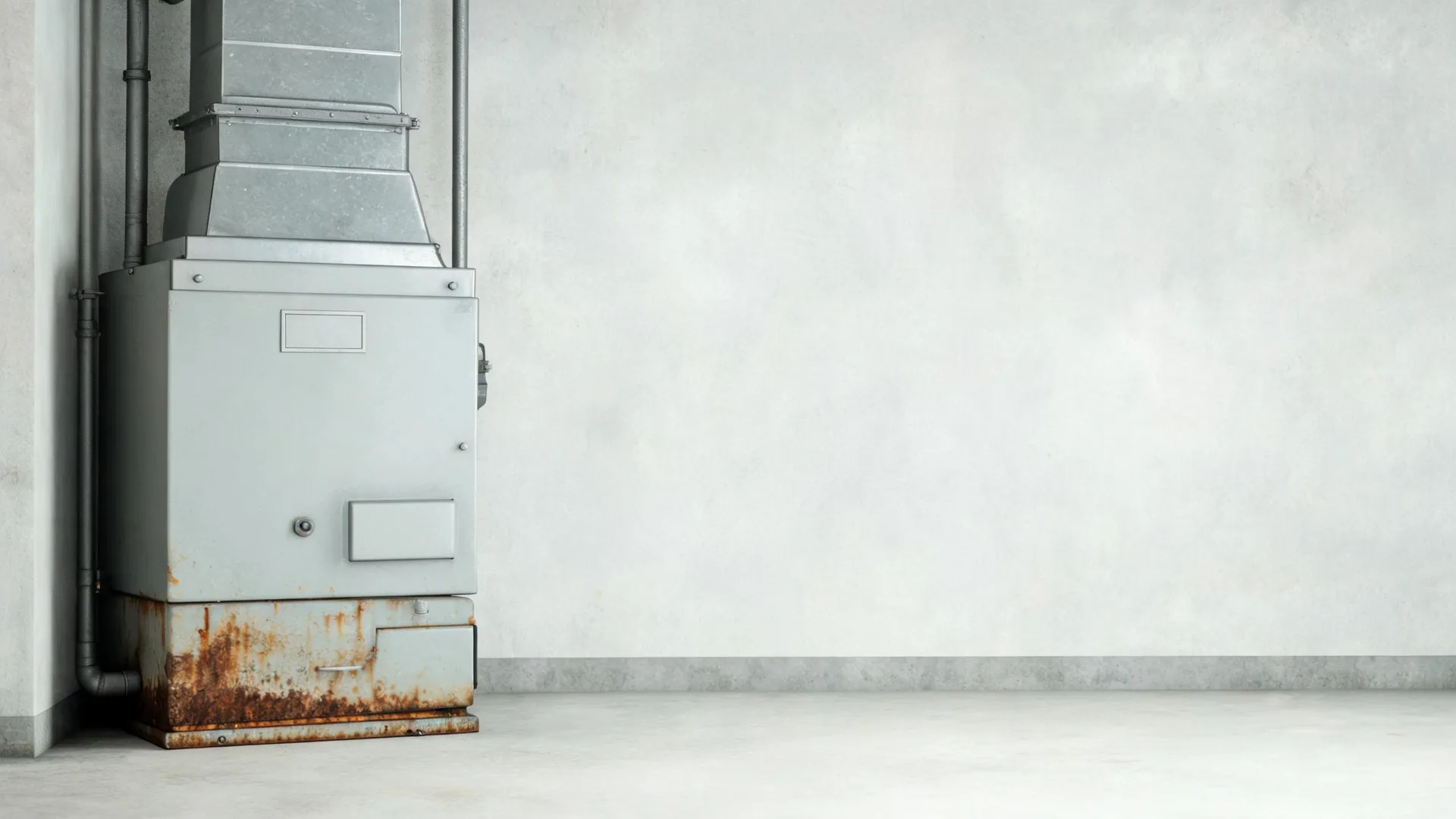
A gas furnace with attached ductwork, gas piping, and condensate lines installed in a concrete-block basement.

A furnace that's struggling doesn't fix itself by staying on

A furnace that's struggling usually sends up a small signal before it sends up a big one. A flame that burns yellow instead of blue. A burner that won't light on the first try and clicks a few times first. A blower that keeps running after the heat shuts off. None of that stops the system from heating your house, so it's easy to let it ride. But a furnace that's already working harder than it should doesn't fix itself by staying on. A cracked heat exchanger gets wider. A failing igniter gets weaker until it stops lighting the burner at all. A clogged flue restricts more each time it runs. Left alone, a problem that was a single part swap can turn into a cracked heat exchanger or a burnt-out blower motor, and now you're replacing more than what broke first. The furnace will usually tell you it's struggling before it quits. Shutting it down and getting it looked at is what keeps a small repair a small repair.

Most calls come down to one worn part

An igniter wears out from repeated heating and cooling until it cracks or stops glowing hot enough to light the burner. A flame sensor coated in residue stops telling the control board a flame is present, so the system shuts the gas off as a safety measure. A pressure switch can fail stuck, refusing to let the burner start even when the flue is clear. These are small parts, and they're the reason a furnace stops working far more often than the heat exchanger or blower motor does.
Neglect turns a small part into a bigger job

A filter left in too long chokes airflow, and the furnace runs hotter and longer to make up for it. That extra heat stresses the heat exchanger and shortens the life of the blower motor. A dirty flame sensor or a clogged burner wears out because nobody cleaned it, not because the part was faulty. Most of what fails in a furnace fails because something upstream of it was ignored, not because the part was bad to begin with.

Before you call, check the thermostat is set to heat and the setting is above room temperature. Look at the filter. If you can't see light through it, it's choking airflow and the furnace can't do its job right. Go to the breaker panel and check nothing's tripped, since a furnace runs on electricity even when it burns gas for heat. If you have a standing pilot, check it's lit. If it's an electronic ignition system, you won't be able to relight it yourself, but you can still check whether the switch on the furnace itself and the one on the wall near it are both on. Check the vents in each room are open and not blocked by furniture or rugs. None of this fixes a cracked heat exchanger or a failed pressure switch, but it rules out the simple stuff before someone drives out to look at it.

A diagnostic visit starts with questions, not tools. A tech wants to know what the furnace was doing before it quit, what it sounds like, whether a smell came with it. Then it's a gas pressure test, a check of the flame sensor and igniter, a look at the pressure switch and the wiring behind the panel. Most of that gets checked with a multimeter and a trained eye, not guesswork. A combustion analysis can show whether the burner is firing clean or running rich. If the heat exchanger is in question, a tech will inspect it directly rather than assume, since that part decides whether the furnace gets fixed or replaced. By the end of the visit you should have a straight answer: what failed, why, and what it takes to put it right.