




A nighttime street scene featuring a row of lit white colonial-style houses with wrap-around porches, flanked by oak trees draped in Spanish moss.

Furnace Repair in Conyers, GA

Tell us about the job

Takes about a minute. No obligation.

RepairFurnace or heatingRockdale County, GA
Step 1 of 2

What ZIP code is the job in?

Half the homes in Rockdale County were built in 1990 or later. If yours is one of them, your furnace is probably newer too, and that changes the math on a repair call. A furnace that age still has most of its working life ahead of it. When something goes wrong, it's usually a single part giving out, not the whole system reaching the end. Fixing that part is almost always the right move before replacement even comes up.

5 months
November through March, your furnace is on duty
35°F
the average winter night it heats against
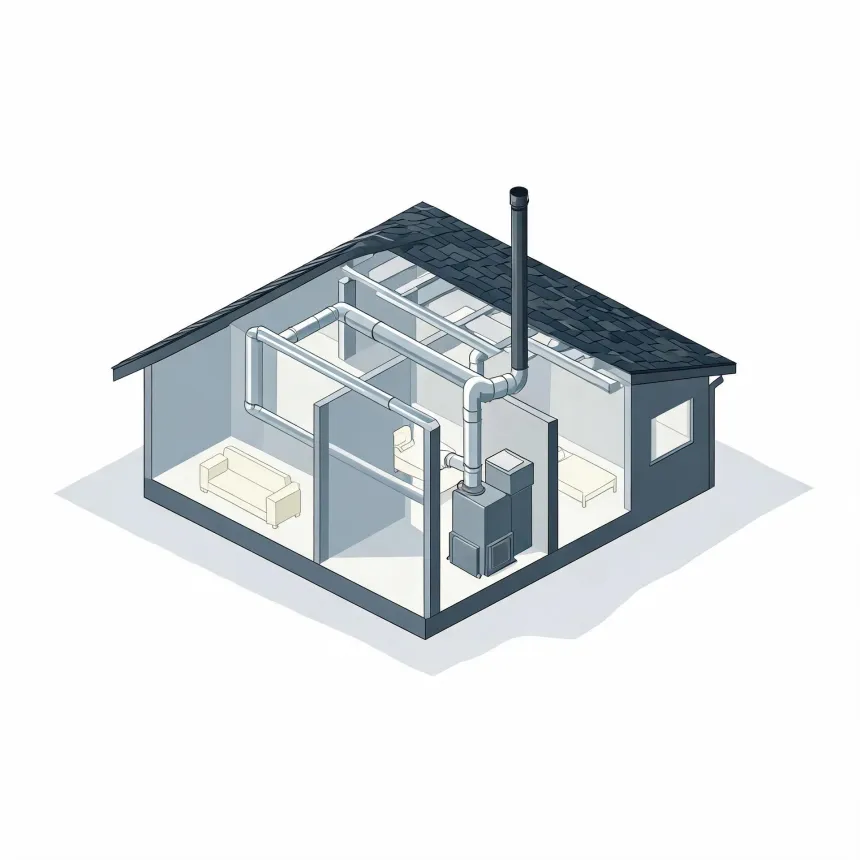
Isometric cutaway illustration of a small single-story house showing a furnace with a flue pipe through the roof and ducting running to rooms containing a sofa, chair and bed.
Your furnace works hardest from November through March.

NOAA nClimDiv, 1991–2020 normals

Furnaces in Rockdale County only run about five months a year, November through March.

A short season like that means less wear, so a furnace with some care behind it usually has plenty of life left to repair.

Five months of cold weather, starting in November

Heat runs November through March
Winter nights average 35°F
Climate zone 3A

Before anyone comes out, check the thermostat first. Make sure it's set to heat, not just fan, and that the setpoint is actually above room temperature. Next, go look at the filter. A filter clogged with dust can choke airflow badly enough that the furnace shuts itself off as a safety measure. If you can see light through it, it's fine. If you can't, replace it. Check the breaker panel too. A tripped breaker will kill the whole unit with no warning lights or sound at all. If your furnace has a standing pilot, see if it's lit. If it uses an electronic igniter instead, you won't be able to check that part yourself, but you can still listen for what happens when it tries to start. A furnace that clicks, hums, or tries to ignite and then shuts off is telling you something different than one that does nothing at all, and that's worth mentioning to whoever you call.

A furnace that only runs five months a year is worth fixing

Five months of work a year is not much to ask of a furnace. If yours is acting up, get the part that failed looked at before you plan on anything bigger.

Find a contractor
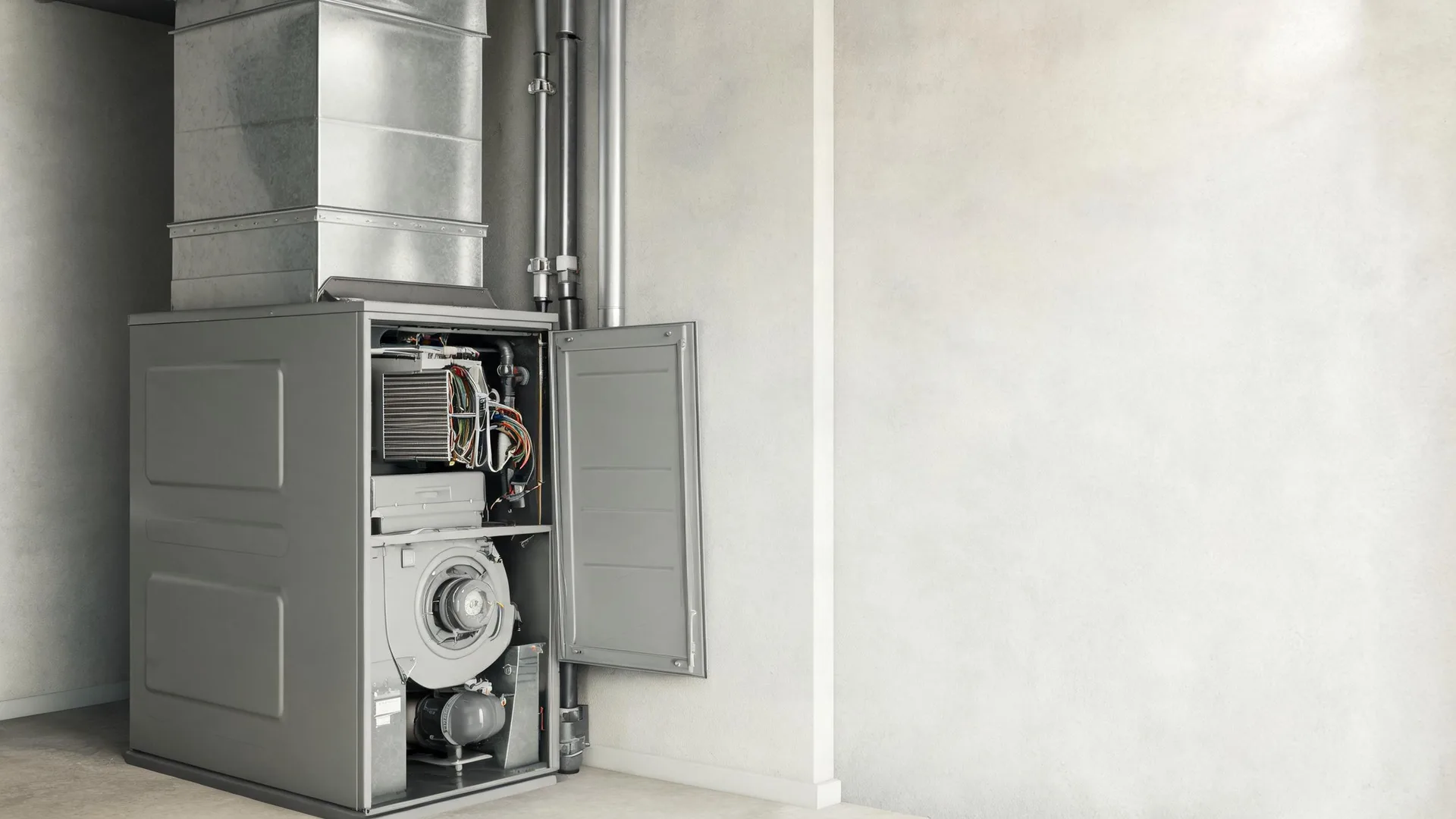
A gray residential gas furnace installed in an unfinished basement, surrounded by ductwork, a metal flue pipe, and a gas supply line.

A furnace that's had an easier life than most

Most homes in Rockdale County were built in 1990 or later, so a lot of furnaces here haven't logged the years an older unit would have. Less time in service means less wear on the heat exchanger and the motor. If yours is one of the newer ones, whatever's wrong is likely one failed part, not the system giving out. Check when yours went in, if you know, before you plan on anything bigger than a repair.

What it sounds like before it quits

A furnace rarely goes from working to dead with no warning. It bangs when it starts, or the blower runs on after the burners shut off, or you get short cycles where it fires up and stops again before the room warms. A burning smell on startup is normal for the first few minutes once a season. One that lingers, or shows up any other time, is not.

What it means for the repair

A banging burner usually points to a dirty burner or a delayed ignition, and that's a straightforward fix. Short cycling can mean a bad flame sensor, a clogged filter, or a limit switch tripping from overheating. Blower running long after the heat stops is often just a thermostat or control board setting. None of these mean the furnace is done. They mean one part is telling on itself, and that's the part that needs attention.

A gray forced-air furnace with ductwork stands in an unfinished concrete basement surrounded by storage items and clutter.

A new furnace would cut about $120 a year off heating for a typical Rockdale County home.

  • A new high-efficiency furnace$560 a year
  • An older furnace$680 a year

Estimates for a typical Rockdale County home, compared with an older unit built to the previous federal minimum, from EIA household energy data, Georgia fuel prices and NOAA climate normals. Your home will differ.

Repair makes sense when one part has failed and the heat exchanger is sound.

Replacement makes sense when the heat exchanger is cracked or the furnace keeps needing parts.

A repair call almost always comes down to one part, not the whole furnace. The heat exchanger and the cabinet are built to last the life of the unit. The igniter, the flame sensor, the blower motor and the control board are not. Those wear out on their own schedule and get replaced as they go. A tech who finds the failed part can tell you whether fixing it brings the furnace back to normal. One part failing is a repair. Several failing in a short stretch is different, especially if the heat exchanger is cracked or rusted through. That pattern means the furnace is done. Outside of that, replacing the part that broke is the right call almost every time.