Three white clapboard houses with wraparound porches glow with warm interior and landscape lighting beneath Spanish moss-draped oak trees at dusk.

Furnace Repair in Canton, GA

Tell us about the job

Takes about a minute. No obligation.

RepairFurnace or heatingCherokee County, GA
Step 1 of 2

What ZIP code is the job in?

How old the furnace is matters less than what's failing

A cracked heat exchanger or a failed control board near the end of a furnace's expected life is usually a sign to replace it. The same furnace with a bad flame sensor or a dirty igniter is still worth fixing. The part that broke tells you more than the furnace's age does.


A furnace that keeps coming back is telling you something

One repair is just a repair. But if the same furnace needs a tech out again within the same season, or if it's had a few different repairs in a row, that pattern matters more than any single fix. A furnace that can't stay fixed is wearing out from the inside, even if each repair itself was simple.

7 months
October through April, your furnace is on duty
33°F
the average winter night it heats against
62%
of homes here heat with gas, so most furnaces here burn gas
6 winter storms
in ten years, the nights a failure hurts most
Isometric cutaway illustration of a small house showing a furnace unit connected to ductwork running through the interior and attic, with a chimney on the shingled roof and simple furniture in the rooms.
Your furnace works hardest from November through March.

NOAA nClimDiv, 1991–2020 normals

Most furnace breakdowns trace back to the igniter, the flame sensor or a clogged filter choking airflow.

A dirty flame sensor gets mistaken for a dying furnace all the time, when a tech can clean it in minutes.

Half the furnaces in Canton are still young enough to fix

Half the homes here were built by 2001
Heat runs October through April
Winter nights average 33°F

September is worth a look before heat runs in October. If a furnace sat quiet all summer, whatever was already marginal in it tends to show up fast once it's asked to run for hours at a stretch. That first cold week is when a weak igniter or a clogged filter gets found out. Furnaces here run October through April, seven months straight, so a problem that shows up in week one doesn't get easier by staying put. Catching it before the season settles in means one visit instead of a breakdown on a cold morning.

Repair it

If your system came with a newer house, it likely has plenty of life left. Repair is usually the right call.

Find a contractor
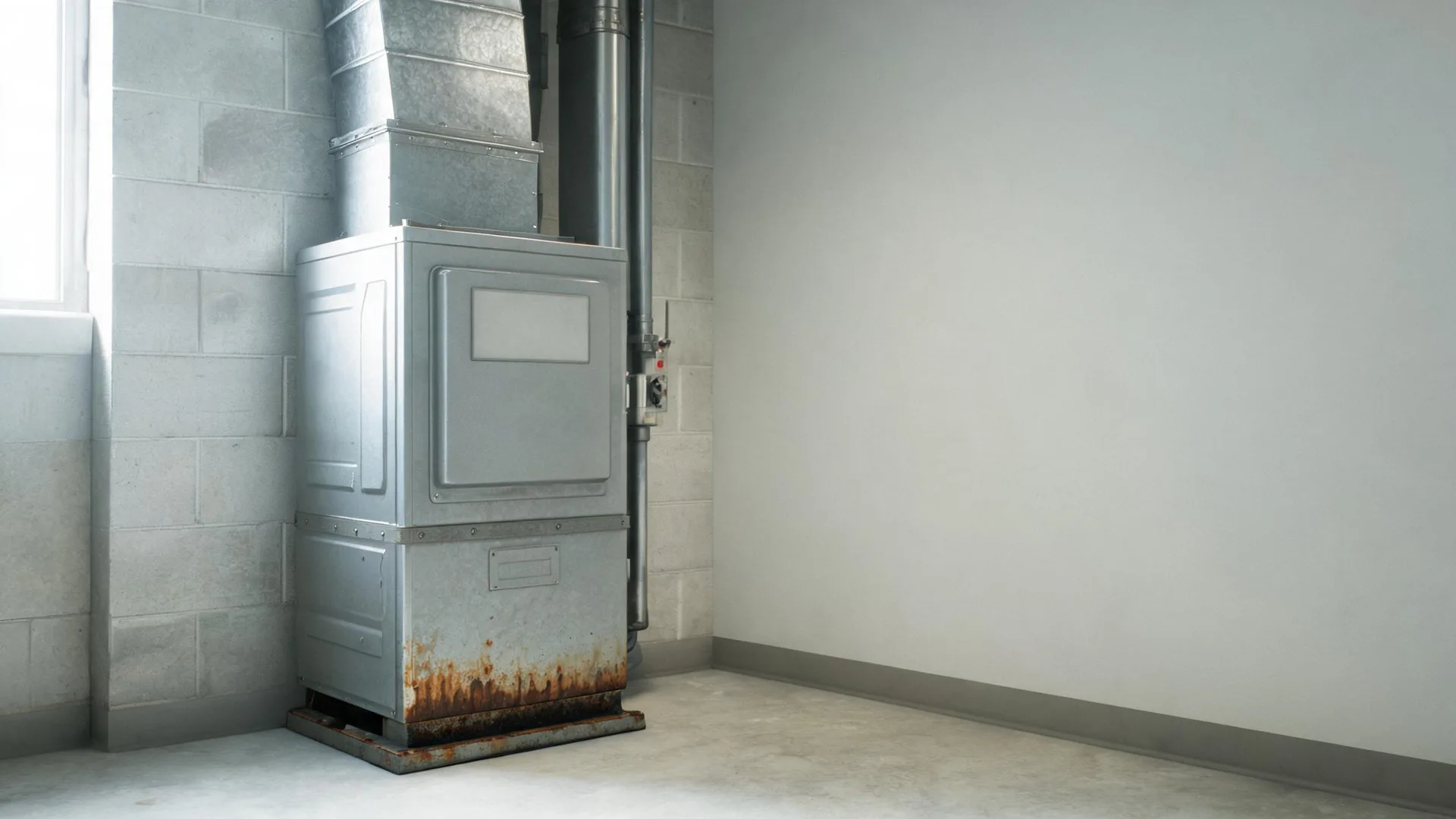
A gray residential gas furnace installed in an unfinished basement, surrounded by ductwork, a metal flue pipe, and a gas supply line.

Some problems wait. Others don't.

A furnace with a problem does not hold steady. A cracked heat exchanger flexes every time the burner fires, and that movement is what grows the crack. A clogged filter forces the blower to pull harder for the same air, and that strain goes straight to the motor bearings. A dirty flame sensor lets the furnace shut off and relight over and over before it finally stops sensing flame at all. None of these sit still while the furnace keeps running. Letting it run through the symptom instead of calling someone out usually turns a small fix into a bigger one, and sometimes turns a furnace that could be saved into one that can't.

A furnace rarely fails quietly

Before a furnace stops running altogether, it usually tells on itself. A burner that won't light on the first try, a flame that looks yellow instead of blue, a blower that kicks on and off more than it used to. Short cycling, where the furnace fires up and shuts down again within a few minutes, is one of the clearest signs something is wrong, whether that's a clogged filter choking airflow or a flame sensor that's lost its read on the flame.

Sound and smell tell you as much as performance does

A banging or booming at startup usually means gas is pooling before it lights, not catching clean the way it should. A burning smell that lingers past the first few minutes of a new season is different from the dusty smell that burns off fine and fades. A squeal points to a bearing or belt wearing out. None of these need a thermometer to notice. If the air coming out still feels warm but something sounds or smells off, the furnace is already asking for a look.

An unfinished basement featuring a forced-air furnace, exposed wooden ceiling joists, bare concrete walls, and miscellaneous items including cardboard boxes and coiled cables on the floor.

A new furnace would cut about $130 a year off heating for a typical Cherokee County home.

  • A new high-efficiency furnace$640 a year
  • An older furnace$770 a year

Estimates for a typical Cherokee County home, compared with an older unit built to the previous federal minimum, from EIA household energy data, Georgia fuel prices and NOAA climate normals. Your home will differ.

Repair makes sense when one part has failed and the heat exchanger is sound.

Replacement makes sense when the heat exchanger is cracked or the furnace keeps needing parts.

A diagnostic visit starts before any panel comes off. A tech asks what the furnace is doing, when it started, and whether it happens on every cycle or only sometimes, because that pattern narrows things down fast. Then it's a check of the flame itself, the pressure switch, the limit switch, and whatever fault the control board is still holding onto, since most boards keep the last code even after the furnace shuts itself off. Pulling the flame sensor to look at it, checking the igniter for a hairline crack, and pulling the filter out each take a few minutes but rule out the most common culprits right away. What takes longer is confirming the fix actually holds, which means running the furnace through a full cycle, start to shutdown, and watching it do that again before calling it done.