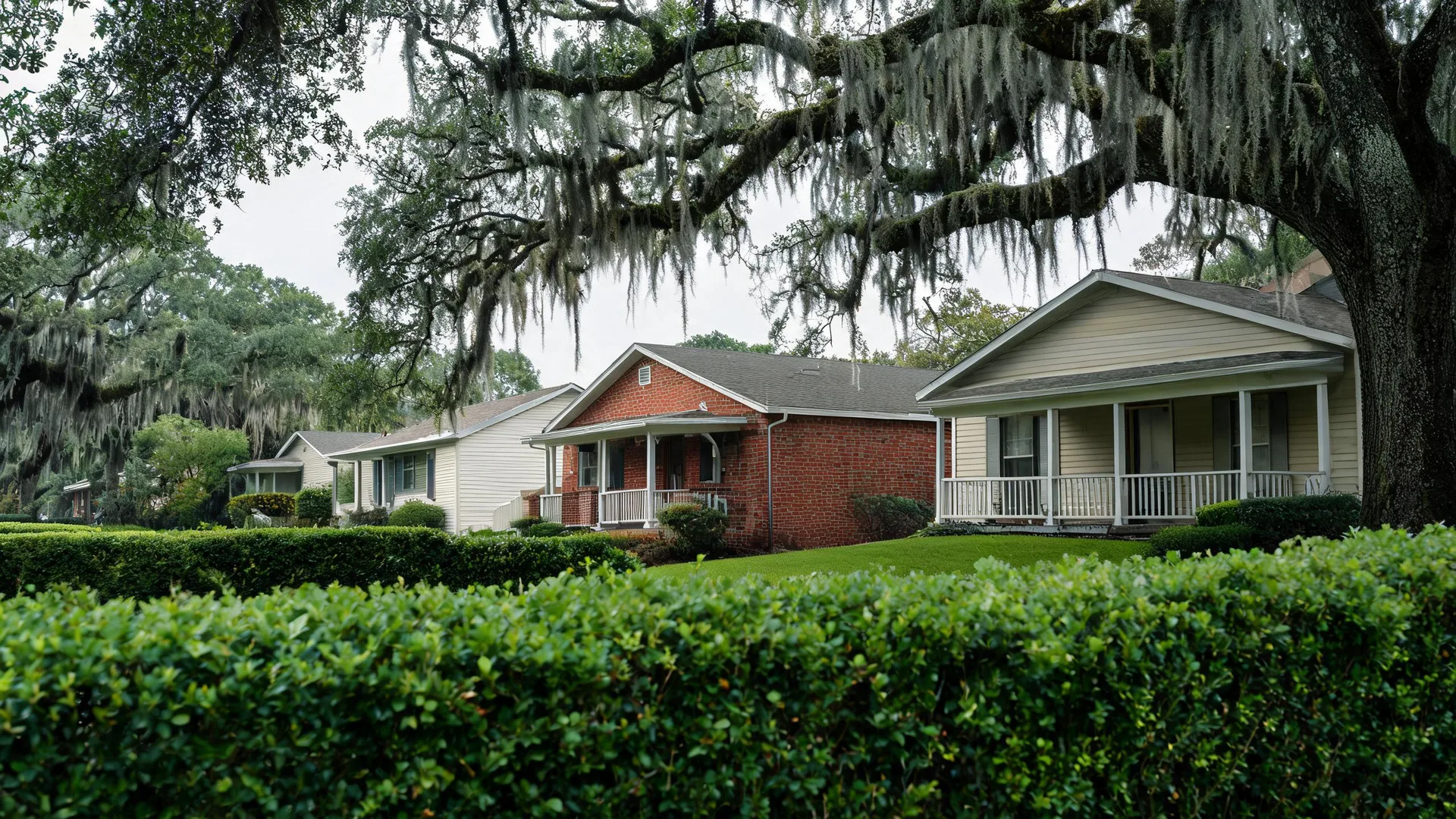






A row of single-story houses, one brick and others with light siding and covered porches, set behind a trimmed green hedge and lawn, under large oak branches draped with Spanish moss.

Furnace Repair in Calhoun, GA

Tell us about the job

Takes about a minute. No obligation.

RepairFurnace or heatingGordon County, GA
Step 1 of 2

What ZIP code is the job in?

Half the houses in Gordon County were built in 1987 or later. If yours is one of them, the furnace isn't fighting an old, drafty house built decades before anyone thought about insulation. A newer house holds its temperature better, and that means less strain on the furnace trying to heat it. Mobile homes make up a small share of the housing stock here, under ten percent, so most furnaces in the county are working inside a standard house with standard ductwork. Put together, that's a furnace that's had an easier job than one in an older home nearby. Fixing what's wrong with it now usually makes more sense than starting over with something new.

7 months
October through April, your furnace is on duty
33°F
the average winter night it heats against
4 winter storms
in ten years, the nights a failure hurts most
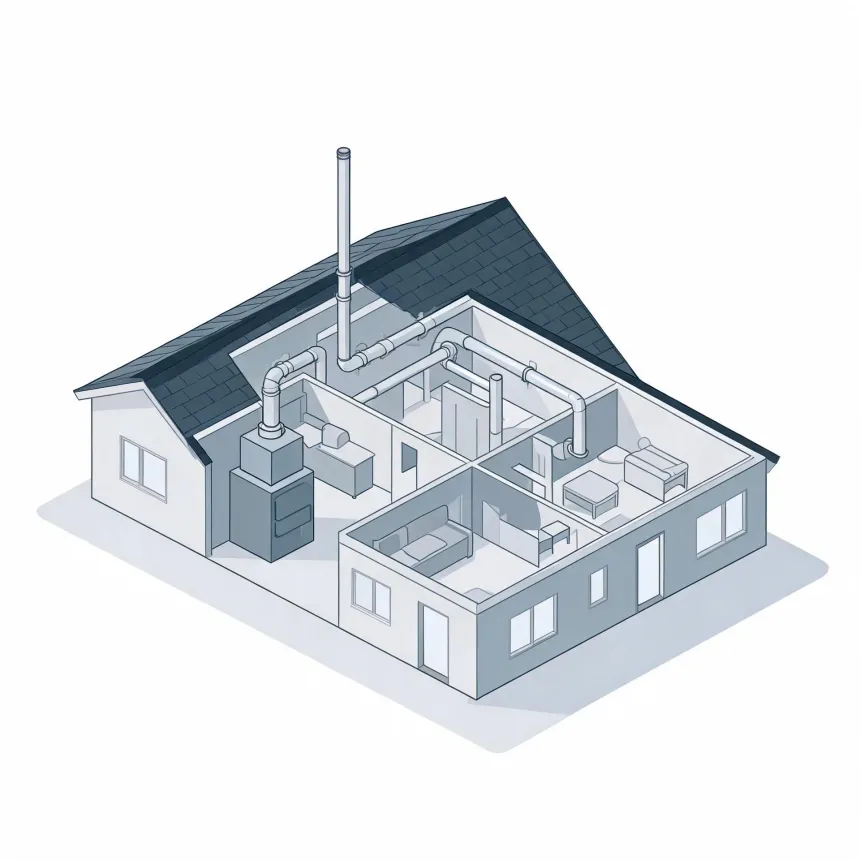
Isometric cutaway illustration of a single-story house showing interior rooms with furniture, a furnace unit connected to ductwork and a tall flue pipe extending through the roof.
Your furnace works hardest from November through March.

NOAA nClimDiv, 1991–2020 normals

Check the thermostat before you check anything else, including the batteries if it takes them.

A dead thermostat looks exactly like a dead furnace, and it costs you nothing to rule out.

Seven months of mild work, not eight or nine of hard work

Heat runs October through April
Winter nights average 33°F
Climate zone 3A
Built for Seven Months, Not TwelveFurnace here runs October through April, about seven months a year.

A furnace doesn't wear out on a schedule. It wears out from use, and from how hard it has to work each time it runs. The heat exchanger, the blower motor, the igniter: these are the parts that fail eventually in any furnace, and age by itself doesn't condemn them. What matters more is whether the problem is a part that can be replaced on its own, like an igniter or a flame sensor, or whether it's the heat exchanger itself, which is the one repair that usually ends the conversation. A cracked heat exchanger means the furnace has to go. Almost everything else is a judgment call. If the furnace has been reliable and this is the first real problem it's had, fixing it is the straightforward answer. If it's been one repair after another, that pattern tells you something the current problem doesn't.

A Newer House Means the Furnace Is Usually Worth Fixing

If your house was built in 1987 or later, call it in for repair rather than planning around a replacement. A furnace working inside a newer house hasn't had to fight the place it's in, and that counts for more than the number of years on the unit.

Find a contractor
A person in a dark long-sleeved shirt and tan pants, seen from behind, carries a worn canvas tool bag up stone steps toward a blue front door with a shrub in a blue planter beside it.
A gas furnace with attached ductwork, gas piping, and condensate lines installed in a concrete-block basement.

What the Furnace Is Telling You

A furnace gives you warning before it quits outright, if you know what to listen for. A burner that lights with a thump instead of a soft whoosh means gas is building up for a second before it catches, which points to a dirty igniter or a burner that needs cleaning. A blower that cycles on and off every few minutes, instead of running a full heating cycle, is short cycling, and that's usually a clogged filter, a cracked heat exchanger, or a limit switch tripping early. Air coming out lukewarm instead of hot can mean a dirty flame sensor is cutting the burners short, or the blower is pulling air past the heat exchanger too fast to pick up heat. A burning or metallic smell in the first few minutes of a cycle is normal as dust burns off ductwork and the heat exchanger. The same smell showing up every time the furnace runs is not. Rattling or scraping from the blower compartment usually means the motor bearings are wearing out, and that part tends to get louder for weeks before it finally seizes. None of these signs mean the same thing on their own that they'd mean together. A furnace that's noisy but heats fine and holds a steady cycle is in better shape than one that's quiet but short cycling. Catching the sign early is what keeps the repair small.

Running It Makes the Problem Bigger

A furnace that's short cycling, tripping its limit switch, or showing a bad flame should get shut down, not run through. A cracked heat exchanger gets worse with every cycle of heating and cooling. A failing igniter that's barely lighting the burners can leave gas unburned. A blower motor that's struggling will run hotter and closer to failure each time it kicks on. None of these get better by waiting. The part that's already stressed is the part doing the work every time the furnace fires.
Shutting It Off Buys You Time

If the furnace is acting up, running it on the lowest setting that still keeps the house comfortable, or switching it off and calling for a repair, costs you nothing but a little patience. A furnace that's off isn't degrading. One that's limping along, short cycling or tripping a safety switch, is wearing down the exact part that needs fixing. The problem you call in today is almost always smaller than the one you'd be calling in next week.

Most furnace failures start small and in predictable places. The igniter weakens with age and stops glowing hot enough to light the burners. The flame sensor collects a film of residue until it can no longer tell the control board a flame is lit, so the system shuts itself down as a safety step. The blower motor wears at its bearings until it runs loud, slow, or not at all. A pressure switch can fail stuck, which keeps the furnace from starting even though nothing else is wrong. These parts fail on their own schedule, not because the furnace reached some age. Dirt and neglect speed most of them along. A clogged filter forces the blower to work harder and can overheat the heat exchanger, so the one habit that prevents the most trouble is also the simplest: change the filter before it chokes the airflow.

A diagnostic visit starts before any panel comes off. The tech asks what the furnace was doing right before it quit, whether it was blowing cold air, short cycling, or not firing at all, because that narrows things down fast. Then they pull the panel and watch it try to run through a cycle, checking for spark or glow at the igniter, flame at the burners, and whether the blower kicks on when it should. They'll test the flame sensor and the pressure switch with a meter rather than guessing by eye, since a part can look fine and still be out of range. If the furnace is throwing an error code, the control board usually stores it as a series of blinks, and that code points the tech toward one area instead of the whole system. The visit ends with the tech telling you what failed and what it'll take to fix it, not just that something's wrong.