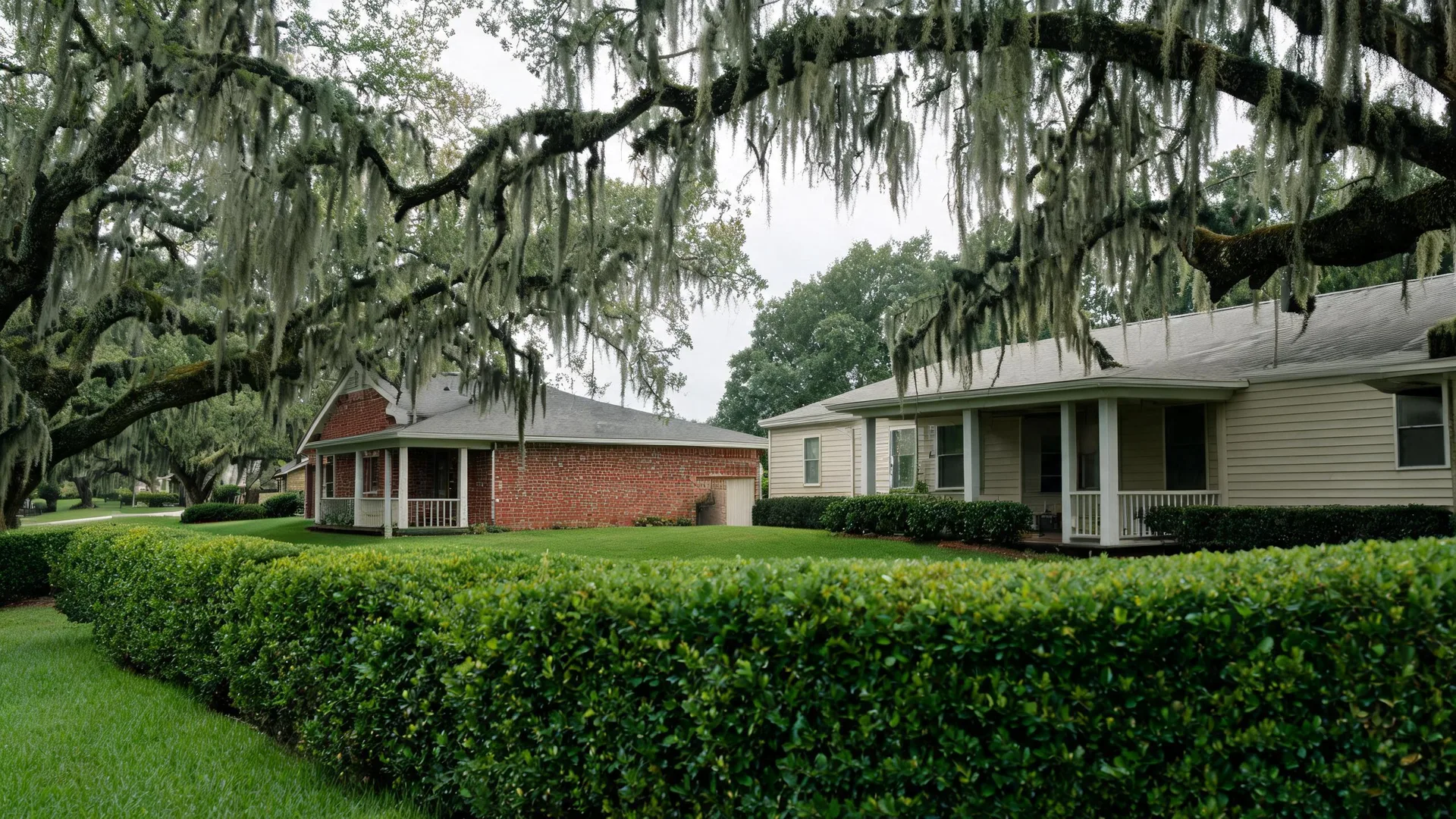






Two single-story houses, one brick with a covered porch and one with pale siding, seen across a mown lawn and a trimmed hedge, beneath large oak branches draped with Spanish moss.

Furnace Installation in Rome, GA

Tell us about the job

Takes about a minute. No obligation.

New system or replacementFurnace or heatingFloyd County, GA
Step 1 of 2

What ZIP code is the job in?

Floyd County saw 115 severe weather events between 2015 and 2024, and damaging wind caused 95 of them. Add 3 tornadoes, 6 hail events, 2 tropical storms and 3 winter storms over that same stretch, and you've got weather coming from every direction at different times of year. Statewide, close to a third of Georgia households lost power for a full day or longer in 2024. A furnace that runs on electricity, or has electric ignition and a blower that needs power either way, goes quiet the moment the lines go down. Worth thinking about before the install, not after the first outage.

7 months
October through April, your furnace is on duty
34°F
the average winter night it heats against
80% AFUE
the federal minimum any new unit must meet
Isometric cutaway illustration of a single-story house showing interior rooms with a dark furnace unit, connected ductwork, a vertical flue pipe through the roof, and simple furniture, on a white background.
Your furnace works hardest from November through March.

NOAA nClimDiv, 1991–2020 normals

Furnace installation in Rome goes faster in September, before anyone needs the heat on.

Homes here start running heat in October, so a September install means it's tested and ready before that first cold morning.

Most furnaces here run on electricity, same as the homes they go into

55.1% of homes heat with electricity
Heat runs October through April
Winter nights average 34°F

Seven months a year, this furnace gets a break. Homes here run heat from October through April, then it sits idle the rest of the year with no summer cooling load pulling double duty on the same equipment. That's a lighter workload than a lot of places see, and it means a furnace here is less likely to wear out from running hard. When one does fail early, age or a skipped tune-up is usually why, not overwork. That's good news for the install: a dependable mid-efficiency furnace will do the job fine. No need to pay for the highest-efficiency model on the lot to get a system that holds up here.

Plan this furnace around the outages, not just the cold

Ask about backup before the install, not after the power's out. A battery or generator setup to keep the blower and ignition running is a lot easier to plan for now than to add once you're sitting in a cold house. If the outdoor work or venting needs to hold up to wind and hail, say so while it's still on the drawing board.

Find a contractor
A man in a cap, dark t-shirt and work trousers carries a canvas tool bag up porch steps toward a blue front door, with a tall planter and shrub beside the entry.
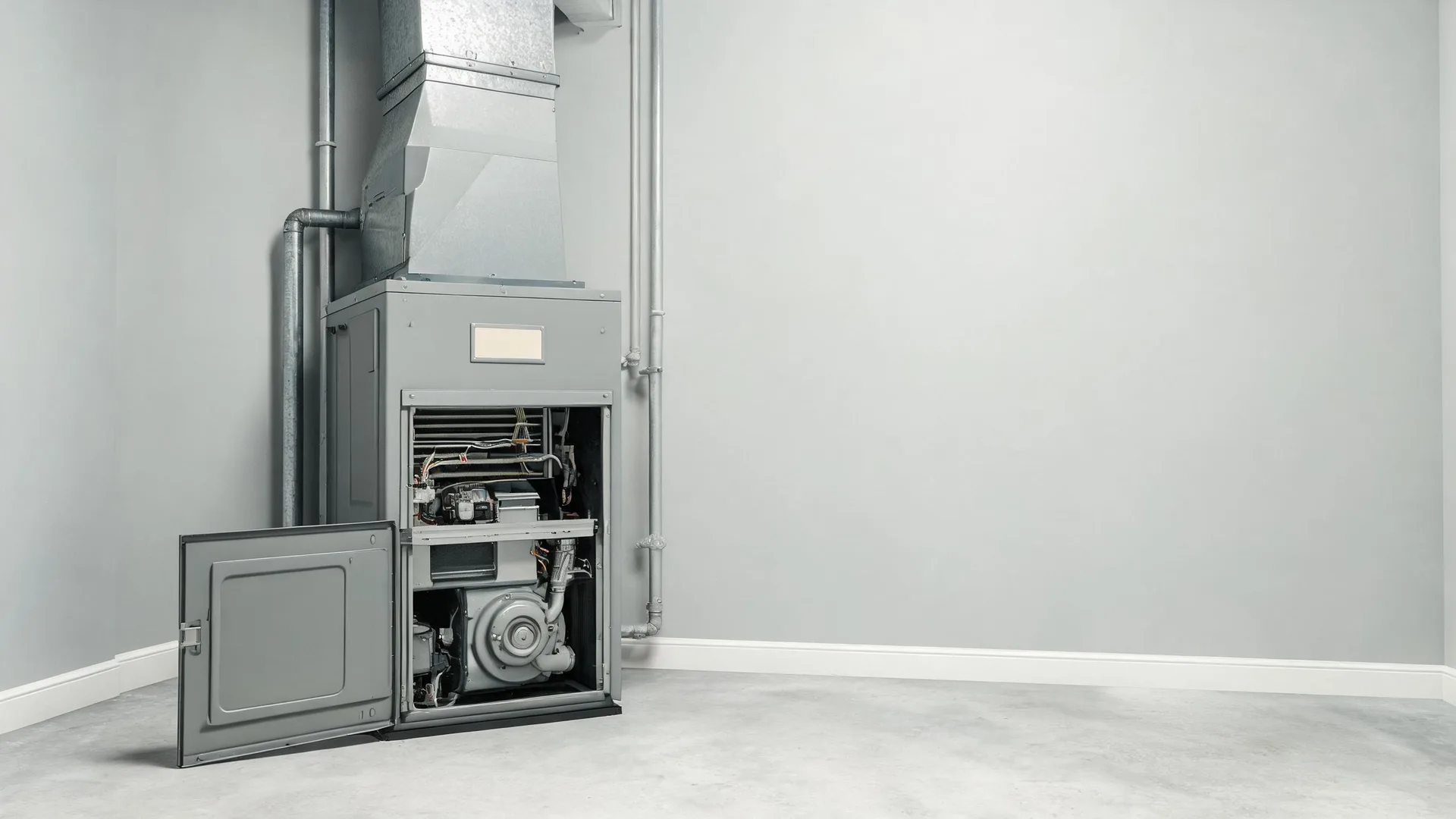
A gray residential gas furnace installed in an unfinished basement, surrounded by ductwork, a metal flue pipe, and a gas supply line.

A light workload means you can plan for other things

Seven months of work a year leaves room to choose on fit, not just on efficiency rating. Since load isn't pushing this furnace hard, put the extra thought into whether it keeps running when the power doesn't. Ask the contractor what the ignition and blower need to stay on through an outage, and size any battery or generator backup for this unit while it's being picked out, not after it's bolted in.

Size and ductwork set the baseline

A furnace has to match the heat loss of the house it's going into, and that takes a load calculation, not a guess based on the old unit's size. If the ductwork is undersized, leaky, or routed oddly, a contractor may need to modify or add runs before the new furnace can heat evenly. That work shapes the price before the furnace itself is even picked.
The vent and gas connections matter more than the sticker

If the furnace runs on gas, the venting has to meet the clearances and materials that furnace needs, and an older flue isn't always built for a new unit's exhaust. Electrical work for the blower motor and control board adds to the job too. None of this shows up on a price tag at the store, but it's where a lot of the labor and parts cost actually comes from.

Ask what happens to ignition when the power blips, not just when it's out for hours. Some control boards need a full reset and won't relight on their own, so a short flicker can leave the house cold until someone resets the switch. Ask how the blower motor is rated too. A motor that draws less power to move the same air is easier to run on a battery backup if that's part of the plan. Ask what the warranty covers if a surge during a storm damages the control board, since that's a different claim than normal wear. And ask how the furnace stages its heat. A unit that can run on a lower stage uses less power to hold the house steady than one that's always running full blast or off.

Zone 3A is the efficiency floor Floyd County furnaces have to clear. Any furnace built since November 2015 already turns at least 80 percent of its gas into heat, and that's what meets the standard here today. That floor rises to 95 percent for furnaces built on or after December 2028, but a furnace bought under the current rule stays a legal install even after that date. Given the lighter workload here, there's no efficiency reason to pay up for a unit built to the stricter future standard now. The zone sets what a furnace has to clear. Whether it clears by a little or a lot is still worth deciding with the outages in mind, since that's the bigger question for this install.