A nighttime street scene featuring a row of lit white colonial-style houses with wrap-around porches, flanked by oak trees draped in Spanish moss.

Furnace Installation in Peachtree City, GA

Tell us about the job

Takes about a minute. No obligation.

New system or replacementFurnace or heatingFayette County, GA
Step 1 of 2

What ZIP code is the job in?

Bigger isn't better

A furnace that's too large for the house heats the air fast and shuts off before it ever warms the walls, the floors, or anything sitting in the rooms. That short cycling wears out the parts that start and stop the most, like the igniter and the blower motor, and leaves rooms feeling uneven even though the furnace is working hard.

The math behind the unit

A contractor works out the right size with a heat loss calculation, which looks at the square footage, the windows, the insulation, and how the house is laid out room by room. It's not a guess based on the old furnace or a rule of thumb for the neighborhood. Houses that look alike from the outside can call for different furnaces depending on what's inside the walls and how they're built.

5 months
November through March, your furnace is on duty
35°F
the average winter night it heats against
64%
of homes here heat with gas, so most furnaces here burn gas
80% AFUE
the federal minimum any new unit must meet
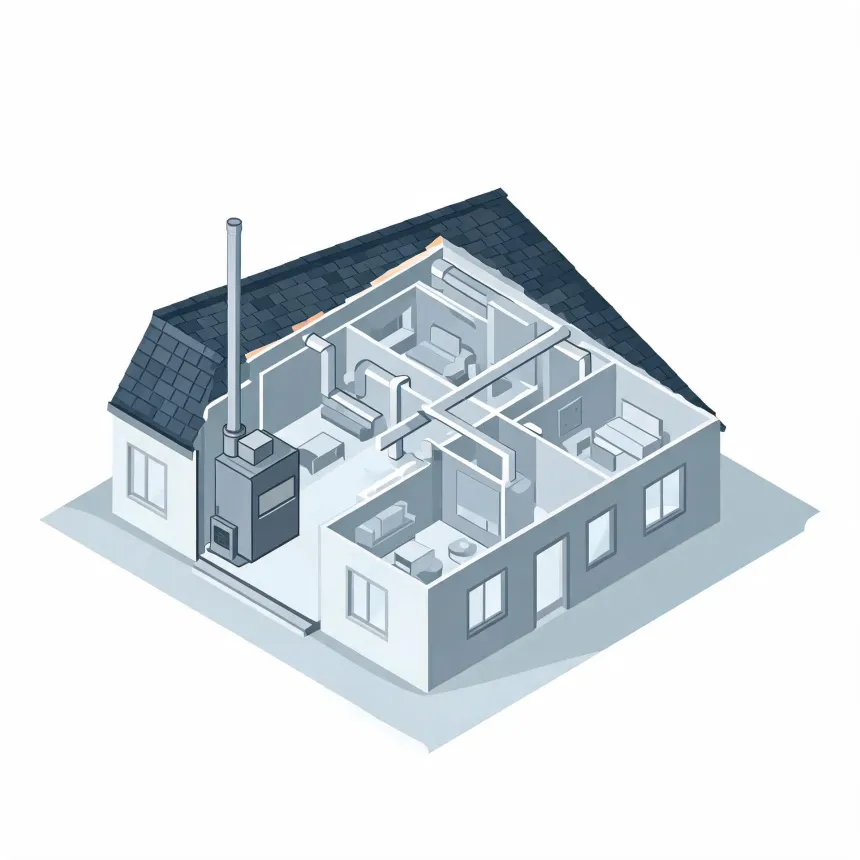
Isometric cutaway illustration of a single-story house showing interior rooms, ductwork, and a dark furnace unit with a tall flue pipe rising past the shingled roof.
Your furnace works hardest from November through March.

NOAA nClimDiv, 1991–2020 normals

Natural gas in Georgia ran $17.66 per million Btu in 2024, lower than much of the country.

A high-efficiency furnace earns back its extra cost slower here, so pick it for comfort and reliability, not the fuel bill.

Five months of heat and 35°F nights, nothing this furnace can't handle without strain

Heat runs November through March
Winter nights average 35°F
Climate zone 3A
Most homes here run on gas, and that's the simplest system to replace63.5% of homes in Fayette County heat with utility gas, far more than electricity or propane

Fayette County has logged 87 severe weather events between 2015 and 2024, most of it damaging wind. Wind and falling limbs are what take down the power lines that run a furnace's blower and igniter, even on a gas system. Nearly a third of Georgia households went at least a day without power in 2024. A furnace install is a good time to ask the contractor where the outdoor equipment sits and what it's exposed to, and to talk through backup options for the nights an outage runs long.

Heat starts in November. Put the furnace in before it does.

Replace it in October and the install happens on a mild afternoon, not during a cold snap with the house already uncomfortable. Heat runs here from November through March, five months straight. A furnace put in ahead of that first cold night gets tested and adjusted while there's no rush on either end.

Find a contractor
A man in a cap, long-sleeved shirt and work pants carries a canvas tool bag up porch steps toward a dark blue front door, beside a blue ceramic planter.
A gray high-efficiency gas furnace installed in an unfinished basement, surrounded by gas lines, a condensate drain, and sheet-metal ductwork.

The old one doesn't get a second life

The old furnace does not just get unhooked and left at the curb. Whoever hauls it has to deal with the gas line, the flue pipe, and in a lot of cases a refrigerant line if there's a cooling coil sitting on top of it. A furnace that's old enough to replace has usually got a cracked heat exchanger, a cabinet rusted through at the bottom, or a blower motor that's seized up, and none of that is worth salvaging. The sheet metal and the copper inside get recycled. What won't get reused is the old ductwork connection point, since the new furnace's cabinet rarely matches the old one's dimensions exactly, so there's always some fitting and sealing to do at the collar even when everything else lines up.

What the ductwork decides

A new furnace moves more or less air than the one it replaces, and the ducts have to carry that air without a fight. Undersized or leaky ductwork makes a contractor add a return, seal joints, or resize a trunk line before the furnace ever gets set. That work is part of the job, not an extra, and it changes with every house.

The vent has to match the furnace

A high-efficiency furnace vents through PVC pipe out a sidewall. An older style vents through metal pipe into a chimney. Switching from one to the other means new venting, not just a new furnace in the old spot. The cabinet, the ductwork connections, and the gas line all have to line up with whichever furnace goes in.

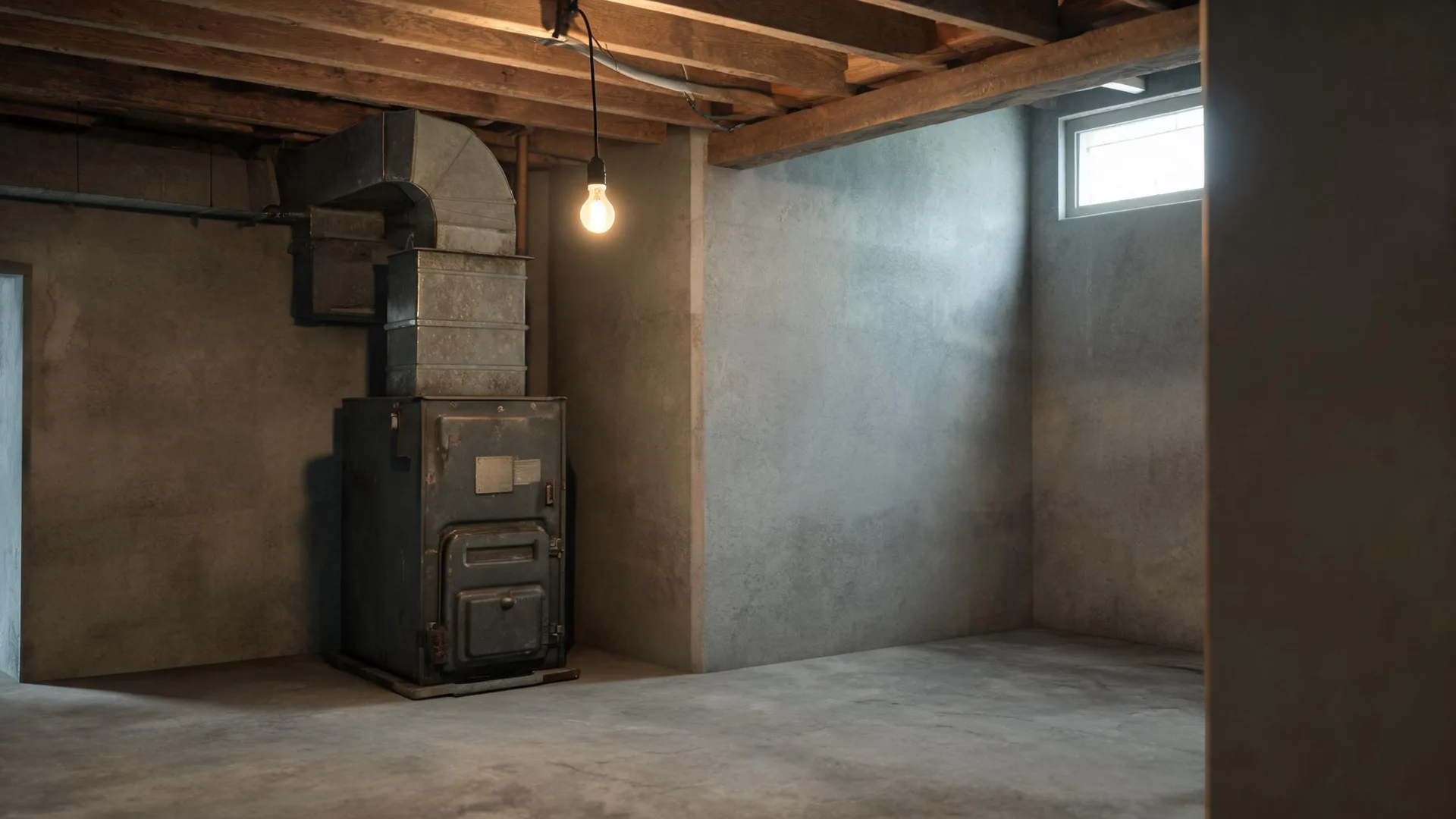
An unfinished basement featuring concrete block walls, exposed floor joists, a bare concrete floor, and a forced-air furnace with a large metal exhaust duct in the corner.

A high-efficiency gas furnace would save about $100 a year to run in Fayette County compared with a gas furnace.

  • A high-efficiency gas furnace$550 a year
  • A gas furnace$650 a year

Estimates for a typical Fayette County home, from EIA household energy data, Georgia fuel prices and NOAA climate normals. Your home will differ.

The old furnace comes out first. The contractor shuts off the gas, disconnects the flue or vent pipe, and disconnects the ductwork from the cabinet before it's hauled out. With the space open, they can see what the new furnace actually has to connect to, not just what the sales visit assumed. Setting the new cabinet, running the gas line to it, and connecting the vent pipe takes most of the day. Once it's in place, the contractor checks the gas pressure, fires it up, and lets it run through a full cycle to see that the burners light cleanly and the blower kicks on and off the way it should. Before they leave, they'll walk the house with you to show the thermostat settings and where the filter goes.