






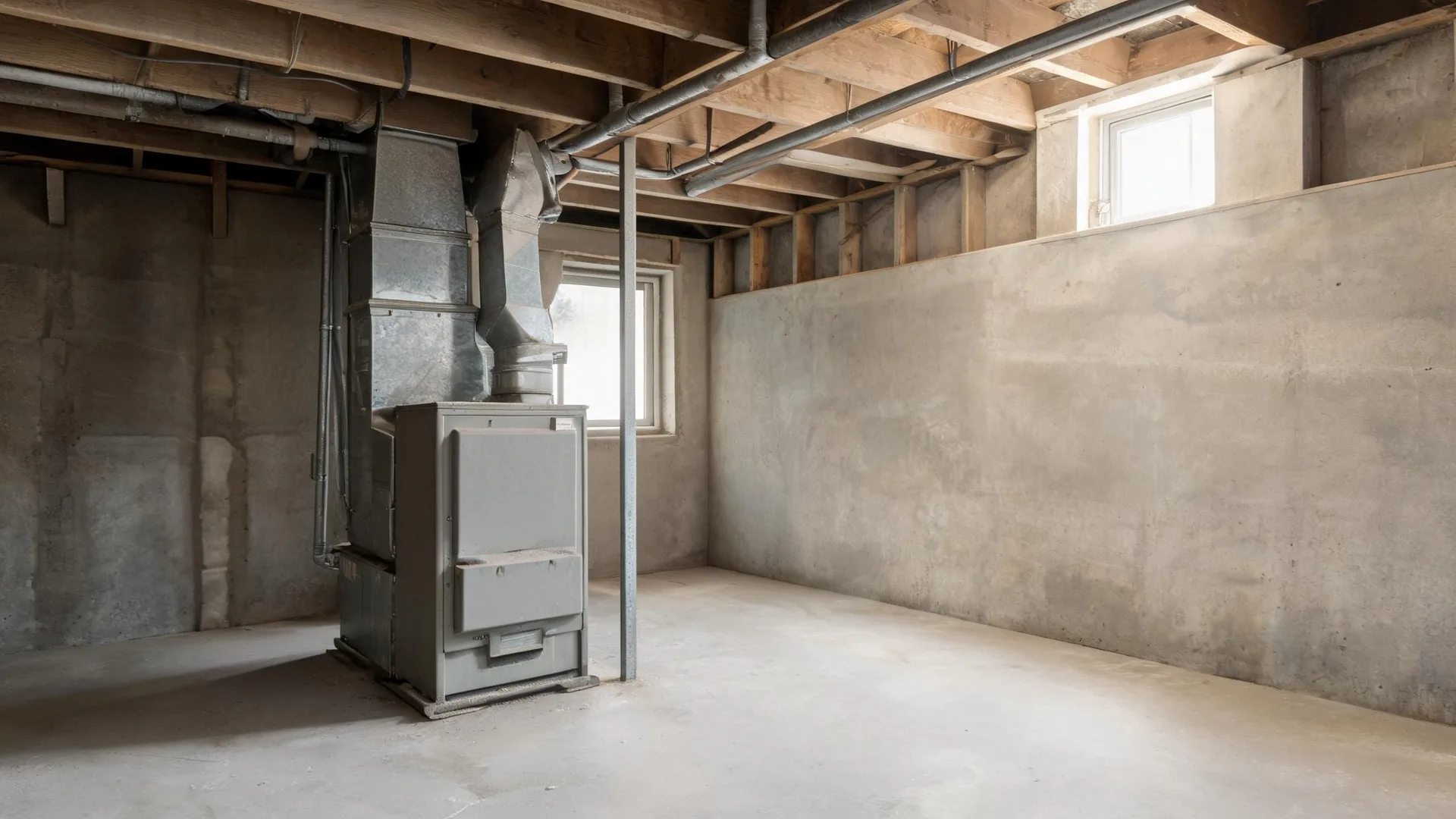
An unfinished concrete basement containing a metal HVAC air handler, exposed wooden ceiling joists with sheet-metal ducts, a hanging bare bulb, copper pipes, and stacked cardboard boxes.

Furnace Installation in Macon-Bibb County, GA

Tell us about the job

Takes about a minute. No obligation.

New system or replacementFurnace or heatingBibb County, GA
Step 1 of 2

What ZIP code is the job in?

Electricity heats 64.9% of homes in Bibb County, most of them on a heat pump or an electric furnace already. Replacing that with the same kind of system is the straightforward path, since the wiring and setup are already there for it. Utility gas heats 32.4% of homes here, and bottled or LP gas heats another 1.7%. If your house already has a gas line run to it, a gas furnace still makes sense, and a contractor can check whether the line and venting support the new unit. Switching fuels on a furnace install means more work before anything gets installed.

5 months
November through March, your furnace is on duty
36°F
the average winter night it heats against
80% AFUE
the federal minimum any new unit must meet
Isometric grayscale illustration of a cutaway house showing an interior furnace with a tall flue pipe and ductwork running to rooms under a partially lifted roof.
Your furnace works hardest from November through February.

NOAA nClimDiv, 1991–2020 normals

Electricity in Georgia runs $41.27 per million Btu, below what homes in a lot of other states pay.

A high-efficiency furnace still costs more up front, and here it takes longer to earn that back.

A standard furnace fits a house like this

Half the homes here were built by 1977
Heat runs November through March
Winter nights average 36°F
Get it done before NovemberHeat goes on in November and runs through March here.

Bibb County sees its share of severe weather, 70 events logged between 2015 and 2024, most of it damaging wind. None of that changes what furnace to put in. Wind and power outages are a reason to think about backup power for the blower and controls, not a reason to size up the furnace itself. A standard unit heats the house the same whether the grid is steady or not. If outages worry you, that's a separate conversation with the contractor about a transfer switch or a generator, not about buying a bigger or pricier system than the house needs.

What a new furnace here has to meet

Any furnace installed here now has to hit 80 percent AFUE, the federal minimum. That minimum rises to 95 percent by the end of 2028, but a furnace put in before then keeps running at the rate it was built to meet. Bibb County falls under zone 3A, a warm, humid zone with a short mild winter, so even the standard-efficiency unit isn't working against much. A federal tax credit is available for qualifying high-efficiency furnaces, worth asking a contractor about when comparing units.

Find a contractor
A gray residential gas furnace installed in an unfinished basement, surrounded by ductwork, a metal flue pipe, and a gas supply line.

Sized to the house, not the old unit

Sizing comes from a room by room load calculation, not from measuring the old furnace and matching it. That calculation accounts for the square footage, the windows, the insulation, and how the rooms connect, then arrives at the heating capacity the house actually needs. Skip that step and the new furnace is just a guess wearing a nameplate. A furnace too big for the house heats the air fast, shuts off, and fires again a few minutes later. That short cycling puts more wear on the heat exchanger and the ignition system than steady running ever would, and it happens on every cycle. A furnace too small never catches up. It runs long on the coldest nights and still can't hold the temperature, so it runs longer still, and parts built for intermittent use end up running continuous. Either mistake shows up later as repair calls, not on install day. The right size is the one that runs in long, steady cycles and shuts off having actually caught up.

Size drives most of the cost

A contractor sizes the furnace to the house with a load calculation, not a guess based on the old unit. Too big and it short cycles, wearing out the heat exchanger early. Too small and it runs constantly without catching up. Getting this step right affects which unit fits and what the ductwork needs to handle, before a price means anything.
The ductwork decides the rest

A furnace swap that keeps the same ducts and the same vent is a different job than one that doesn't. If the vent material has to change for the new furnace, or the ducts are undersized for the air it needs to move, that work happens before the furnace goes in, not after. A contractor checking this during the quote is checking the thing that actually sets the scope.

Ask each contractor what AFUE rating they quoted and get it in writing, not just the brand name. Ask what size furnace they calculated and whether that number came from a load calculation or from matching the old unit, since those can land in different places. Ask what happens to the ductwork and venting, because a furnace that needs different venting or bigger ducts is a different scope than a straight swap, and that belongs in the quote, not discovered partway through the job. Ask what the warranty covers on the heat exchanger versus the rest of the parts, since those terms aren't always the same length. And ask what's excluded. A quote that spells out what isn't included tells you more than one that only lists what is.

Install day starts with the old furnace coming out, and the ductwork and venting get tied into before the new unit ever gets set. A contractor runs gas or checks the existing line, connects the vent, and wires the blower and controls into the thermostat. Once it's in, the work isn't done. The furnace gets fired up and checked for proper airflow across the heat exchanger, gas pressure gets measured and set to the manufacturer's spec, and the temperature rise gets checked against the range stamped on the unit's data plate. That last check matters more than it sounds like it should. A furnace running outside its rated rise is either starving for air or getting too much, and either one shortens its life. A combustion analyzer gets used to check the exhaust, confirming the furnace is burning clean and venting properly rather than spilling exhaust back into the house. None of this is optional add-on work. It's what separates a furnace that's installed from one that's installed correctly.