A row of single-story cottages, one brick and the others light gray siding with covered porches, behind a trimmed hedge and lawn, under large oak branches draped with Spanish moss.

Furnace Installation in Brunswick, GA

Tell us about the job

Takes about a minute. No obligation.

New system or replacementFurnace or heatingGlynn County, GA
Step 1 of 2

What ZIP code is the job in?

Most homes here run on electric heat

Electricity heats 86 percent of homes in Glynn County, more than any other fuel. Utility gas is a distant second at 10.1 percent, with propane even smaller. If your home came with an electric furnace or heat pump, that puts it with most of the county.

Matching what's already there is the simpler job

An electric furnace uses the circuit already run for the one it replaces. Switching to gas would mean running a gas line most homes here don't have, since so few are set up for it.

5 months
November through March, your furnace is on duty
43°F
the average winter night it heats against
80% AFUE
the federal minimum any new unit must meet
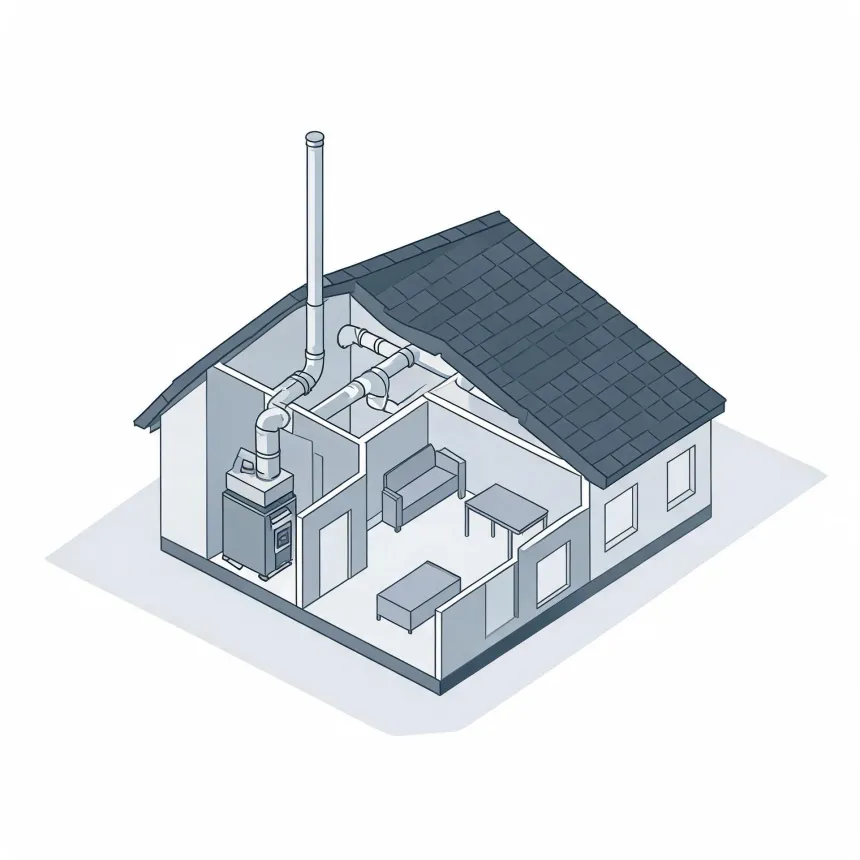
Isometric line illustration of a cutaway single-story house with a shingled roof, showing an interior furnace connected to ductwork and a tall vertical flue pipe, plus simple furniture in the adjacent room.
Your furnace works hardest from December through February.

NOAA nClimDiv, 1991–2020 normals

The old furnace doesn't get left behind for someone else to deal with.

The crew hauling in the new unit takes the old one out with them, same trip.

Electricity here is cheap, so the payback on a pricier furnace takes longer

Heat runs November through March
Winter nights average 43°F
Climate zone 2A

A standard furnace sized and rated for this house is the right call here. Glynn County has seen its share of rough weather, 71 severe weather events recorded, most of it wind and tropical storms coming through. None of that changes what a furnace needs to do or how big it needs to be. Wind and storms are a power supply problem, not a heating problem. If the power goes out, a bigger or more efficient furnace won't run any better than a standard one, since both need electricity to run the blower and controls. What matters more is what happens after the power comes back on, and most systems handle that on their own without anyone resetting anything.

A furnace built for five mild months, not a hard winter

Five months of heat a year, and overnight lows averaging 43°F even in the coldest stretch, is not hard duty for a furnace. It won't be cycling against real cold for long. A furnace sized right for this house will keep up without needing the highest efficiency rating on the shelf.

Find a contractor
A gas furnace with attached ductwork, gas piping, and condensate lines installed in a concrete-block basement.

Put it in before you need it

Heat here runs November through March, about five months. Outside that stretch, nobody's thinking about their furnace until the first cold night shows a problem. Getting the new unit in during October means a crew with time to do the job right, and a system ready to go before it's needed. Wait until the cold snap hits and you're choosing from whoever can come out that week, on their timeline.

The rating tells you about the gas, not the electric parts

The efficiency rating on a furnace measures how much of the fuel burned turns into heat instead of going out the flue. That number only applies to gas furnaces. An electric furnace turns nearly all its electricity into heat already, so this rating does not apply to it and will not be on the label of one.

A higher rating only pays you back if the furnace runs a lot

The gain from a higher-rated furnace shows up in fuel burned over the winter. A furnace that only runs a few months a year does not burn enough fuel for that difference to add up the way it would somewhere the furnace runs most of the year. Sizing the furnace right for the house matters more than chasing the top number on the shelf.

A quote should tell you more than a model number. Ask what size the contractor is proposing and whether it came from a load calculation or just matches the old unit. Ask what's included. New ductwork or plenum work if the old ducts don't fit the new furnace. A new thermostat if the old one isn't compatible. Hauling away the old unit. Ask what happens to the warranty if the furnace doesn't get registered, and whose job that registration is. Quotes for the same size furnace can still land far apart because one accounts for the work the house actually needs and the other leaves it out.

Installation day starts before the crew touches the old furnace. They'll isolate the power and, on a gas unit, shut off the gas line before anything gets disconnected. The old furnace comes out, and if ductwork needs to change to fit the new unit, that gets done before the new furnace goes in, not after. Setting the new unit means leveling it, connecting the supply and return plenums, wiring in the thermostat and control board, and on a gas furnace, connecting the venting and running a gas line pressure test before anything gets lit. Once it's hooked up, a tech runs it through a full cycle, checking temperature rise across the furnace and airflow at the vents, before calling the job done. A furnace that's installed right shouldn't need a callback in the first week.