

When a furnace flame sensor needs cleaning in Georgia

A local pro who services furnaces gets in touch about the tune-up.

Match me with a pro

A flame sensor needs cleaning once a year, usually right before the furnace starts running for the winter, and sooner if the furnace has been shutting off on its own after a few seconds of running. The sensor is a thin metal rod that sits in the burner flame and proves to the furnace that gas is actually burning. Over time it builds up a layer of soot and oxidation, and once that coating gets thick enough, the sensor can't read the flame anymore, so the furnace shuts the gas valve as a safety measure and the burners go out. Most Georgia homes heat with electricity, but if your house has a gas furnace, this is the part behind a furnace that fires up and then quits within a minute. Cleaning it is a short job for someone who knows where it sits and how to handle it without damaging the rod underneath.

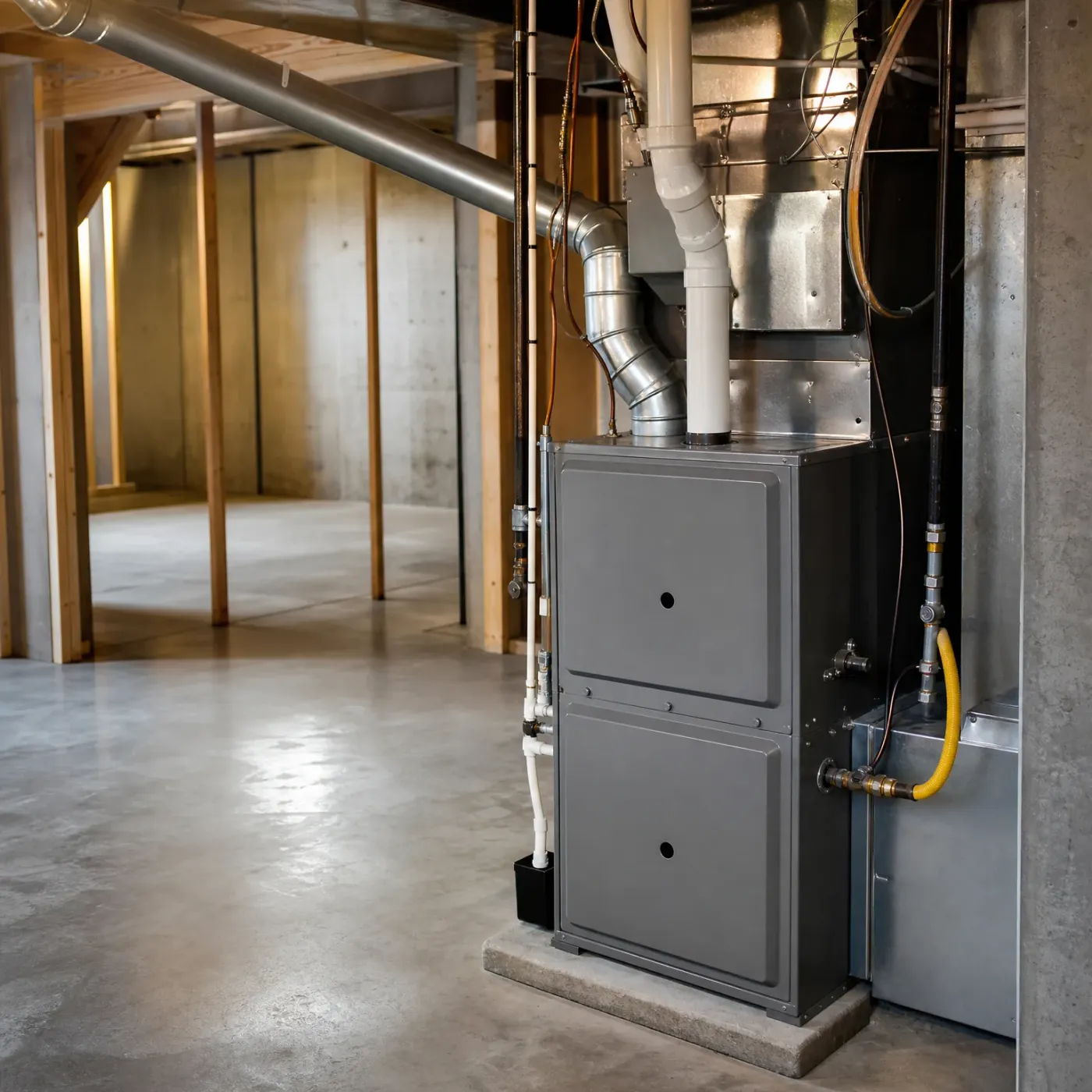
A gray high-efficiency furnace stands on a concrete basement floor beside galvanized sheet-metal ductwork, with white PVC vent pipes, gas and water lines, and unfinished wood framing behind it.

Clean sensor, normal start

A clean flame sensor lets the furnace light and stay lit. You'll hear the burners ignite, run steady, and keep heating the house through the cycle. No clicking off after a few seconds, no repeated attempts to light. This is what a furnace with electric backup heat should do all winter without you thinking about it.

A beige furnace with two louvered front panels stands on a concrete basement floor beside galvanized ductwork, metal pipes, and a wooden post.

Dirty sensor, short cycling

A coated sensor can't detect the flame, so the furnace shuts the burners off seconds after they light, then tries again. You'll notice cool air blowing, or the furnace cycling on and off every few minutes instead of running a full heat cycle. Left alone, it keeps happening until the rod gets cleaned.

Why does your furnace light, then quit a few seconds later?

That's the flame sensor telling the furnace to shut off because it can't confirm a flame, even though one is there. You'll hear the burners catch, run for a few seconds, then click off. Then it tries again. Some furnaces repeat this three or four times before giving up and locking out, leaving you with cold air coming from the vents on a cold morning. With most homes here heating on electricity, a furnace that won't stay lit usually means the system falls back on backup heat strips, which pull a lot more power to do the same job. Left alone through the winter, the short cycling puts more wear on the igniter and the blower motor than running normally would.

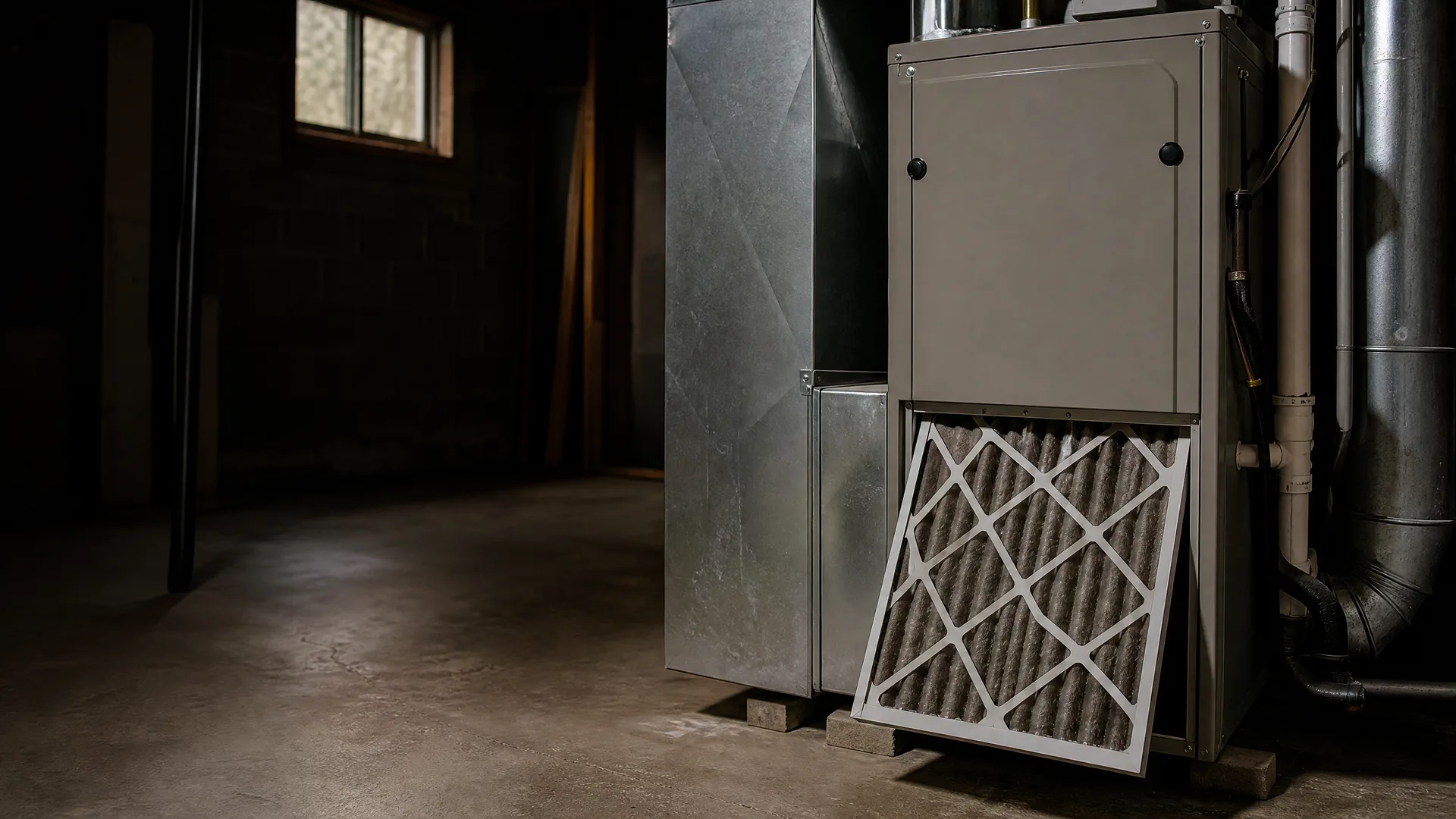
A gray furnace with sheet-metal ductwork in a dim basement, with a dirty pleated air filter leaning against its base on a concrete floor.

You're down in the basement on an October afternoon, pulling the filter to check it before the cold sets in. It slides out grey, dust caked across the pleats. You set it against the wall and crouch to look at the furnace itself, and that's when you hear it. The burners catch, run for a few seconds, then click off. You wait, and it tries again. Catch, run, click off. Outside it's still warm enough most days, but you know that won't last. You stand there listening to it try a third time, thinking about the rod you can't see inside, the one telling the furnace something is wrong.

A gray high-efficiency furnace in a basement with white PVC vent pipes, sheet-metal ductwork, copper and black piping, a condensate pump, and insulated walls above a concrete floor.
A clean sensor gets a quiet winter. The furnace lights once, holds the flame, and heats the house without a second thought from you.
A beige residential furnace stands on a concrete basement floor beside galvanized sheet-metal ductwork, a round flue pipe, copper gas piping, and a PVC condensate line, with a wood-paneled wall at right.
A dirty sensor gets a service call eventually. The furnace that short cycles in October is the one you're troubleshooting on the coldest night of January.

Clean It Yourself or Call Someone

Clean it yourself

  • You need a shutoff for the gas and power, a screwdriver, and fine sandpaper or steel wool, nothing specialized.
  • The sensor is one screw and a wire, so pulling it takes a few minutes once you find it near the burners.
  • A light grey film wipes off with a few strokes of sandpaper, no chemicals or special cleaner needed.
  • If you put the sensor back wrong or don't seat the wire fully, the furnace won't read it any better than before.
  • You won't know if the problem was really the sensor until you button it up and watch the furnace run a full cycle.
  • Working inside the burner compartment means you're near the gas line and the igniter, so the power and gas both need to be off first.

Have it done

  • A contractor checks the sensor along with the igniter and the burner flame, so a dirty sensor doesn't get mistaken for something else.
  • If the rod is corroded instead of just dusty, it gets replaced on the spot rather than cleaned and put back in a bad sensor.
  • Maintenance visits often cover the whole furnace, not just the one part that's been giving trouble.
  • You're not the one deciding whether a few seconds of flame before shutoff means a sensor problem or something further along in the gas valve.
  • Once the form is sent, finding someone to do this stops being on you, and the contractor is the one who reaches out.
  • A furnace that's been short cycling for a while sometimes has buildup on more than the sensor, which a cleaning alone won't catch.
A woman wrapped in a cream textured blanket sits in an armchair beside a lit lamp and a dark window, with an open book in the foreground.
A bearded man in a plaid flannel shirt stands indoors looking out a frost-covered window, with a steaming dark blue mug on the wooden sill and snow-covered trees outside.
A gray gas furnace on a concrete pad in an unfinished basement, connected to sheet-metal ductwork, white PVC venting, and a yellow gas line, with concrete walls and wood framing in the background.

Get the right pro for your furnace

Send the form, and lining up the furnace tune-up stops being yours to chase.

Say what's going on with your furnace, and a pro who works on them reaches out.

Find my pro

No charge to send it. You decide if you hire them.

A woman in a cream sweater and jeans stands in the open doorway of a white stucco house, holding the dark door, while a man in a dark quilted jacket seen from behind walks toward the entry past potted plants.

What's actually happening at that rod

The flame sensor doesn't light anything. Its only job is to prove a flame is there once the gas valve opens. It does this by passing a tiny electrical current through the flame itself back to the control board. Carbon and oxidized metal build up on the rod over months of burning, and that coating acts like a layer of rubber around a wire. The current can't get through it, so the board reads no flame even while the burners are going, and it cuts the gas as a safety measure.

That's why cleaning the rod is different from replacing it. Sanding off the coating with fine steel wool or emery cloth restores the metal-to-metal contact the sensor needs. No wiring changes, no recalibration. A furnace that's been doing this for a few winters, or one where cleaning hasn't brought it back, is worth having someone look at who works on these year-round. Once you're matched with a contractor who knows your model, you're not the one chasing down what's wrong with it anymore.

A living room corner with a beige sofa and cushion, a round wooden coffee table holding a pale ceramic vase of eucalyptus stems and a wooden bowl, and a curtained window with a potted plant above a latticed radiator cover in the background.
  1. Thermostat calls for heat and the gas valve opens

  2. Igniter glows or sparks to light the burners

  3. Flame sensor reads current through the flame to the control board

  4. Carbon buildup blocks the current and the board shuts the gas valve

Winter nights average 36°F statewide

Winter nights here average 36°F, mild enough that most Georgia homes heat on electricity rather than running a furnace hard for months on end. That shorter season is exactly why the flame sensor gets skipped. A furnace that only fires up on the colder nights still needs that once-a-year cleaning before it does.

NOAA nClimDiv 1991-2020 county normals weighted by homes

A gray furnace with two access panels stands on a concrete basement floor beside sheet-metal ductwork, with pipes, flexible conduit and an electrical box on the concrete wall to the left.
Before you get your furnace maintenance
A gray high-efficiency furnace stands on a concrete basement floor beside galvanized sheet-metal ductwork, white PVC vent pipes, copper and black piping, and unfinished wood stud framing.
After you get your furnace maintenance

The Flame Sensor, in Short

  • A dirty flame sensor is the usual reason a furnace lights, runs a few seconds, then shuts off on its own.
  • Carbon buildup on the rod blocks the small current it needs to prove a flame to the control board.
  • Cleaning it takes a few minutes with a screwdriver and fine sandpaper or steel wool, once the gas and power are off.
  • Georgia furnaces run fewer months than the electric heat most homes rely on, so the buildup gets missed until the furnace starts short cycling.
  • Once a year, before the furnace starts running for winter, keeps the sensor from causing a shutdown mid-season.
  • A furnace that short cycles on a cold night is almost always telling you the sensor needs attention, not the burners or the gas valve.

A furnace that lights, runs a few seconds, then quits is almost always a dirty flame sensor, not a bad burner or a failing gas valve. The rod sits in the burner flame and passes a small current back to the control board to prove the flame is real. Carbon builds up on that rod over time and blocks the current, so the board shuts the gas off even though the furnace is working fine. Clearing it is simple work. Shut off the gas and power, pull the one screw holding the sensor, and clean the rod with fine sandpaper or steel wool before putting it back.

Georgia makes this easy to put off. Most homes here heat with electricity, and the furnace only runs on the colder nights, so a season or two can pass before anyone notices the sensor at all. By the time it's shutting the furnace off mid-cycle, enough carbon has built up to block that current reliably, not just on the coldest nights.

Doing it once a year, before the furnace starts running for winter, keeps that buildup from ever reaching that point. It's a small habit that avoids a cold morning spent figuring out why the furnace won't stay lit. If yours is already short cycling, that's the sensor talking. Cleaning it is usually the whole fix, and maintenance that catches it early means it never gets the chance to cause a shutdown you have to troubleshoot in the middle of winter.

A gray-haired, bearded man in a dark coat dusted with snow stands smiling in a dimly lit room with a lamp, mirror, framed art, and a sofa in the background.
An older man with white hair and a beard, wearing a dark snow-dusted coat and scarf, stands in a warmly lit interior hallway with a framed landscape picture, a table lamp and a potted plant behind him, and a snowy view through a window at left.
An older man in a dark snow-flecked overcoat and scarf stands smiling in a warmly lit home entryway, with a glass-paned door showing darkness outside and a lamp-lit room visible through a doorway behind him.
An older man with gray hair and a beard, wearing a dark snow-dusted jacket and scarf, stands smiling in a warmly lit interior hallway with a lit table lamp, a vase of dried branches, and a framed picture in the background.

Furnace Maintenance

A pro who works on furnaces

Send the form and the furnace tune-up stops being something to remember.

A black-framed smartphone standing upright against a plain light gray background, its screen filled with solid green.
Tune-up, service, or cleaningFurnace or heatingGeorgia
Step 1 of 2

What ZIP code is the job in?