A Richmond County pro who repairs furnaces gets your request.
A furnace that shuts off before the house warms up is doing it for a reason. It could be a flame sensor that's dirty and can't tell the burner is lit, so the control board cuts gas to be safe. It could be a clogged filter choking airflow until a limit switch trips and shuts the whole thing down. It could be a cracked heat exchanger, which is not something to wait on. Each of these looks the same from your living room: the furnace fires, runs a few minutes, and quits.
Most houses around Augusta and the rest of Richmond County heat with electricity, so when a furnace is the problem, it's often tied into a heat pump system rather than a standalone gas unit. That changes where a tech looks first, and it's part of why a phone diagnosis rarely gets past guessing.
Winters here are mild, which means a furnace that won't stay running might not feel urgent the way it would somewhere colder. But a short cold snap is still a cold house, and a furnace that cycles off repeatedly is usually wearing down a part faster each time it does it, not resting.
You don't have to figure out which of these it is before you do anything. Once you send the request, the job of finding the right contractor for your situation is off your plate. A contractor who handles furnace repair in this area will reach out and take it from there, working from what your system is actually doing rather than a guess made over the phone.
Fill in a few details about your furnace and what it's doing, and let someone who works on these systems every day take it from here.
Why does my furnace keep shutting off?
You turn the furnace on and it runs for a few minutes, maybe long enough to take the chill off, then quits. Sometimes it kicks back on later, sometimes you have to flip the switch yourself to get it going again. It's not that the furnace won't start. It starts fine. It just won't stay running, and in a house that depends on electric heat through a mild Richmond County winter, that's enough to make the next cold snap worth worrying about.
A safety switch is cutting power before the cycle finishes
Furnaces are built to shut themselves off the moment something isn't right, rather than keep running and risk damage or worse. A flame sensor coated in residue stops reading the flame and the control board kills the gas. A filter packed with dust chokes airflow until the limit switch trips from heat buildup inside the cabinet. A blower motor running weak can do the same thing. None of these let the furnace finish a normal cycle, so it shuts off again and again instead of warming the house through. Winters in the Augusta area are mild, so a furnace here may only run a handful of days at a stretch, and dust or a weak part can sit unnoticed until the first real cold snap puts it to the test.
Running the way it should
A furnace like this fires once and keeps going until the thermostat is satisfied. The flue pipes draft clean, the gas valve holds steady, and the blower moves air through the ducts without the burner cutting out partway through a cycle. Nothing about this setup needs a workaround.
Shutting off early
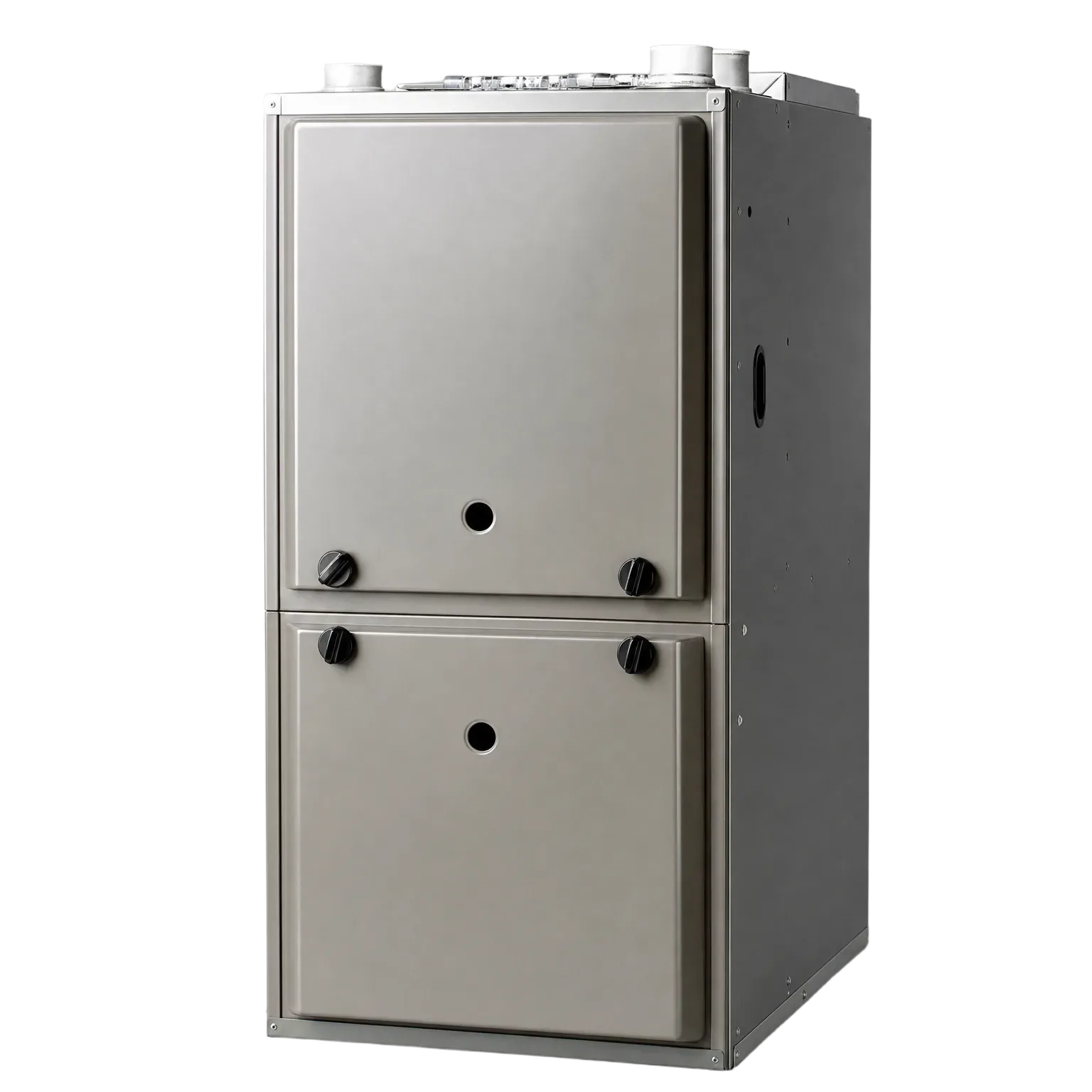
Dust and age catch up with a furnace like this one. A cabinet this worn often means a flame sensor or limit switch that's been struggling for a while. If yours fires, runs a few minutes, then quits, something inside is telling it to stop before the room ever warms up.
Why does a furnace shutting off matter more once it gets cold here?
Winter nights average 37°F
Winter nights here average 37°F, so a furnace that quits partway through a cycle leaves the house sitting at a chill that doesn't let up on its own.
Heat runs November through March
Heat only runs here from November through March, so a furnace that won't stay lit is a problem for a short stretch, not something to live with until spring.
57.8% of homes heat with electricity
Electricity heats 57.8% of homes in Richmond County, and most of those run on a heat pump with backup strip heat rather than a gas furnace.
NOAA nClimDiv 1991-2020 · ACS 2020-2024
Why a Furnace Cuts Itself Off
A flame sensor coated with a thin film of residue can't prove a flame is burning, so the control board shuts the gas valve as a safety step.
Furnaces fire in a set order: igniter glows, gas valve opens, flame sensor confirms the burn, blower starts; a fault anywhere in that order ends the cycle early.
A limit switch trips when air inside the furnace runs too hot, usually because a dirty filter or blocked vent is holding heat inside the cabinet.
Short cycling, where the furnace runs only a few minutes before quitting, points to airflow or ignition trouble rather than the thermostat setting.
A cracked heat exchanger can force a furnace to shut off through its safety switches, since the metal expands as it heats and triggers a limit meant to protect the house.
Pressure switches check that the inducer motor is pulling exhaust out through the flue before the burner lights, and a stuck switch keeps the furnace from starting a new cycle at all.
A furnace shutting off mid-cycle is almost always a safety switch doing its job, not a random failure. The sequence matters. When the thermostat calls for heat, the igniter glows first, then the gas valve opens, then the flame sensor has to confirm a flame is actually burning before the blower kicks on to push warm air through the ducts. If any step in that order fails, the control board stops the cycle rather than let gas run unburned or heat build up with nowhere to go. A flame sensor with a film of residue on it is a common cause. It sits in the burner flame but can't read it anymore, so the board treats the furnace as if no flame exists and cuts the gas. Airflow trouble shows up differently. A dirty filter or a blocked vent holds hot air inside the cabinet until the limit switch trips from the heat, shutting the burner down to protect the heat exchanger and the ductwork. The pressure switch covers a separate risk entirely. It confirms the inducer motor is clearing exhaust through the flue before the burner ever lights, and if that switch sticks, the furnace won't start a new cycle at all. A furnace that runs only a few minutes before quitting is telling you the problem sits in ignition or airflow, not in how the thermostat is set. In rarer cases, a cracked heat exchanger expands as it heats and trips a limit switch meant to catch exactly that.
Winter nights average 37°F
At 37°F, a furnace that shuts off mid-cycle doesn't just leave the house a little cool. It gives the air time to drop again before the next cycle even starts, so the chill keeps creeping back instead of settling out overnight.
Get the furnace repair search off your mind today.
You only hire the pro if you want to.
What a short cycling furnace costs you
A furnace that shuts off partway through a cycle still uses gas or electricity on every start, and it starts more often to make up for the heat it didn't finish delivering. The igniter and blower motor wear with every cycle, not with every hour of runtime, so a furnace that cycles eight times an hour is aging those parts faster than one that fires once and holds. Most homes here heat with electricity, and a system that keeps restarting is drawing startup power repeatedly instead of settling into a steady run. None of that shows up as a dramatic bill spike right away. It shows up as a system working harder to leave the house at the same temperature it used to reach without the interruptions.
What happens if it's ignored
A furnace that shuts off on its own a few times a winter is a different problem than one doing it every cycle, and the second one tends to get worse, not better, since whatever is tripping the safety switch or fooling the flame sensor doesn't clear itself. Left alone, a dirty flame sensor eventually stops reading a flame at all, and the furnace won't restart until it's cleaned. A clogged filter restricting airflow can run a furnace hot enough to trip the limit switch on every single cycle, and eventually that heat stresses the heat exchanger itself, which is a repair instead of a cleaning.
Before you get your furnace repairAfter you get your furnace repair
In your house this shows up as rooms that never quite get warm and a thermostat that seems to be lying to you. You set it to 70 and walk away, and twenty minutes later the air coming out of the vents has gone cold again, so the room you're sitting in drifts back down before the furnace ever finishes the job. If you've got a baby's room or a bedroom far from the furnace, that's usually the first place it shows up, since it's the last to get warm air and the first to lose it. Most homes here heat with electricity, so every one of those restarts is pulling power to reheat a house that was almost there. Leave it alone and the parts doing the extra work, the igniter and the blower motor, are the ones most likely to fail outright, usually on a night when you'd rather not be without heat at all.
A furnace that shuts off partway isn't one to leave alone
A furnace that keeps quitting mid-cycle is telling you something specific stopped it, whether that's a flame sensor that can't see the flame, a filter choking off airflow, or a limit switch doing exactly what it's built to do. None of those clear up on their own, and running the thermostat up and down just makes the furnace start and stop more, which is the part that wears an igniter or a blower motor down faster than it should.
Once you've got this far, the next step is getting a contractor who works on furnaces in Richmond County to look at yours and tell you which of these it actually is. Send the form and that part's handled. A contractor who takes on jobs like this will get in touch, and from there it's between you and them.
Furnace Repair
Find a furnace repair pro in Richmond County
Your request goes to a Richmond County pro who takes furnace jobs.
Get matched with someone who does this kind of work in Richmond County.
Send the request today and stop worrying about who to call.
Send the request and finding a pro stops being your problem.
Explain the furnace problem once instead of to every shop in Richmond County.
Skip calling shops to ask who repairs furnaces in Richmond County.
A licensed pro who repairs furnaces in Richmond County gets your request.
The pro who gets in touch is licensed in Georgia and works in Richmond County.