





White plantation-style houses with wraparound porches lit at night, surrounded by Spanish moss-draped live oak trees.

Heat Pump Repair in Peachtree City, GA

Tell us about the job

Takes about a minute. No obligation.

RepairHeat PumpFayette County, GA
Step 1 of 2

What ZIP code is the job in?

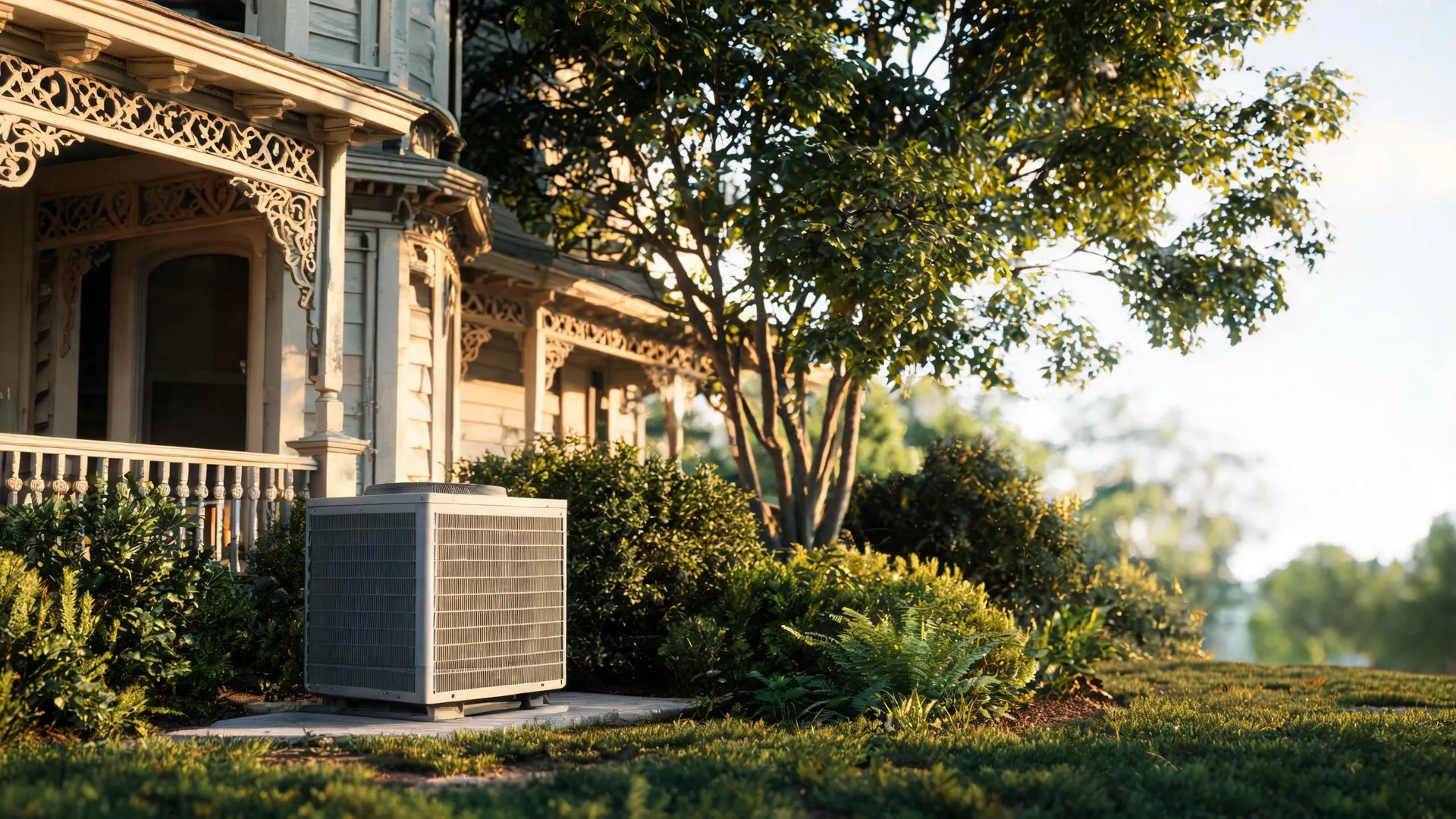
Fayette County saw 87 severe weather events between 2015 and 2024. Most of that was wind, 72 events, with 7 hail events and a few tornadoes and tropical storms mixed in. Your outdoor unit sits outside through all of it, exposed to whatever the wind throws at it and whatever the hail drops on it. A hard enough hit can bend the fins or crack the fan blade without stopping the unit right away. It might keep running for weeks before the damage shows up as a bigger repair. If a storm has come through and hit the unit, it is worth having someone look at it even while it still seems fine.

5 months
November through March, your system heats
5 months
May through September, it cools
35°F
the average winter night it heats against
89°F
the average summer afternoon it cools against
Isometric cutaway illustration of a house showing interior ductwork, an indoor air handler unit, and an outdoor condenser unit beside the building.
Your system heats November through March and cools May through September.

NOAA nClimDiv, 1991–2020 normals

November is when heat pumps here start working hardest for heat.

A weak part that made it through summer often fails in those first cold weeks.

Half the homes here were built in 1993 or later, and the heat pump is often newer still

Half the homes here were built by 1993
72 damaging wind events from 2015 to 2024
Power here costs 14.47 cents per kilowatt-hour

If your heat pump came with a newer build, repair is usually the right move when something goes wrong. Most problems on a system that age come down to one failed part rather than the whole unit wearing out. A capacitor, a contactor, or a control board costs a lot less to replace than the system itself, and it gets you through this winter and the next few after it. It's worth checking when your unit was actually installed, since some homes have already had a replacement done. Either way, a technician can tell you in a few minutes whether what's wrong is worth fixing, which for most newer systems it is.

If a storm came through, get the unit checked before winter asks more of it

If your outdoor unit took a direct hit from wind or hail, don't rule it out just because it's still running. Bent fins and a cracked fan blade don't always stop a heat pump right away, and the repair only gets bigger while it waits. A quick check now tells you where it stands.

Find a contractor
A residential heat pump outdoor unit mounted on a concrete pad next to a house with gray vinyl siding.

Running it while something's wrong rarely ends well

A heat pump that's struggling doesn't fail all at once. A weak capacitor makes the compressor work harder to start each cycle, and it keeps pulling that extra strain every time it kicks on. A refrigerant leak gets worse under runtime too, not better, and a system low on charge has to run longer to do the same job, which puts more hours on the compressor than it was ever meant to carry. Ignore a strange noise or a short cycle for a few weeks and the part that was struggling is often the part that fails for good. Shutting it down the moment something seems off doesn't fix the problem, but it stops a cheap repair from turning into a compressor replacement.

What you can check yourself

Check the thermostat is set to heat and the setting actually calls for more than the room temperature. Look at the outdoor unit and clear away leaves, ice or anything blocking the coil. Check the air filter, since a clogged one starves the system of airflow and can shut it down on its own. Go around the house and make sure no vents are closed or blocked by furniture. Check the breaker box for a tripped breaker or a blown fuse before assuming the problem is inside the unit itself.
What tells you to stop and call

If the outdoor fan isn't spinning while the system is running, don't try to start it by hand. Ice building up on the outdoor coil beyond a light frost means something is wrong with the cycle, not the weather. A burning smell, a tripped breaker that won't reset, or a hissing sound near the lines means stop and get a technician out rather than keep testing it. Short cycling, where the unit starts and stops over and over, wears on the compressor every time it happens and isn't something to wait out.

A heat pump usually tells you something is wrong before it quits outright. It might blow air that isn't as warm as it used to be, or run long stretches without ever quite catching up to the thermostat setting. Listen for a clicking that repeats without the system starting, or a hum that doesn't turn into a running compressor. Outdoors, the fan should spin freely whenever the unit is on. If it's turning slowly, wobbling, or not moving at all while the system calls for heat, that's the motor or a bent blade, not a quirk to wait out. A system that switches between heat and defrost more often than it used to is also worth a look, since that pattern usually points to a refrigerant or sensor problem rather than the weather outside.

Age isn't the only thing that decides this, and neither is a single breakdown. Look at what the system has needed over the past year or two, not just what's wrong today. One repair is normal wear. A second one on top of a compressor that's starting to sound strained is a different question. A heat pump near the end of its life tends to ask for more each season, a new capacitor one year, a control board the next, and the repairs start costing more while the unit does less with them. If a technician finds the compressor itself has failed, that's usually the point where replacement is worth putting on the table, since that part carries most of the cost and most of the system's remaining life. Short of that, most heat pumps are worth repairing almost every time something goes wrong.