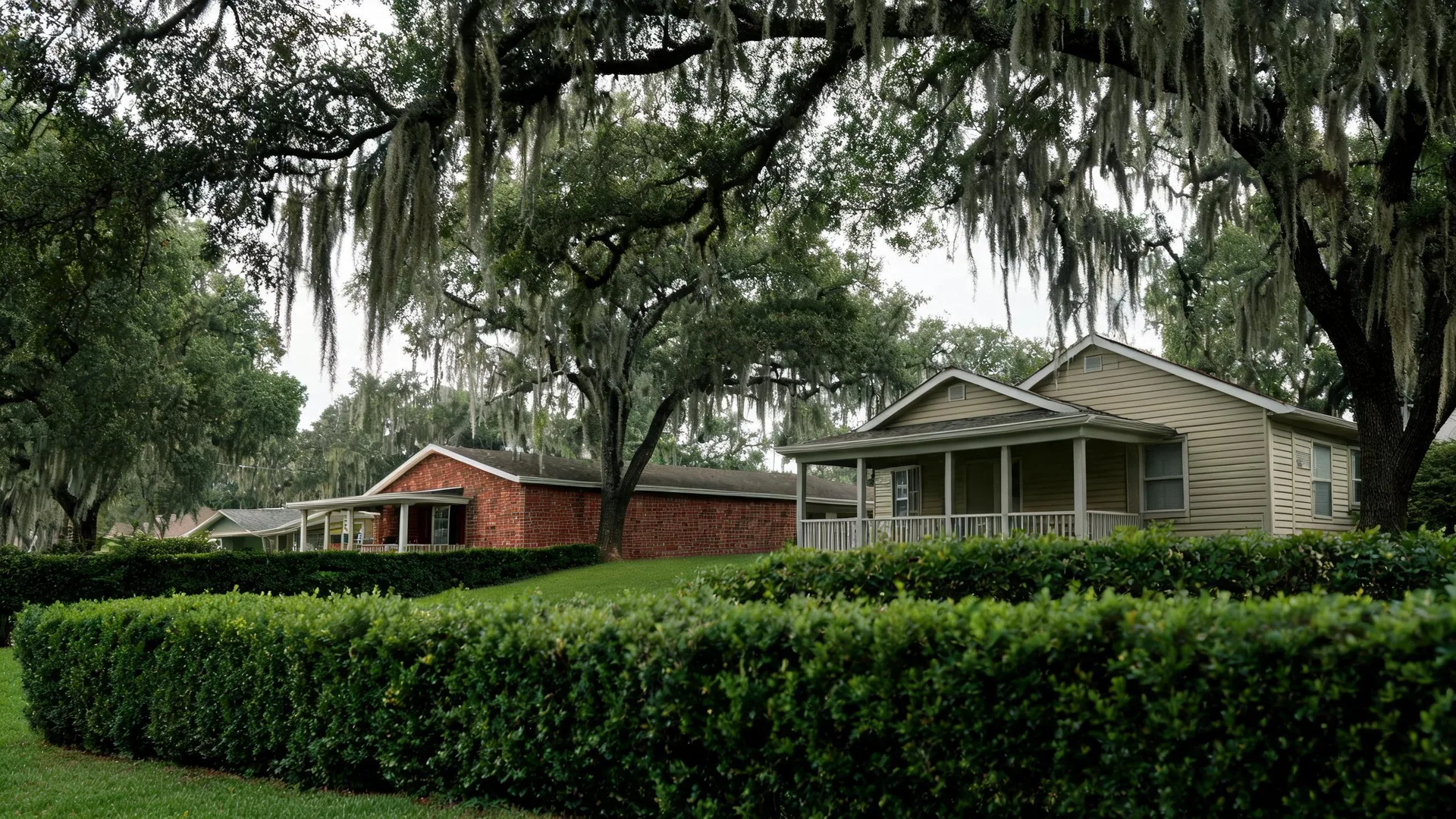






Single-story houses with a covered porch and a brick building behind a trimmed hedge and lawn, under large oak trees draped with Spanish moss.

Heat Pump Maintenance in Valdosta, GA

Tell us about the job

Takes about a minute. No obligation.

Tune-up, service, or cleaningHeat PumpLowndes County, GA
Step 1 of 2

What ZIP code is the job in?

Lowndes County saw 299 severe weather events between 2015 and 2024, and damaging wind was behind most of them. Your heat pump's outdoor unit sits right in the path of that wind, along with whatever it throws around the yard. Hail dents the fins. A branch or a fence panel can crack the fan blade or jam the coil. None of that stops the unit from running, it just runs worse, pulling more power to move less air. A unit that looks fine from the porch can still be working against a bent fan or a coil packed with debris.

Your heat pump switches from heat to cooling in May.

Have it checked in April, before the switch, so storm damage from winter doesn't show up as a summer breakdown.

Half these homes were built by 1993, young enough that a yearly check still pays off

Half the homes here were built by 1993
269 damaging wind events from 2015 to 2024
Power costs 14.08 cents a kWh statewide
Built to take wind, not sit idleDamaging wind hit Lowndes County 269 times between 2015 and 2024. The outdoor unit sits right in its path.

A tech can check the outdoor unit for the kind of damage that doesn't announce itself. That means pulling off the top panel to look at the fan blade, checking the coil fins for dents that block airflow, and clearing out anything that blew in and settled around the base. It's also worth asking whether your heat pump restarts on its own once power comes back, or whether it needs a hand. Georgia households that lost power for a day or more in 2024 ran at 31%, so that's not a question worth skipping.

Have the outdoor unit checked now

Wind hit Lowndes County 269 times between 2015 and 2024, and the outdoor unit took it standing in the open. A bent fin or a jammed coil does not stop the unit from running. It just makes it work harder. Get it looked at before the season that uses it most.

Find a contractor
A man in a dark jacket, knit hat and tan work pants climbs porch steps toward a gray front door, carrying a worn canvas tool bag, with a potted shrub in a blue planter at left.
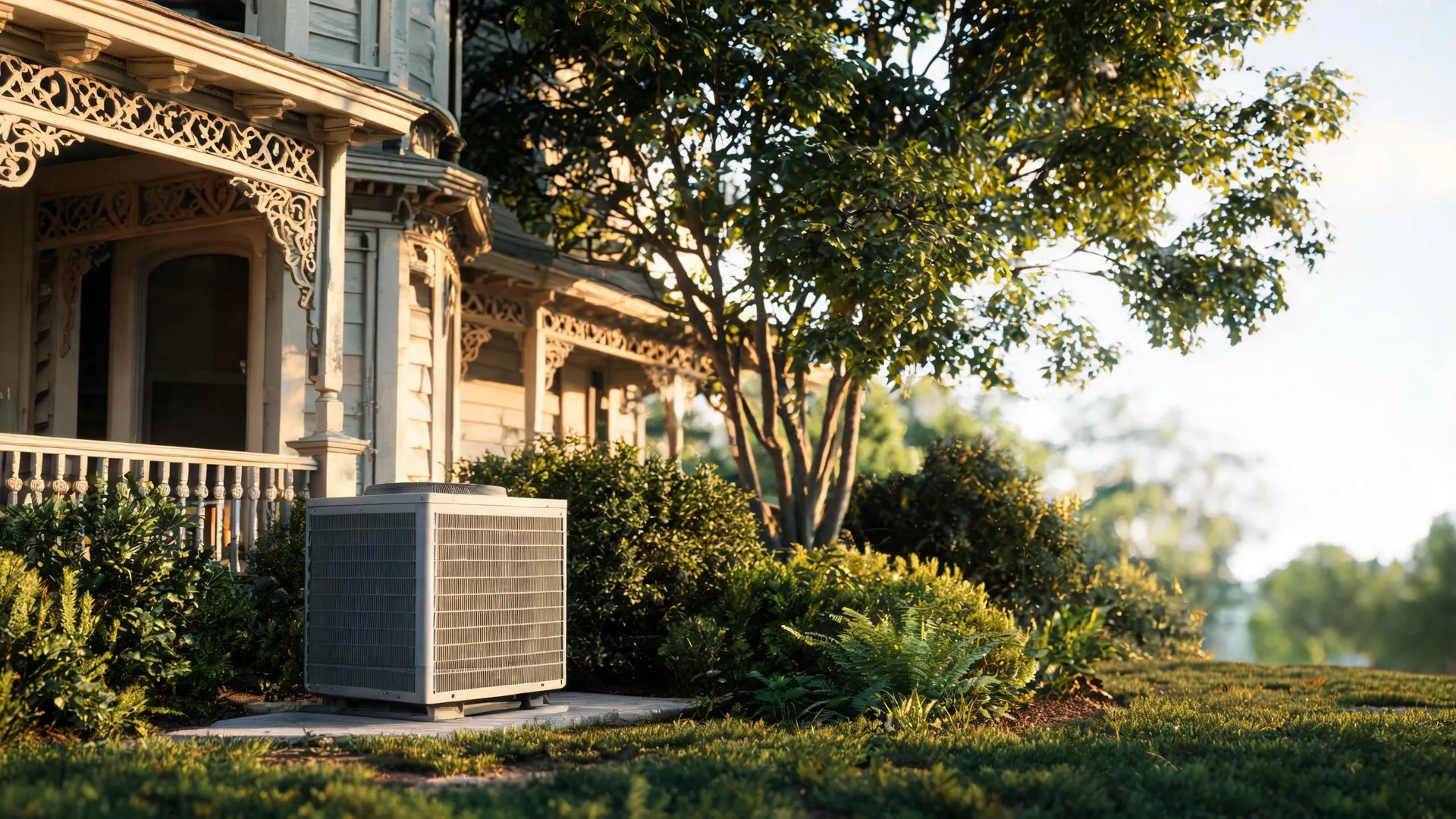
A residential heat pump outdoor unit mounted on a concrete pad next to a house with gray vinyl siding.

Young enough to protect, not just repair

At that age, a heat pump still has years of work left in it. A yearly check is what keeps it getting there, catching a bent fin or a weak capacitor before it turns into a breakdown. Skip it a few years running and small wear turns into a compressor working harder than it should, year after year.

Keep the outdoor unit clear

Leaves, pine straw and grass clippings build up against the coil fins and block airflow. Walk out every so often and clear anything piled against the sides or sitting on top. Leave at least a couple feet of open space around the whole unit so air can pull through it the way it is supposed to.
Change the filter yourself

The filter is the one part of the system built for you to handle, not a tech. A clogged filter starves the indoor coil of airflow, and the system runs longer to move less air. Check it on a schedule and swap it when it looks gray or packed with dust, rather than waiting for a set date.

Skip the yearly check and nothing fails right away. The refrigerant charge drifts a little low, the coil stays a little dirty, and the heat pump still blows air, just not as much of it. The compressor is what pays for that. It is built to move refrigerant through the system under a specific pressure, and when airflow is down or the charge is off, it works harder to do the same job. That extra strain shows up as a system that runs longer each cycle and wears faster than it should. A dirty coil also means the unit can't shed heat the way it needs to in cooling mode, so it runs hotter than it was built to. None of this trips a breaker or sets off an alarm. It just shortens the life of the one part that is hardest to replace.

A tune-up on a heat pump covers both sides of the system, not just the outdoor unit. Indoors, that means checking the blower wheel for dust buildup, since a caked wheel moves less air even when the motor runs fine. It means checking refrigerant charge against what the system calls for, because a unit low on charge cools and heats worse while drawing more power to do it. A tech checks the reversing valve too, the part that lets a heat pump switch between heating and cooling. If that valve sticks, the system can get stuck in one mode no matter what the thermostat asks for. Electrical connections get checked for corrosion, and the capacitor gets tested, since a weak capacitor makes the compressor or fan struggle to start rather than failing them outright. None of these checks fix a problem that's already visible. They catch the ones that are not.