Three white clapboard houses with wraparound porches glow with warm interior and landscape lighting beneath Spanish moss-draped oak trees at dusk.

Heat Pump Maintenance in Monroe, GA

Tell us about the job

Takes about a minute. No obligation.

Tune-up, service, or cleaningHeat PumpWalton County, GA
Step 1 of 2

What ZIP code is the job in?

Walton County sees its share of storms

Walton County logged 191 severe weather events between 2015 and 2024, including 176 damaging wind events, 3 tornadoes, and 6 tropical storms or hurricanes. Hail showed up too, 4 times in that span. A heat pump's outdoor unit sits right in the path of all of it.


The outdoor unit takes the hit

Wind-driven debris, hail and falling branches can dent the cabinet or bend the fins on the coil outside. A unit that's been through a storm can look fine from a distance and still be struggling to move air through a bent coil.

November starts heat pump season in Walton County, and the system goes straight to work.

Have it checked in October, before that first cold night asks more of it than it's had to give all year.

Long summers, heavy air, hard wind. This heat pump works through all of it.

176 damaging wind events from 2015 to 2024
Climate zone 3A
Power here costs 13.96 cents per kilowatt-hour
Most homes here are newer. That's not a reason to skip the check.Half the homes in Walton County were built in 1997 or later.

A heat pump only works as well as the air can move through it. The filter catches dust before it reaches the indoor coil, and when it loads up, airflow drops and the whole system has to work harder to move the same amount of air. The indoor coil absorbs heat in summer and gives it off in winter, so if it's coated in dust it can't transfer heat the way it should. The outdoor coil does the same job in reverse, and dirt, leaves or grass clippings packed into those fins slow it down the same way. Condensation from the indoor coil has to leave through the drain line, and if that line clogs with algae or sludge, the water backs up into the pan and can shut the system down or spill into the space around it. None of these parts fail on their own. They fail because something simple was never cleaned.

After a storm, have the outdoor unit checked before you need it

A tune-up gets eyes on the cabinet and the coil fins while the unit is sitting idle, not after a cold night finds the problem. Georgia households lost power for a day or more at a rate that touched nearly a third of homes in 2024, and a heat pump that heats this county through the winter needs to come back working when the power does.

Find a contractor
A man in a cap, gray work shirt and tan pants climbs porch steps toward a blue front door, carrying a canvas tool bag, with a blue ceramic planter of white flowers beside him.
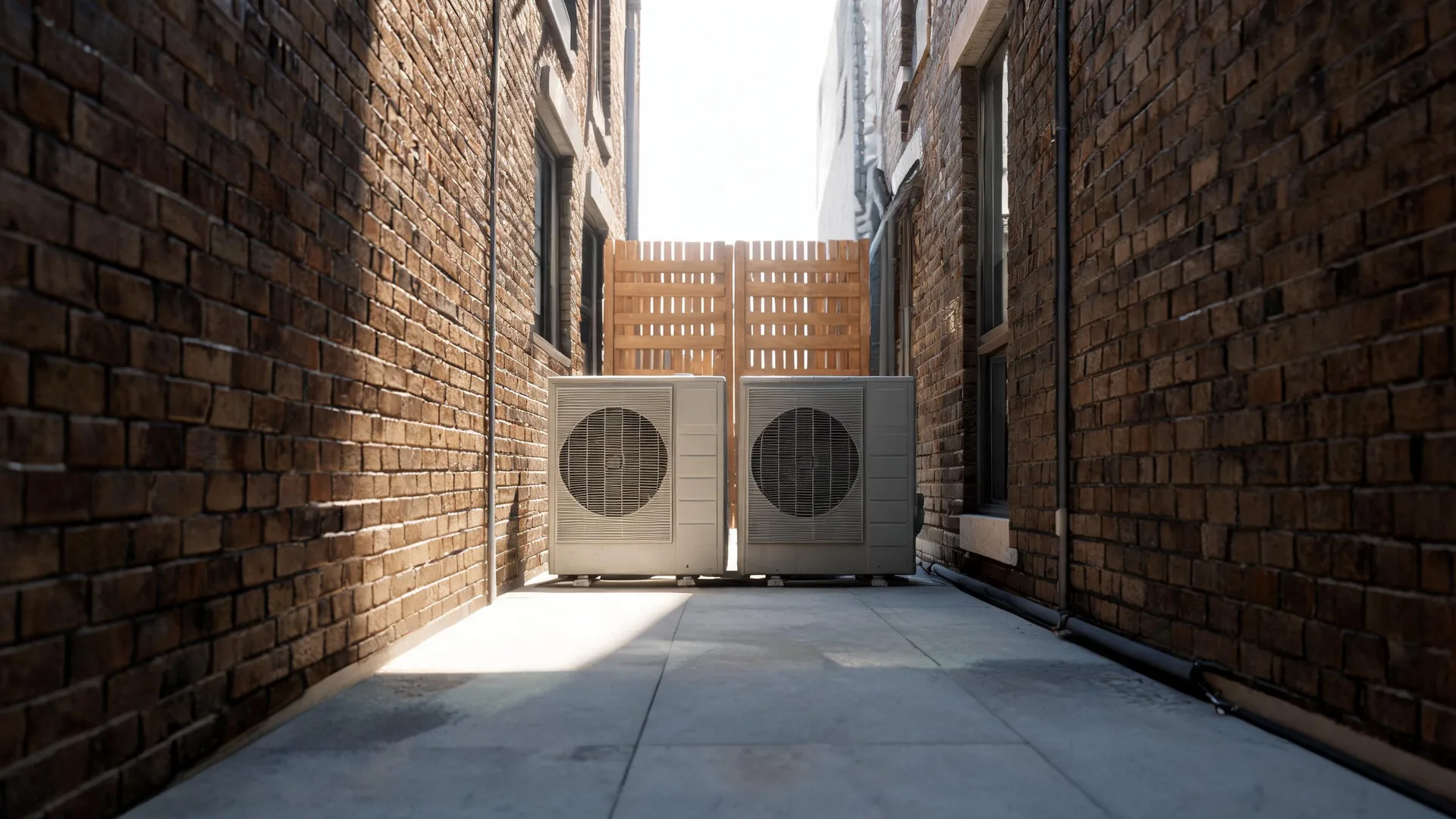
A residential heat pump outdoor unit mounted on a concrete pad next to a house with gray vinyl siding.

A newer system still needs the yearly look

A yearly check matters whether the system is five years old or twenty five. If yours came with a newer build, it still gains from the same look at the coil, the refrigerant charge and the electrical connections. Catching a weak part early keeps a system that's already in decent shape from sliding out of it. A heat pump that's been sound every year it's run is one less thing to worry about when a cold snap or a storm outage puts it to the test.

A quick visit checks that it runs

A tech who just checks that the system kicks on and blows air can be in and out fast. That tells you the unit isn't dead. It doesn't tell you what shape it's in or what's about to quit.

A thorough one checks why it runs well

A real tune-up means pulling the panels, checking refrigerant pressures against what the system calls for, testing capacitor and contactor condition, tightening electrical connections, and washing out the outdoor coil instead of just glancing at it. It means checking the reversing valve actually shifts the system between heating and cooling. A loose connection or a weak capacitor won't stop the unit today. Left alone, it strands you on the night you need the heat most.

Between visits, the filter is the one thing worth your attention. Check it once a month and change it when it looks gray or matted, more often if there's a pet shedding in the house. A clogged filter starves the system of airflow no matter how well the rest of it is running. Outside, keep the area around the unit clear. Leaves, grass clippings, and anything stacked against the cabinet block the airflow the outdoor coil needs to do its job. Walk by after a storm and look for branches or debris resting against it, but leave the panels and the refrigerant alone. Past the filter and a clear space outside, the rest is a job for someone who can test the charge and the electrical parts properly.

A reversing valve is what makes a heat pump a heat pump. It's the part that switches the system between pulling heat in and pushing heat out, and it's a part a straight air conditioner doesn't have. If it sticks, the system can get stuck heating when you need cooling, or stuck cooling when you need heat, and from the thermostat that looks like the whole unit has failed. A tune-up checks that it shifts cleanly both ways, not just once but reliably. The compressor also works harder on a heat pump than on a standard AC, since it runs through more hours and more cycles across the year. That makes the oil level, the refrigerant charge and the electrical connections feeding it worth checking on a schedule, not just when something stops working.