



Single-story brick and siding houses with lawns behind a long trimmed hedge, framed by large oak branches draped with Spanish moss under an overcast sky.

Heat Pump Maintenance in Macon-Bibb County, GA

Tell us about the job

Takes about a minute. No obligation.

Tune-up, service, or cleaningHeat PumpBibb County, GA
Step 1 of 2

What ZIP code is the job in?

A heat pump here works in both directions, pulling heat out of cold air all winter and pulling it back out in summer. That makes October worth marking down, since heat starts running in November and this is the last quiet month before it does. April matters the same way on the other side, before cooling starts in May. Get it checked in the month before either one starts, while it is still sitting idle, not after it is already working to keep up.

A dirty outdoor coil makes the heat pump work harder to move heat in or out.

Keeping leaves and grass clippings away from it is something you can check yourself, any month.

What the weather here means for your heat pumpBibb County saw 70 severe weather events between 2015 and 2024.

A heat pump here doesn't need more than one checkup a year to stay ahead of trouble. Once in fall or once in spring, before the season that works it hardest, covers it. Half the homes in Bibb County were built in 1977 or earlier, and half in 1977 or later, but that split doesn't change what the machine needs. Older system or newer, the same yearly check applies. Nothing about a house here asks more of a heat pump than the next one does.

Book it before the season

It starts running hard in the first month of the season here. Book the check the month before.

Find a contractor
A man in a cap, work jacket and tan trousers carries a canvas tool bag up wooden porch steps toward a blue front door of a house with lap siding.
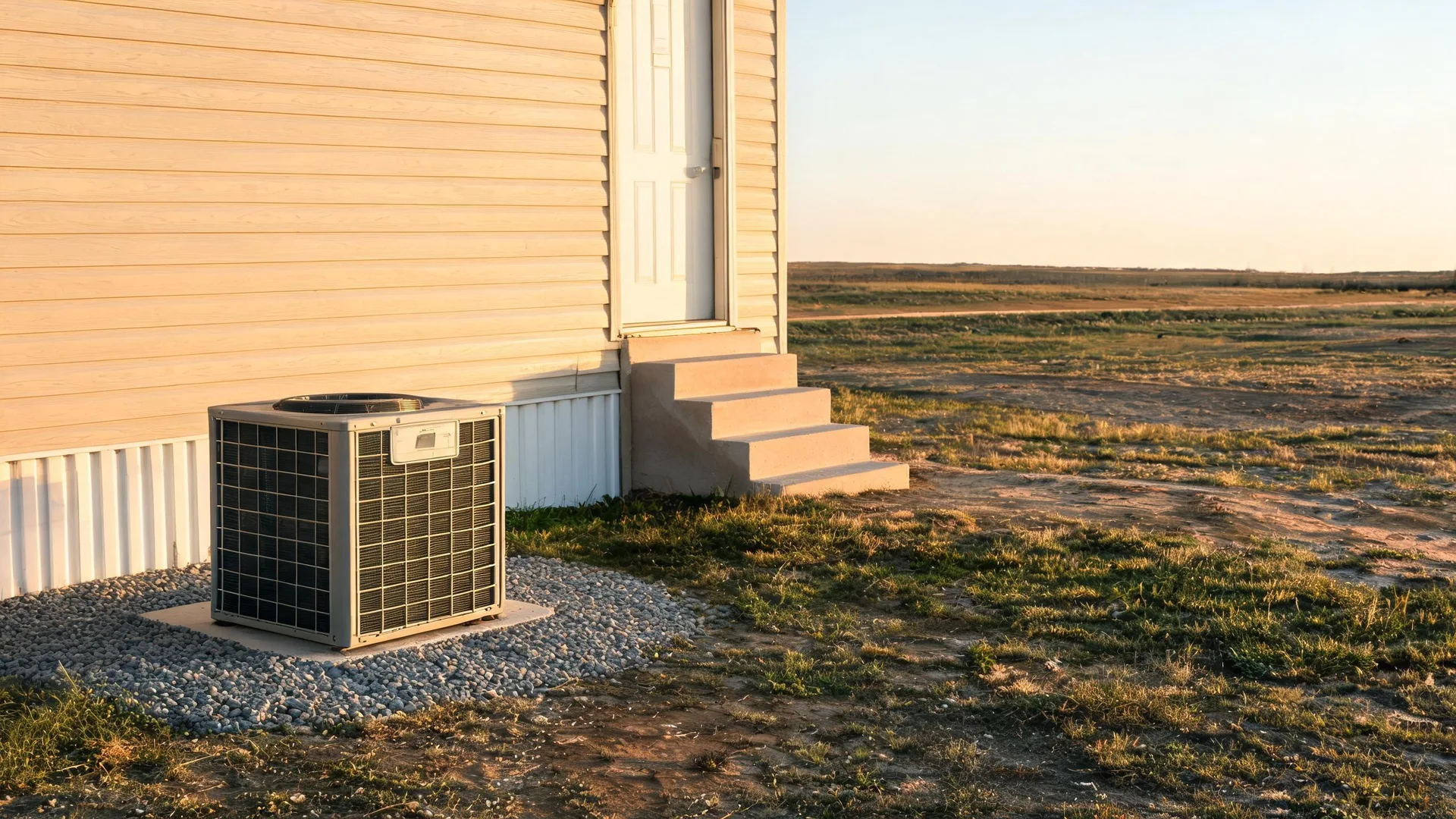
A gray outdoor HVAC unit mounted on a concrete pad beside a house with gray lap siding and a stone foundation.

What gets checked before it fails

A technician checks things a homeowner has no way to see from the thermostat. Refrigerant charge is one of them. A system running low still blows air, so the house feels nothing wrong, but it moves less heat doing it and the outdoor unit works harder to make up the difference. The defrost cycle is another. A heat pump senses frost building on the outdoor coil and runs a short cycle to clear it. If that sensor or the reversing valve behind it is failing, frost keeps building until the coil ices over and the system can't pull heat from the air at all. Electrical connections loosen over time from the system switching on and off, and a loose connection runs hot before it fails outright, usually with no warning from inside the house. None of this shows up on a thermostat display. It shows up in the cabinet, with the panels off, which is the only place anyone would think to look for it.

The filter protects the coil

A clogged filter starves the indoor coil of airflow. The coil needs air moving across it to pick up heat or release it, and when that air is choked down the coil can frost over in heating mode or ice up in cooling mode. A filter is also the one part of this system a homeowner can check without taking anything apart.
The drain keeps the cabinet dry

Cooling mode pulls moisture out of the air, and that water has to leave through the condensate drain line. A clogged drain backs water up into the cabinet instead, which can trip a safety switch and shut the system down or let water damage the parts inside. It is worth checking that the line is draining freely, not just that the filter is clean.

A tune-up on a heat pump means the panels come off, not just a glance at the thermostat. The technician checks refrigerant charge against what the system calls for, since low charge still cools or heats, just not as well, while the outdoor unit strains to keep up. The reversing valve gets tested both directions, the part that lets the system switch between pulling heat in and pushing it out. Electrical connections get checked and tightened, because a loose one runs hot and fails without warning. The outdoor coil gets cleaned so it can still move heat the way it's supposed to, and the condensate drain gets cleared so cooling mode doesn't back water up into the cabinet. None of this is guesswork. It's the same handful of checks, done in the same order, whether the system is heating or about to start cooling.