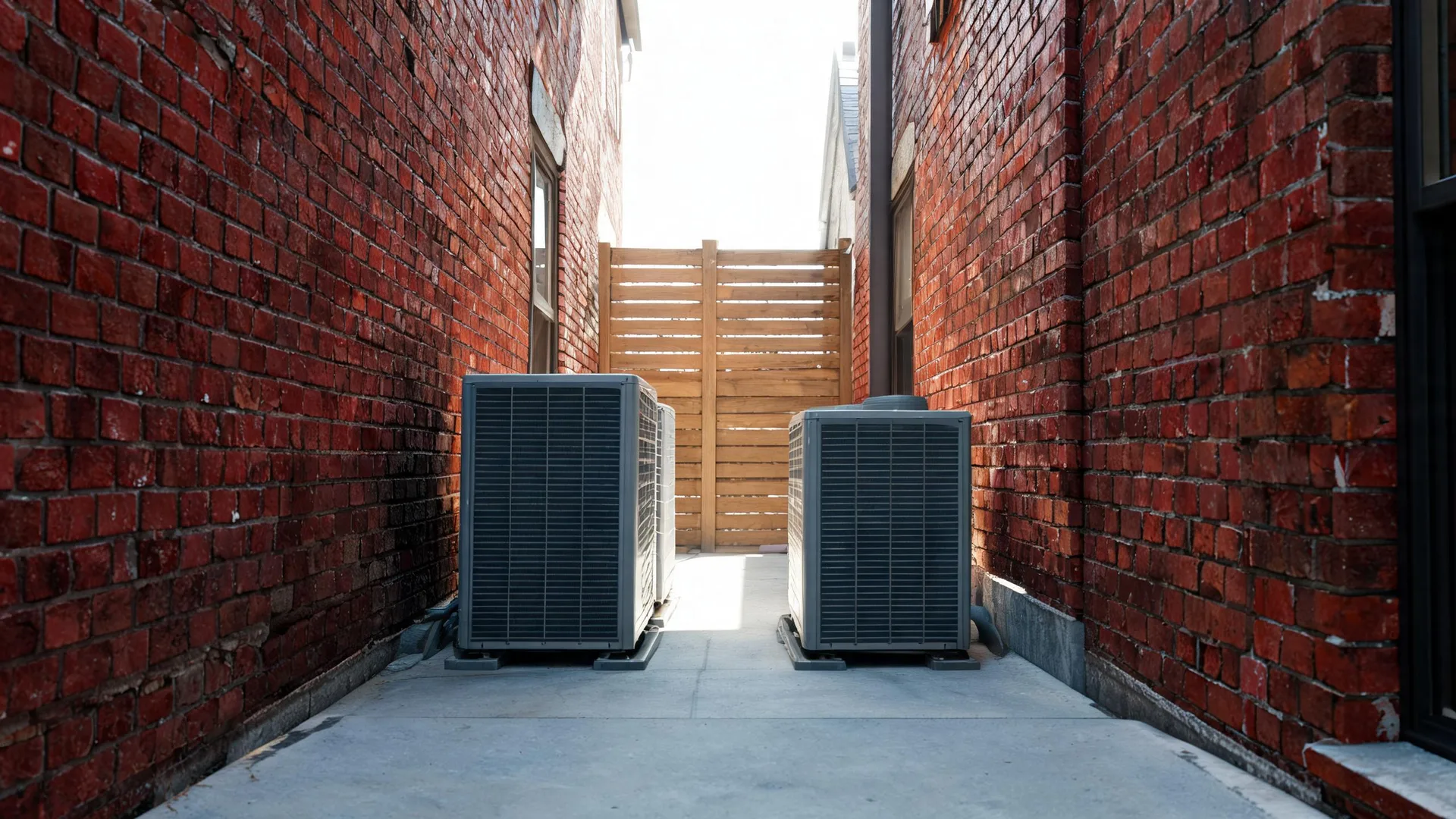
A gray outdoor HVAC condenser unit mounted on a concrete pad in the front yard of a two-story suburban house.

Heat Pump Maintenance in Hinesville, GA

Tell us about the job

Takes about a minute. No obligation.

Tune-up, service, or cleaningHeat PumpLiberty County, GA
Step 1 of 2

What ZIP code is the job in?

The refrigerant charge gets checked, not just the filter

A quick visit gets you a rinsed filter and a glance at the outdoor unit. A thorough one includes checking refrigerant charge against the manufacturer's spec, inspecting the reversing valve, and measuring temperature split at the air handler. A heat pump running low on charge will still blow air, just not enough heat or cooling, and that kind of shortfall only shows up when someone actually measures it.


The outdoor coil gets cleaned, not just looked at

Your outdoor coil has to shed heat in summer and pull heat from the air in winter, and dirt or pollen on the fins cuts that exchange down no matter how good the compressor is. A thorough tune-up includes washing the coil, straightening any bent fins, and checking that the defrost cycle actually kicks in and shuts off on its own. Skipping that step is the easiest way to turn a full visit into a fast one.

Half the homes in Liberty County were built in 1994 or later.

A heat pump that age still has years ahead of it, and a yearly check is what keeps it on track to get them.

April and October are the months to get a heat pump checked here, right before it goes to work

Cooling runs May through October
Heat runs November through March
Power costs 14.08 cents a kWh statewide

Between visits, keep the area around the outdoor unit clear. Grass clippings, leaves, and mulch pile up against the coil and block the airflow it needs to work. Check the filter and rinse or swap it when it looks dirty, since a clogged filter forces the system to run longer to move the same amount of air. Look at the outdoor unit now and then to make sure it still sits level, since ground underneath it can shift or settle over time. If you see ice building up on the outdoor coil outside of a normal defrost cycle, or the air coming out feels neither warm nor cool, that's worth a call rather than a wait.

Keep a newer system on schedule

If your heat pump came with the house, it still has plenty of working life ahead. A yearly check is what keeps it running the way it did on day one, instead of losing capacity a little at a time until something fails.

Find a contractor
A man in a dark shirt and tan work pants, seen from behind, carries a canvas tool bag up wooden steps toward a blue front door of a gray clapboard house, with a shrub in a blue planter beside the door.

The system keeps running, just worse

A heat pump with a dirty coil or a weak charge doesn't shut off and tell you something's wrong. It keeps cycling, pulling more power and wearing the compressor harder to make up for what it's losing. Nothing looks broken until the day it is.

Small problems get buried where you can't see them

A reversing valve that's starting to stick, or a defrost cycle that runs long, doesn't show up by looking at the unit from outside. Those are found by someone checking pressures and watching a cycle complete. Skip enough years and the first sign is the system failing to heat or cool at all.

A heat pump that needs a look usually tells you in small ways first. It runs longer than it used to without getting the house as warm or as cool as it should. It cycles on and off more often than it did last year. You might hear a clicking at startup that wasn't there before, or notice the air handler running while the outdoor unit sits idle, which points to a reversing valve not doing its job. Frost on the outdoor coil that lingers instead of clearing on its own is worth noting too. None of these mean the system is about to quit, but each one is the kind of thing a technician can check before it turns into a bigger repair.

A tune-up worth paying for starts with the electrical side, not the coil. A technician checks the contactor for pitting, tightens connections that vibration works loose over time, and tests the capacitor that gets the compressor and fan motors started. A weak capacitor is one of the most common reasons a heat pump starts struggling, and it rarely shows itself until the motor it's supposed to help finally stalls. From there it's the refrigerant lines, checking for signs of a slow leak at the joints, and the condensate drain, since a clogged one backs water up into the air handler instead of outside. Thermostat calibration gets checked too, because a thermostat reading a few degrees off runs the system longer than it needs to without anyone noticing why.