




Two illuminated white colonial-style houses with wrap-around porches, flanked by oak trees draped in Spanish moss, photographed at night.

Heat Pump Maintenance in Grovetown, GA

Tell us about the job

Takes about a minute. No obligation.

Tune-up, service, or cleaningHeat PumpColumbia County, GA
Step 1 of 2

What ZIP code is the job in?

Columbia County recorded 121 severe weather events between 2015 and 2024. Most of that was wind, 92 damaging wind events in that span, plus 23 hail events and a tornado that touched down in the county. Your outdoor unit sits through all of it. Hail dents the cabinet and bends the fins on the coil. Wind throws branches and debris into the fan. None of that announces itself right away, but it adds strain to a unit that has to keep working once the weather clears.

Half the homes in Columbia County were built in 1999 or later.

A heat pump that age still has years ahead of it, and a yearly check is what keeps it on track for them.

Grovetown asks a lot of this unit before it even gets to the storms

92 damaging wind events from 2015 to 2024
Power here costs 16.10 cents per kilowatt-hour
Climate zone 3A

Your heat pump switches over to heat in November and runs on it through March. October is the month before that starts, and it's the easiest time to get someone out to look at the unit before the real cold sets in. Overnight lows average 37°F across December, January and February here, and that's when a heat pump works hardest to keep up. Book the check in October and a contractor can catch a weak part while the unit is still idling, not after it's been running flat out for weeks. Wait until the cold hits and you find out what's wrong the same week you need the heat most.

Have the unit looked at before the next storm rolls through

Get the outdoor unit checked for dents, bent fins or debris before this year's storms add to it. A contractor can also tell you how your system will hold up if the power goes out, which happened to 31% of Georgia households for a day or more last year.

Find a contractor
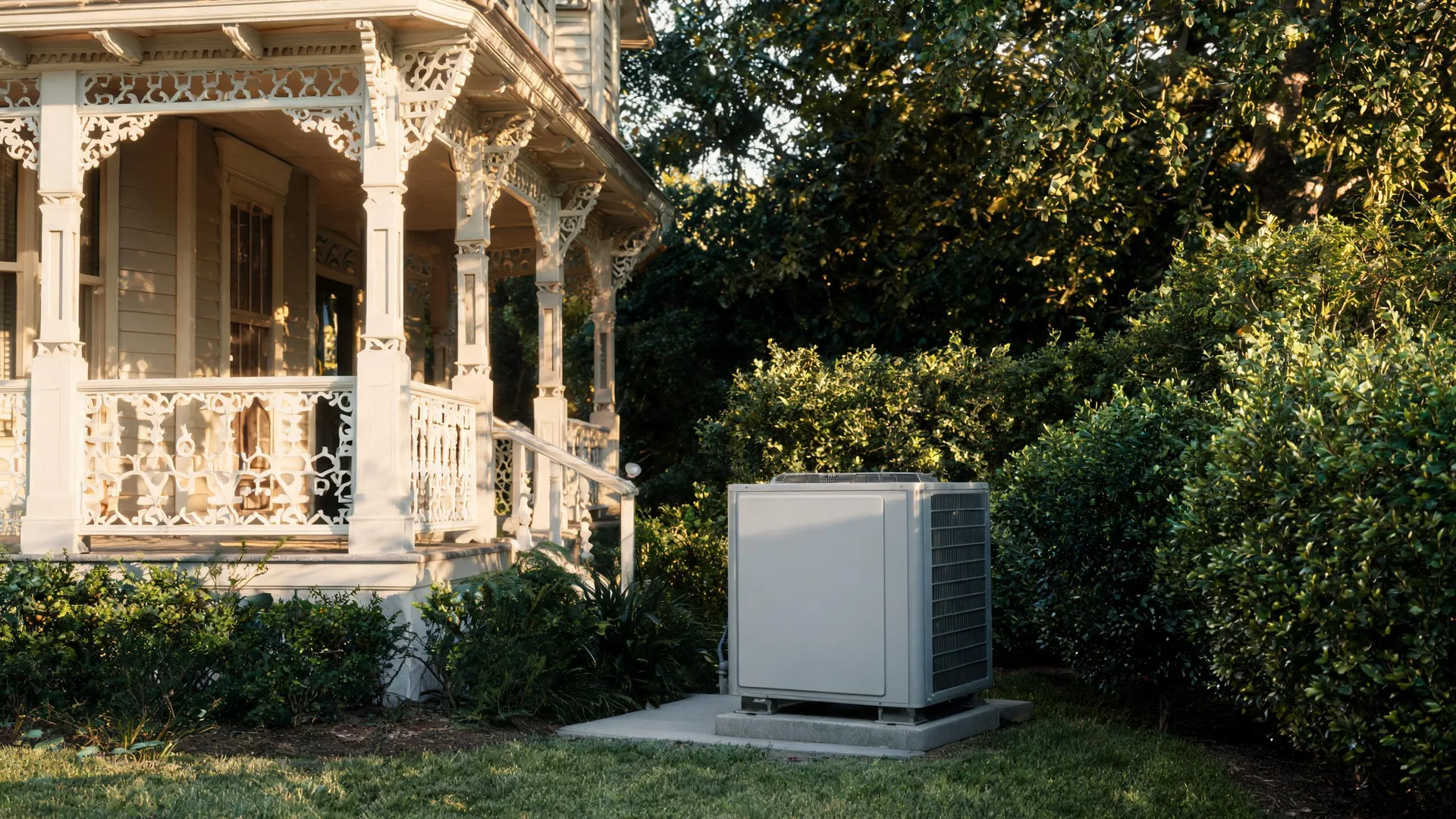
A gray heat pump outdoor unit mounted on a concrete pad next to a residential house with lap siding and stone accents.

This one never gets a season off

A heat pump doesn't get a season off. It runs the compressor to cool through the warm months, then reverses to pull heat through the cold ones, so the parts that would wear out slowly in a furnace or an AC alone are working year round here. The reversing valve is the one to watch. It's the part that switches the unit between heat and cool, and if it sticks, you'll notice the system blowing the wrong temperature or struggling to switch over at all. Refrigerant charge matters more too, since the system depends on it in both directions. A unit that's low will run longer to do the same job, and that extra runtime wears on the compressor, which is the most expensive part to replace. Coils collect dirt and grime over months of constant cycling, and a dirty coil makes the whole system work harder to move the same amount of heat. None of this shows up as a breakdown right away. It shows up as higher bills, a system that runs longer than it used to, or rooms that take longer to come up to temperature. A yearly check catches the worn contactor or the weak capacitor while it's still just worn, not after it's failed and left you without heat or cooling.

What's hiding behind the panels

A contractor opens the cabinet and checks things a homeowner never sees from the yard. Electrical connections loosen over time from the vibration of the compressor running. A contactor can pit and burn on its contacts and still close the circuit most days, right up until it doesn't. Refrigerant lines get checked for oily residue, which is how a slow leak shows itself before the charge drops low enough to hurt performance. The condensate drain gets checked for algae and sludge that build up where you can't see them, long before a clog backs water up into the unit.
Why this matters more for a heat pump

A furnace sits idle all summer and an air conditioner sits idle all winter, so each one gets a break to be looked at before its season starts. A heat pump doesn't get that break. It's either heating or cooling almost every day of the year, so a worn part doesn't wait for an off season to get found. It gets found when it fails, mid run, in whichever mode the system happens to be in. Catching it on a schedule instead of waiting for a breakdown is the whole point of having someone check it before something gives out.

There's a few things worth doing yourself between visits, and they matter more here because the unit never really stops running. Keep the area around the outdoor unit clear. Grass clippings, leaves and mulch piled against the cabinet block airflow, and a unit that can't breathe works harder in both directions. Look at the fins after any storm. If you see them bent flat against the coil, that's restricting airflow even if nothing else looks wrong. Check the filter and change it on a regular schedule, because a clogged filter makes the system pull harder to move the same air, whether it's heating or cooling that day. Walk past the unit now and then and listen. A new rattle, a hum that wasn't there before, or ice building up on the coil outside of a normal defrost cycle are all things worth mentioning to a contractor before the next visit, not after the system quits.

A yearly check on a newer system is mostly about catching small things before they turn into service calls. A contractor checks refrigerant charge, tightens electrical connections, tests the capacitor and contactor, and looks over the coil while it's all still working the way it should. None of that takes long on a unit that hasn't had time to develop real problems. Skip a few years of checks and small wear turns into the kind of repair that could have been caught early. For a system built with the house in 1999 or later, staying on a yearly schedule now is what keeps it running the way it's supposed to for years to come.