




A row of single-story houses, one of red brick and others with light siding and a covered porch, behind a mown lawn and a trimmed hedge, under large moss-draped tree branches and an overcast sky.

Heat Pump Maintenance in Dalton, GA

Tell us about the job

Takes about a minute. No obligation.

Tune-up, service, or cleaningHeat PumpWhitfield County, GA
Step 1 of 2

What ZIP code is the job in?

Whitfield County logged 115 severe weather events between 2015 and 2024. Most of that was damaging wind, 100 events in all, along with 8 hail events and a tornado. Your outdoor unit sits through every one of them, exposed to whatever the wind carries and whatever settles around the coil afterward. Across Georgia, 31% of households lost power for a day or more in 2024, and a heat pump that was already struggling before the outage is the one that gives you trouble when the power comes back. Getting it looked at before storm season means finding the bent fin or the blocked coil while it's still a small fix.

Half the homes in Whitfield County were built in 1987 or later.

A heat pump that age still has years ahead of it, and a yearly check is what keeps it getting to all of them.

One system, two jobs, all year

Cooling runs May through September
Heat runs October through April
Climate zone 3A

A yearly check is a short visit against that. The tech clears the coil, checks refrigerant charge, and tests the capacitor and contactor before any of them fail outright. That matters more here because your heat pump is also what keeps the house warm all winter, not just cool in summer. A system that's only a few years into a long working life is worth keeping that way, and the parts that wear are cheap to catch early and expensive to replace after they fail on a cold night.

Check it before storm season finds its weak point

Get the outdoor unit checked before storm season puts it to the test. A tech can clear the coil, check for bent fins, and make sure the capacitor and contactor will hold up through whatever wind and hail come through this year.

Find a contractor
A dark gray heat pump unit mounted on a concrete pad next to a house with gray siding and a stone veneer wall.

A system that never clocks out

A heat pump does not get a season off. It runs the compressor to cool the house, then reverses to run it for heat, so the parts inside are working every month it operates. Oil breaks down in a motor that never gets to sit idle for long. Contacts in a contactor pit a little more each time they open and close. A capacitor loses its charge-holding ability cycle by cycle, not all at once. None of this shows up as a sudden failure. It shows up as a system that short cycles, a fan that hesitates before it starts, or a compressor that hums and trips the breaker instead of kicking on. A check catches the weak capacitor before it fails, finds the refrigerant charge running low before the compressor strains against it, and gets the coil clean before restricted airflow makes every part work harder than it needs to.

What's fine to do yourself

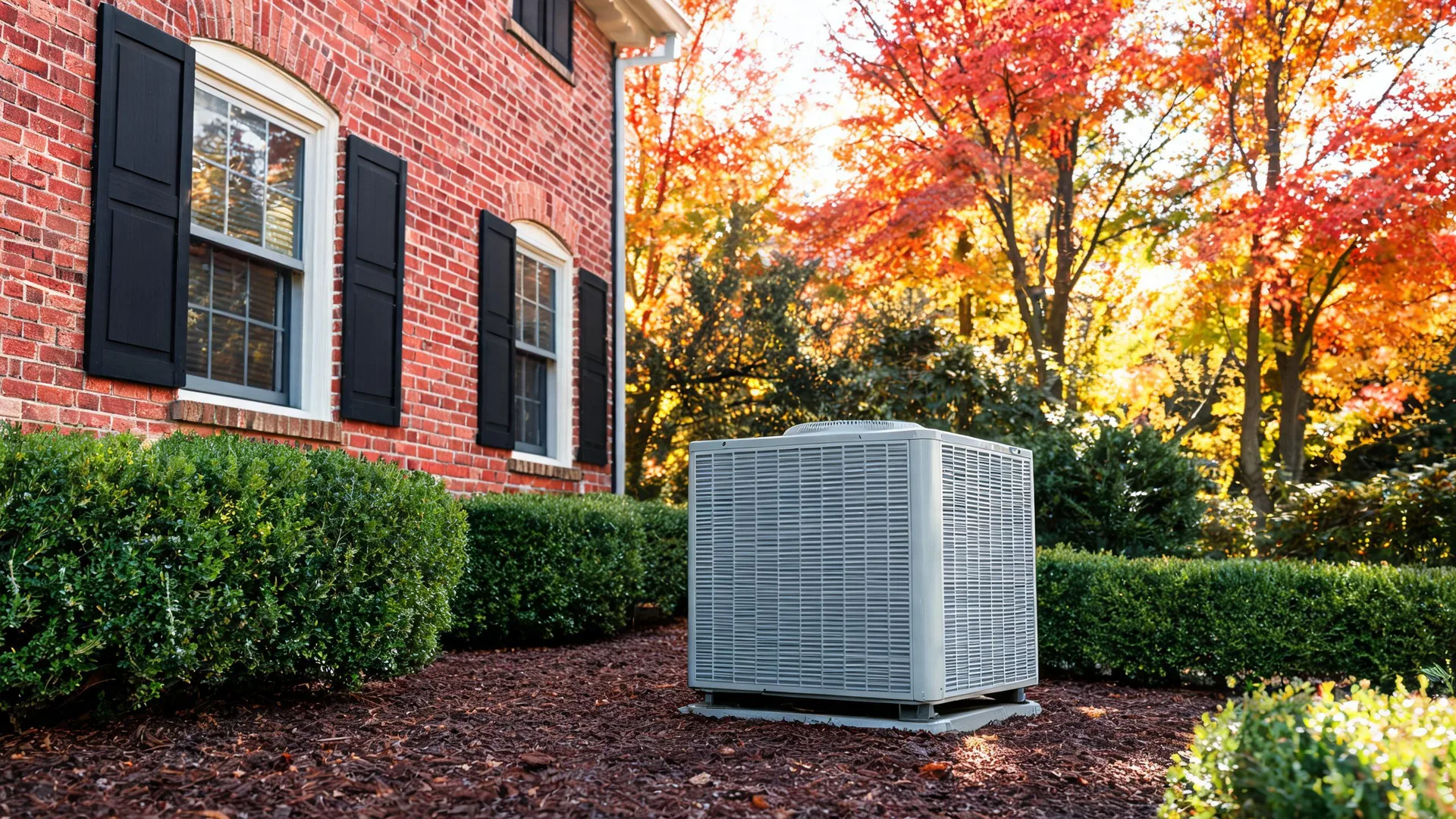
The filter is the one job that's really on you. A dirty filter chokes airflow, and the system has to work harder to move the same amount of air through the house. Check it once a month and swap or rinse it when it's visibly gray. Outside, keep the area around the outdoor unit clear. Leaves, grass clippings, and mulch piled against the cabinet block airflow across the coil. Keep plants trimmed back and give it open space on all sides. If snow or ice piles up against it, clear that too.
What to leave for a visit

Anything past the filter and the clearing around the cabinet belongs to a tech. Refrigerant charge, electrical connections, and the reversing valve all need tools and training to check safely. Opening the cabinet to look at the coil or the capacitor risks a shock even with the power off, since a capacitor holds a charge after the unit is unplugged. If you hear a new noise, see ice building up on the outdoor coil in a season that shouldn't have it, or notice the system running longer than usual, that's a sign to get it looked at rather than something to chase down yourself.

A reversing valve can be sticking before it ever fails to switch. The system still moves from cooling to heat on command, but the valve is wearing toward the day it won't, and nothing about that shows up from the thermostat. Refrigerant charge works the same way. A system low on charge still runs, just with the compressor pulling harder than it should and the coil losing some of its ability to pull heat out of the air or push it in. A tech checks charge against what the system is supposed to hold, not against whether it's blowing warm or cool air at the moment. Loose electrical connections are the other one. A connection that's a little loose runs warm every cycle, and that heat breaks it down further each time, long before it works itself loose enough to cause a failure you'd notice.

A tune-up starts outside at the cabinet. The tech pulls the panel and looks at the coil fins for anything bent flat enough to block airflow, then checks the condensate drain so it isn't backing up into the pan. Refrigerant charge gets checked against the number on the nameplate, not against how the air feels at the vent. Electrical connections get tightened, since a loose one runs hotter every cycle and wears itself further each time it does. The capacitor and contactor get tested under load rather than just looked at, because both can look fine sitting still and still be close to giving out. The reversing valve gets cycled to make sure it still shifts cleanly between heat and cooling, since a valve can start sticking well before it fails outright. Indoors, the blower wheel gets checked for dirt buildup, which throws it out of balance the same way a dirty filter throws off airflow. None of this takes long, but each piece is something that fails quietly on its own time, not on a schedule that's convenient for anyone.