Three white clapboard houses with wraparound porches glow with warm interior and landscape lighting beneath Spanish moss-draped oak trees at dusk.

Heat Pump Maintenance in Calhoun, GA

Tell us about the job

Takes about a minute. No obligation.

Tune-up, service, or cleaningHeat PumpGordon County, GA
Step 1 of 2

What ZIP code is the job in?

A dirty filter works the whole system harder

A clogged filter starves the indoor coil of airflow. The coil can ice over, the blower has to push harder, and the compressor ends up working against that restriction all day. Swapping or washing the filter on a regular basis is the one thing that protects everything downstream of it.


The outdoor coil needs to stay clear on both sides

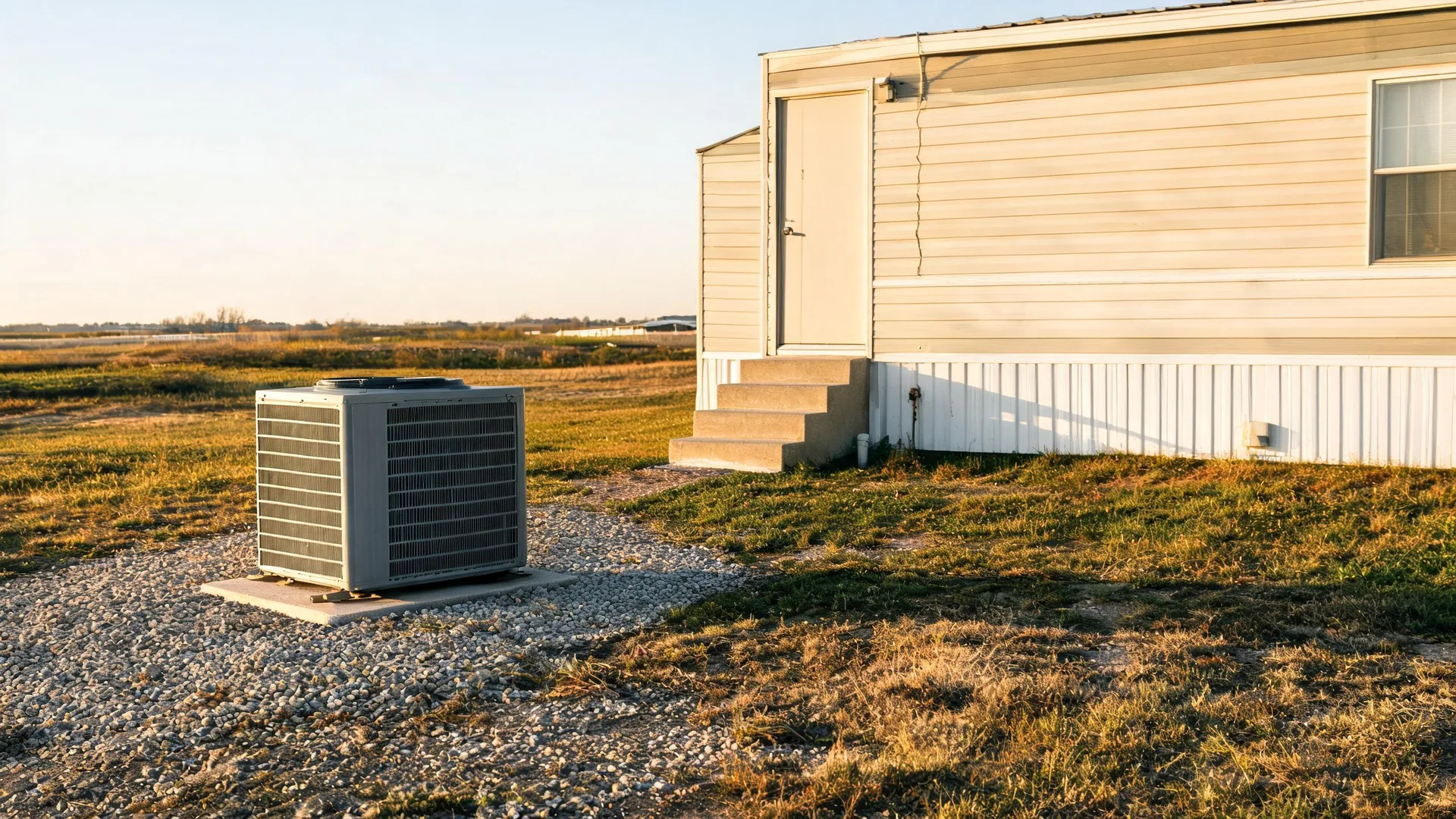
A heat pump moves heat through the outdoor coil whether it's heating or cooling, so the fins need open airflow in every season. Grass clippings, leaves, and plain dust packed against the coil make the system work harder to do the same job. Rinsing it off and keeping shrubs and debris back from the unit is basic upkeep, not a luxury.

A heat pump that short cycles never gets a service check it needs

Short runs mean something is wrong, and left alone it wears the compressor down faster than normal use ever would

Mild air all summer, cold snaps all winter, nothing extreme either way

Climate zone 3A
Power here costs 14.33 cents per kilowatt-hour
Cooling runs May through September

May starts the cooling run here, and October puts the heat pump into the long winter stretch. Book the tune-up in April or in September, a month ahead of either one. A tech can catch a weak capacitor or a low refrigerant charge while the system is idle, not after it's already working to keep up. Heat is the bigger job in Gordon County. Seven months of heating against five of cooling means the compressor and reversing valve carry more of their load in the cold months, through nights that average 33 degrees in December, January and February. Catching a problem in September beats finding it out on one of those mornings in January.

Light duty is still worth a yearly look

Nothing here runs the compressor into the ground. Mild summers and short winters mean less strain year-round, so a yearly check tends to catch a loose connection or a worn part while the system is still running fine. Book the tune-up now, while nothing is forcing the issue.

Find a contractor
A man in a cap, gray T-shirt and tan work pants climbs porch steps toward a blue front door, carrying a canvas tool bag in his right hand, with a potted shrub in a blue planter beside the door.
A gray air-source heat pump mounted on a concrete pad next to a house with gray vinyl siding, surrounded by gravel and flanked by green shrubs and white hydrangea flowers.

A newer system still needs the yearly look

Half the homes in Gordon County were built in 1987 or later. If yours is one of them, the heat pump might still be the original, or close to it, and still well within its working life. A yearly check is what keeps it there. A tech can catch a worn contactor or a slow refrigerant leak while the system is running fine, long before either one takes the compressor down with it. Skip it for a few years and small wear turns into the kind of repair that could've been a line item on a service visit instead.

What the homeowner can check between visits

Look at the filter every month and change or wash it when it's gray with dust. Walk outside and clear leaves, mulch or grass clippings away from the outdoor unit so air can pass through the coil. Check that nothing is stacked against the vents or return inside the house. Watch for ice forming on the outdoor coil when the system is heating, since that points to an airflow or defrost problem a tech needs to look at.

What to leave for a tech

Refrigerant charge, electrical connections and the reversing valve aren't something to open up or test at home. If the system is blowing air that doesn't feel warm enough in winter or cool enough in summer, or it's cycling on and off faster than it used to, that's a sign for a service call rather than a home fix. Chasing it yourself can mask a small problem until it becomes a bigger one.

A tune-up is really a teardown and a look, not just a glance at the thermostat. A tech pulls the panel and checks refrigerant charge against what the system is supposed to carry, because a few pounds low won't trip any alarm, it just makes the compressor work harder for weeks or months before anyone notices the power bill or the comfort slipping. They'll check amp draw on the compressor and fan motor against what those motors are rated for, since a motor pulling too many amps is wearing out before it fails outright. The reversing valve gets tested both directions, not just the one the system happens to be running when the tech shows up. Electrical connections get checked for the kind of looseness or corrosion that causes a no-start months later, not today. None of this shows up by looking at the unit or feeling the air coming out of a vent.

A few things only get checked with the system actually running, in both modes. A tech will switch the system into heat and into cooling during the same visit, because a reversing valve that works fine one way can stick the other, and that won't show up unless someone forces it to switch. The defrost control gets checked too, since that's what tells the outdoor coil when to clear itself of frost in winter. If the sensor or board controlling that is off, the coil can ice over and stay iced, and the system keeps running without actually heating the house. Drain lines and condensate pans get checked on the indoor side as well, since a clogged drain backs up quietly until it's dripping somewhere it shouldn't. None of this is guesswork. It's the same handful of checks every visit, done whether the system seems fine or not.